
Chef Dimitra
Aegean Island Chtapodi me Kritharaki (Χταπόδι με Κριθαράκι)
Aegean island octopus, tomato, red wine, and toasted kritharaki share one pot, so the pasta drinks the briny sauce and stays glossy instead of turning heavy.
A cooking platform built around craft, culture, and the stories behind what we eat.
Created by
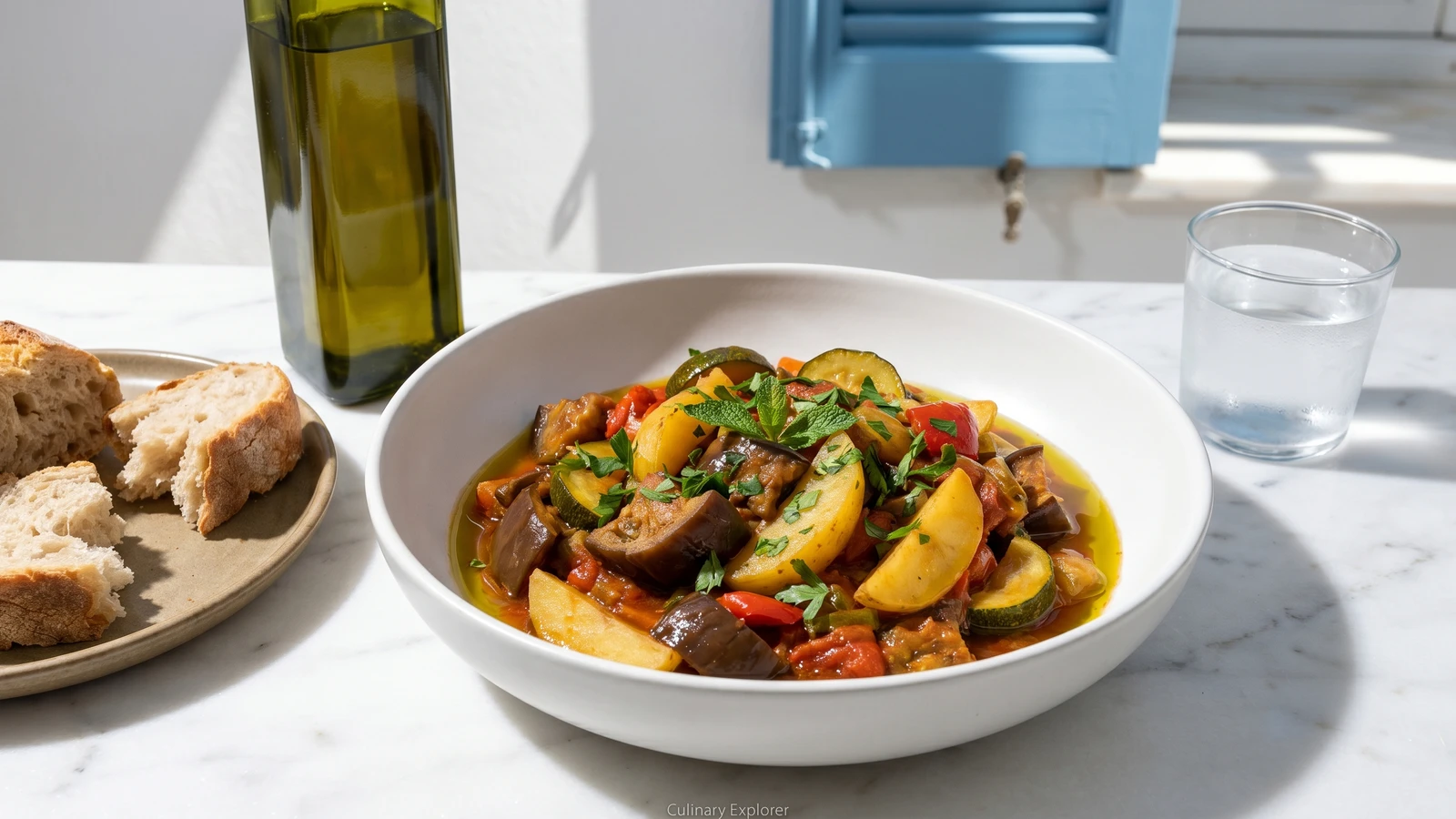
Ikaria's soufiko is a one-pot summer vegetable stew: eggplant, zucchini, potatoes, peppers, and tomato cooked down with olive oil, nothing fried first.
Soufiko belongs to Ikaria, and the region is the dish's surname. It is the island's summer vegetable pot: eggplant, zucchini, potato, onion, pepper, tomato, and olive oil, cooked together until the vegetables soften into one another without losing their names.
What makes it itself is the refusal to fry first. Many Greek vegetable dishes begin with a pan of oil and a little browning, but soufiko is quieter. You layer the vegetables raw, salt them properly, give them good olive oil, and let the tomatoes release enough juice to carry the whole pot. Add water too early and you've made vegetable soup. Stir too much and you've made mash.
Use vegetables that taste of summer. This is where I become strict, because the right method on a sad tomato still gives you a sad dish. Λίγα και καλά, a few things, and good ones. The pot goes on early enough that it can rest before supper, because soufiko is better when the oil settles and the vegetables have time to drink their own sauce.
It is nistisimo, suitable for the fasting table, but it doesn't feel like a restriction. Ikaria's kitchen knows how to make a main dish from the garden and the oil jar. I don't invent it. I find it, I test it, I write it down, so the next cook can make the old pot come out right.
Soufiko is recorded as an Ikarian household dish, tied to the island's summer gardens and to the frugal cooking of the north Aegean. Its name is often linked in local telling to a crowded pot of vegetables, everything pushed in together, which matches the method better than any restaurant story. Unlike oven-baked briam, soufiko is made on the stovetop, and the difference matters: the vegetables stew in their own liquid and olive oil rather than roasting dry.
Quantity
500g
grated or finely chopped
Quantity
350g
cut into 3cm chunks
Quantity
350g
cut into 3cm chunks
Quantity
300g
peeled and cut into 2cm chunks
Quantity
250g
thinly sliced
Quantity
180g
sliced
Quantity
120g
sliced into thin rounds
Quantity
4
thinly sliced
Quantity
120ml
Quantity
12g
plus more to taste
Quantity
1 tsp
Quantity
1/2 tsp
Quantity
15g
chopped
Quantity
10g
chopped
Quantity
1 tbsp
| Ingredient | Quantity |
|---|---|
| ripe tomatoesgrated or finely chopped | 500g |
| eggplantcut into 3cm chunks | 350g |
| zucchinicut into 3cm chunks | 350g |
| potatoespeeled and cut into 2cm chunks | 300g |
| onionsthinly sliced | 250g |
| green bell peppersliced | 180g |
| carrotsliced into thin rounds | 120g |
| garlic clovesthinly sliced | 4 |
| extra virgin Koroneiki olive oil | 120ml |
| fine sea saltplus more to taste | 12g |
| dried Greek oregano | 1 tsp |
| freshly ground black pepper | 1/2 tsp |
| flat-leaf parsleychopped | 15g |
| fresh mint leaves (optional)chopped | 10g |
| red wine vinegar (optional) | 1 tbsp |
Put the eggplant chunks in a colander with 1 teaspoon of the measured salt and leave them for 15 minutes while you cut the rest of the vegetables. Rinse quickly and pat dry. This is not to punish the eggplant, only to tame any bitterness if the fruit is old or seedy.
Choose a wide heavy pot. Spoon half the tomato into the bottom, then layer in the onions, garlic, potatoes, carrots, peppers, eggplant, and zucchini. Add the remaining tomato, the rest of the salt, the oregano, pepper, parsley, mint if using, and the olive oil.
Set the pot over medium heat for 8 to 10 minutes, just until the tomato begins to bubble at the edges. Do not add water unless the tomatoes are poor and dry. Soufiko is decided here: the vegetables must collapse slowly in their own juice and oil, not boil in a thin broth.
Lower the heat, cover the pot, and cook for 35 minutes. Shake the pot by its handles every so often instead of stirring hard. The potatoes should soften, the eggplant should turn silky, and the zucchini should slump without becoming a purée.
When the vegetables are tender and glossy, pull the pot off the heat and let it rest, covered, for 15 minutes. Taste for salt. Add the vinegar only if the tomatoes are flat. Serve warm or at room temperature, with bread for the oil-rich juices.
1 serving (about 290g)
Culinary guides, cultural storytelling, and the editorial depth that makes cooking meaningful.
Discover Culinary ExplorerChef Dimitra
Aegean island octopus, tomato, red wine, and toasted kritharaki share one pot, so the pasta drinks the briny sauce and stays glossy instead of turning heavy.

Chef Dimitra
Aegean coast psari plaki is the quiet whole-fish bake: onions and tomato softened first, fish laid on top, and olive oil doing its slow work until the bones release cleanly.

Chef Dimitra
Astakomakaronada is the Aegean islands' celebration pasta: spiny lobster, tomato, olive oil, and long noodles cooked in the shell broth, never drowned in cream or cheese.

Chef Dimitra
Aegean Easter goat on the spit, lean and full-flavored, turned slowly over charcoal and basted with lemon, oregano, garlic, and good olive oil.