Chef Lupita
Acúmara Tatemada al Comal
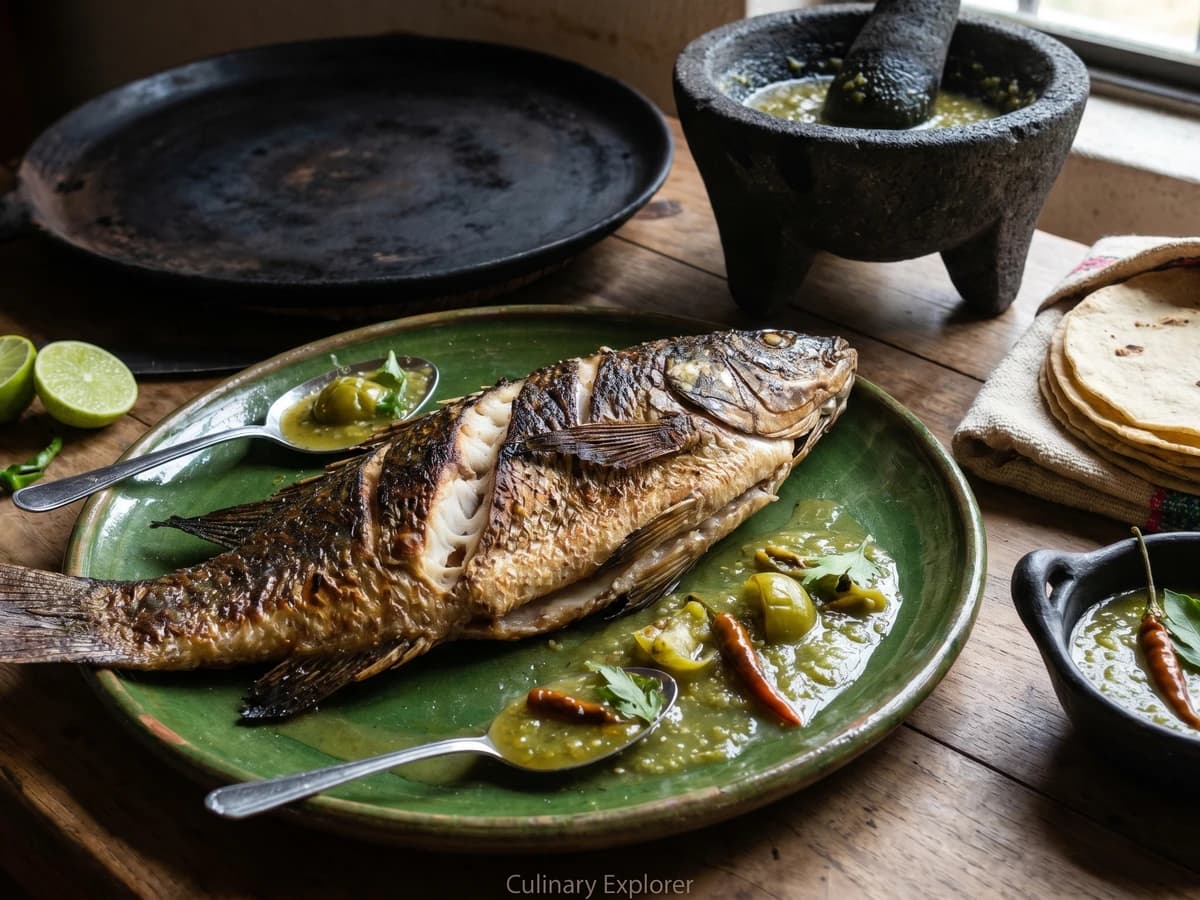
Michoacán's Lake Pátzcuaro acúmara, a whole kurucha from the lago tatemada on a comal de leña and served with chile perón atápakua, corn tortillas, and P'urhépecha discipline.
A cooking platform built around craft, culture, and the stories behind what we eat.
Created by
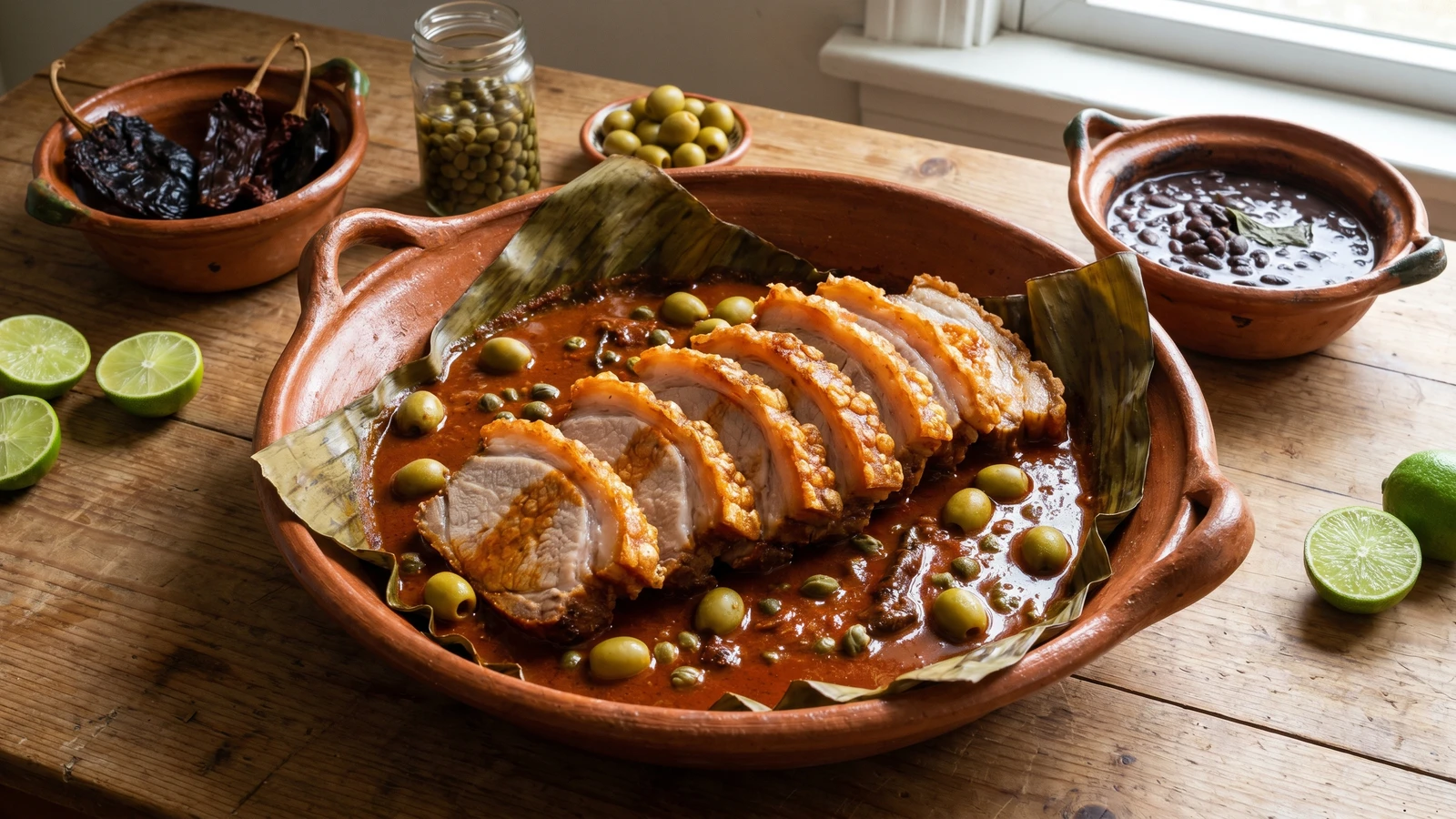
Veracruz Sotavento's celebration pork loin, roasted with the cuerito on until the skin blisters crisp over ancho-chipotle adobo, served sliced with frijoles negros.
Veracruz, the Sotavento coast: Alvarado, Tlacotalpan, Boca del Rio, the river towns where Spanish jars of olives and capers sit beside hoja santa, chile chipotle, and black beans. This is not northern pork. This is jarocho pork, built for a Sunday table with music outside and a cazuela heavy enough to feed the family.
The cuerito is the point. You roast the loin with the skin still attached, dry it overnight, salt it properly, then let the fat under the skin do its work. The adobo is chile ancho for body, chile chipotle seco for smoke, jitomate de bola for Veracruz sweetness, garlic, oregano, clavo, pimienta, and a little vinegar. The olives and capers are not decorations. They are the port of Veracruz speaking through the pot.
I learned a version of this from a woman near Tlacotalpan who served it with frijoles negros cooked with epazote and a stack of corn tortillas wrapped in a cotton servilleta. She told me, 'si no truena el cuerito, no es fiesta.' If the skin doesn't crackle, it isn't a celebration. Dry the skin. Toast the chiles. Fry the adobo in manteca. No me vengas con atajos.
The Sotavento region of Veracruz became one of Mexico's great port kitchens after the 16th century, when Spanish, Afro-Caribbean, Indigenous, and Gulf Coast ingredients met through the port of Veracruz and the river routes around Tlacotalpan and Alvarado. Olives, capers, cinnamon, cloves, and vinegar entered local cooking through colonial trade, while hoja santa, black beans, corn, chiles, and achiote remained rooted in Indigenous and regional practice. Pork roasts with crisp skin reflect both Spanish whole-animal cookery and Afro-coastal celebration cooking, adapted to Veracruz adobos and the family cazuela.
Quantity
1 roast, 4 to 4 1/2 pounds
with 1/2 inch fat under the skin
Quantity
2 tablespoons
divided
Quantity
1 teaspoon
Quantity
4
stemmed and seeded
Quantity
2
stemmed
Quantity
3 medium
halved
Quantity
1/2 medium
thickly sliced
Quantity
6
unpeeled
Quantity
1 small
torn
Quantity
1 teaspoon
Quantity
1/2 teaspoon
Quantity
4
Quantity
2
Quantity
1/2 inch
Quantity
3 tablespoons
Quantity
2 tablespoons
Quantity
1 tablespoon
Quantity
1 cup, plus more as needed
Quantity
1/3 cup
pitted
Quantity
2 tablespoons
rinsed
Quantity
2
Quantity
as needed
wiped clean and softened over a comal
Quantity
for serving
Quantity
for serving
Quantity
for serving
| Ingredient | Quantity |
|---|---|
| skin-on boneless pork loin roastwith 1/2 inch fat under the skin | 1 roast, 4 to 4 1/2 pounds |
| kosher saltdivided | 2 tablespoons |
| baking powder | 1 teaspoon |
| dried chile anchostemmed and seeded | 4 |
| dried chile chipotle seco or chipotle mecostemmed | 2 |
| jitomates de bolahalved | 3 medium |
| white onionthickly sliced | 1/2 medium |
| garlic clovesunpeeled | 6 |
| hoja santa (acuyo) leaftorn | 1 small |
| dried Mexican oregano | 1 teaspoon |
| cumin seeds | 1/2 teaspoon |
| whole black peppercorns | 4 |
| whole cloves | 2 |
| Mexican cinnamon stick | 1/2 inch |
| pork lard (manteca de cerdo) | 3 tablespoons |
| apple cider vinegar or cane vinegar | 2 tablespoons |
| achiote paste | 1 tablespoon |
| pork broth or water | 1 cup, plus more as needed |
| Manzanilla green olivespitted | 1/3 cup |
| capersrinsed | 2 tablespoons |
| bay leaves | 2 |
| banana leaveswiped clean and softened over a comal | as needed |
| frijoles negros with epazote (optional) | for serving |
| warm hand-pressed corn tortillas (optional) | for serving |
| lime halves (optional) | for serving |
Pat the pork completely dry. Score the skin in shallow parallel cuts, about 1/2 inch apart, cutting through the skin but not deep into the meat. Rub the skin with 1 tablespoon salt mixed with the baking powder. Rub the meat side with another 1 teaspoon salt. Set the pork skin side up on a rack, uncovered, in the refrigerator overnight. This is how the cuerito dries enough to blister. Wet skin becomes rubber. Dry skin crackles.
Heat a dry comal over medium. Toast the chile ancho one at a time for 20 to 30 seconds per side, just until the skin puffs and the color darkens. Toast the chipotle seco briefly, turning it so it does not burn. Cover the toasted chiles with hot water and soak 20 minutes. Hot water softens the flesh. Boiling water pulls bitterness from the skin.
On the same comal, roast the jitomates de bola, onion, and unpeeled garlic until the tomato skins blister, the onion edges char, and the garlic softens inside its peel. Peel the garlic. Toast the cumin, peppercorns, cloves, cinnamon, and oregano for a few seconds until fragrant. Watch the clove. It turns bitter fast.
Drain the chiles and put them in the blender with the roasted jitomate, onion, peeled garlic, toasted spices, hoja santa, vinegar, achiote paste, and 1/2 cup pork broth. Blend until completely smooth. If the blender struggles, add a little more broth. Strain through a fine-mesh sieve. Veracruz adobo should be smooth enough to coat the pork without leaving chile skins on the tongue.
Melt the manteca in a wide cazuela or heavy skillet over medium heat. Add the strained adobo carefully. It will sputter. Cook 8 to 10 minutes, stirring, until the color deepens to brick red and the fat starts to shine at the edges. La manteca es el sabor. Raw blended chile is not a sauce yet. Frying makes it one.
Take the pork from the refrigerator 45 minutes before roasting. Keep the skin dry. Rub the fried adobo over the meat side and the cut sides only, not over the skin. If adobo touches the skin, it will burn before the cuerito blisters. Let the pork sit while the oven heats to 450F.
Line a roasting pan or deep cazuela with softened banana leaves. Set the pork skin side up on the leaves. Add the remaining 1/2 cup broth, olives, capers, and bay leaves around the pork, not on top. Roast at 450F for 25 minutes, until the skin begins to bubble and tighten. The first heat wakes up the fat under the skin.
Lower the oven to 325F. Continue roasting 1 hour 15 minutes to 1 hour 35 minutes, basting only the meat and pan juices, never the skin. Roast until the center reaches 140F. The carryover heat will finish it. Pork loin is lean under that beautiful cuerito, so do not cook it into dryness just because you got nervous.
If the skin needs more blistering, raise the oven to 475F for 8 to 12 minutes or use the broiler for 2 to 4 minutes, watching without walking away. The skin should be golden, bubbled, and crisp under a knife tap. Move the pork to a board and rest 20 minutes. Resting keeps the juices in the meat and lets the cuerito firm.
Skim excess fat from the pan only if the sauce looks greasy, but leave some. That fat carries the chile. Slice the pork across the grain, making sure each piece gets meat, fat, and cuerito. Spoon the olive-caper adobo around the slices. Serve with frijoles negros cooked with epazote, warm corn tortillas, and lime halves. Cada estado, su propia cocina.
1 serving (about 430g)
Culinary guides, cultural storytelling, and the editorial depth that makes cooking meaningful.
Discover Culinary ExplorerChef Lupita
Michoacán's Lake Pátzcuaro acúmara, a whole kurucha from the lago tatemada on a comal de leña and served with chile perón atápakua, corn tortillas, and P'urhépecha discipline.

Chef Lupita
Puebla's weekday adobo of pork shoulder braised in a thick guajillo and ancho sauce sharpened with vinegar, cumin, and clove. The deep red of a market spice stall, the dish a poblana cooks without thinking.

Chef Lupita
Loreto's pit-roasted clams, planted hinge-up in beach sand and tatemadas under a fast fire of dried romerillo brush, the resinous Baja desert shrub that gives this dish its smoke.

Chef Lupita
Oaxaca's eighth mole, the silky, almond-and-cinnamon almendrado, served over poached chicken. Mild, sweet, restrained, and a quiet rebuttal to anyone who thinks Mexican food has to be hot to be Mexican.