
Chef Juliana
Açaí com Camarão do Pará
You think açaí belongs with banana and granola because that's the version that traveled. In Pará, thick unsweetened açaí sits beside shrimp, rice, and farinha. Anota aí: same fruit, different meal.
A cooking platform built around craft, culture, and the stories behind what we eat.
Created by
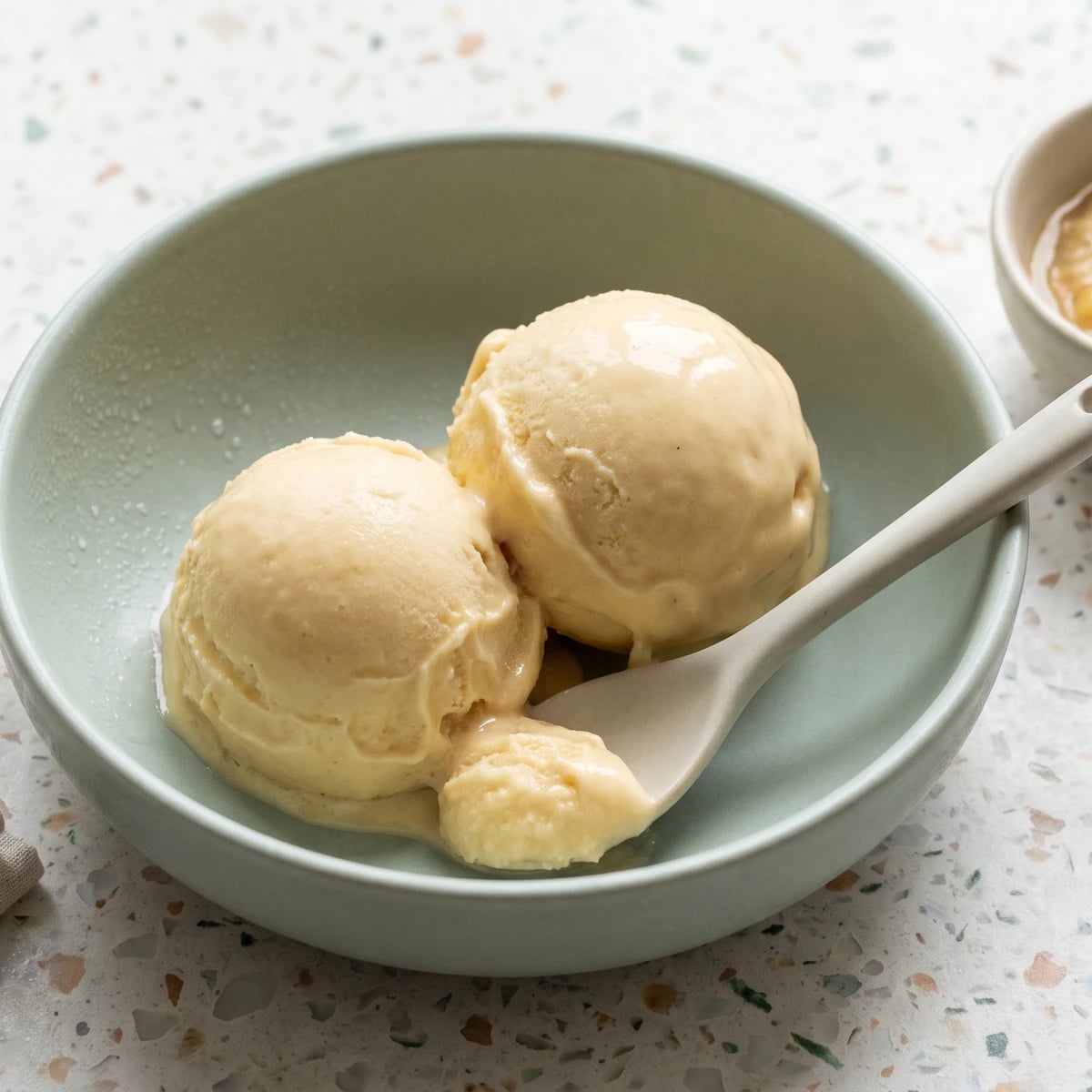
If bacuri sounds like someone else's Pará kitchen, start with the label. Real pulp, condensed milk, cream, and one patient freeze give you a perfumed scoop you can actually repeat.
You see the word bacuri on the frozen pulp bag and that little voice starts: isso não é pra mim. Someone else's fruit, someone else's grandmother, someone else's freezer aisle. Good. Squint at the label. That's how a gente learns, one bag, one spoon, one recipe that works.
The everyday Brazilian table is rice, beans, a piece of chicken or egg, something green, and then, when the day asks nicely, dessert. Comida de verdade is not punishment. It has room for a cold scoop made from fruit you can name, cream you can measure, and no powder pretending to be the Amazon.
I did not grow up carrying bacuri tradition, and I won't borrow a Pará grandmother I don't have. The people who live with that fruit know things a city cook learns only with humility. My job here is smaller and useful: teach you to buy polpa de bacuri, not cupuaçu by mistake, sweeten it enough because cold dulls sweetness, beat it so it scoops, and freeze it without turning it into a yellow brick.
Anota aí: sorvete is not magic. It's arithmetic and patience. Pulp, leite condensado, creme de leite, a pinch of salt, blender, freezer. That's the whole class.
Bacuri, Platonia insignis, is native to the eastern Amazon and the north-northeast transition, especially Pará, Maranhão, and Piauí; in Pará it is often harvested in the rainy early months, when ripe fruits fall and are opened for their thick, perfumed pulp. Belém's fruit sorvetes grew with twentieth-century city ice cream counters that turned regional pulps such as bacuri, cupuaçu, taperebá, and muruci into frozen desserts, while the home version stayed bluntly practical: pulp, condensed milk, creme de leite, blender, freezer.
Quantity
2 cups (about 500 g)
thawed until slushy and cold
Quantity
1 can (14 oz / 395 g)
use 3/4 can first if the pulp is already sweetened
Quantity
2 boxes (200 g each)
or 1 2/3 cups cold table cream or heavy cream
Quantity
1/8 teaspoon
Quantity
2 to 4 tablespoons
| Ingredient | Quantity |
|---|---|
| unsweetened bacuri pulp (polpa de bacuri)thawed until slushy and cold | 2 cups (about 500 g) |
| sweetened condensed milkuse 3/4 can first if the pulp is already sweetened | 1 can (14 oz / 395 g) |
| cold creme de leite de caixinhaor 1 2/3 cups cold table cream or heavy cream | 2 boxes (200 g each) |
| fine salt | 1/8 teaspoon |
| extra sweetened condensed milk (optional) | 2 to 4 tablespoons |
Look for polpa de bacuri. The ingredient list should be bacuri pulp, with water at most. If it says nectar, drink, dessert mix, artificial flavor, or gives you a list long enough to need a chair, put it back. The fruit carries the whole sorvete, so the bag has to smell floral and look pale gold, not grey, watery, or fermented.
Thaw the frozen pulp in the fridge overnight, or leave the sealed pack in a bowl of cool water for 20 to 30 minutes, until you can bend it and break it into chunks. Keep it slushy and cold. Fully warm pulp freezes more slowly, and slow freezing gives you bigger ice crystals instead of a creamy scoop.
Put the cold bacuri pulp, condensed milk, creme de leite, and salt in the blender. Blend for 45 seconds, stop, scrape the sides, and blend for 15 seconds more. The base should be thick, smooth, pale golden, and loudly perfumed. Taste it now: it should be a little sweeter than you want the final sorvete, because the freezer mutes sweetness and aroma.
Scrape the base into a shallow 1-liter freezer container and smooth the top. Press a piece of parchment or plastic wrap directly onto the surface, then cover with the lid. A shallow container freezes evenly, and the covered surface keeps ice crystals and freezer smells from bullying your bacuri.
Freeze for about 2 hours, until the edges are firm and the center is thick and slushy. Beat the mixture with a hand mixer for 30 to 45 seconds, or scrape it back into the blender and pulse just until smooth again. This breaks up early ice crystals and folds in a little air, which is the difference between scoopable sorvete and a frozen block with ambition.
Smooth the sorvete back into the container, cover the surface again, and freeze for at least 4 more hours, preferably overnight. When it's firm, let it sit on the counter for 8 to 12 minutes before scooping. Good bacuri sorvete should give under the spoon, hold a round scoop, and smell like the fruit before it even reaches your mouth.
1 serving (about 162g)
Culinary guides, cultural storytelling, and the editorial depth that makes cooking meaningful.
Discover Culinary Explorer
Chef Juliana
You think açaí belongs with banana and granola because that's the version that traveled. In Pará, thick unsweetened açaí sits beside shrimp, rice, and farinha. Anota aí: same fruit, different meal.

Chef Juliana
You don't need a blender trick or a sweet shop bowl. Thick unsweetened açaí, crunchy farinha de tapioca, and the discipline to read the label solve this Belém spoon plate.

Chef Juliana
You think savory açaí is not for you. I understand. Then you taste the cold, dark bowl beside hot fried fish, rice, greens, and farinha, and dinner gets very quiet.

Chef Juliana
You don't need a shop to make a thick açaí bowl. You need real frozen pulp, a ripe banana, and the discipline to stop blending before it becomes juice.