
Chef Margarida
Aletria
The Christmas twin of arroz doce, where angel hair pasta meets warm milk, golden egg yolks, and cinnamon. Convent sweetness born from surplus yolks, humble magic from grandmother's kitchen.
A cooking platform built around craft, culture, and the stories behind what we eat.
Created by
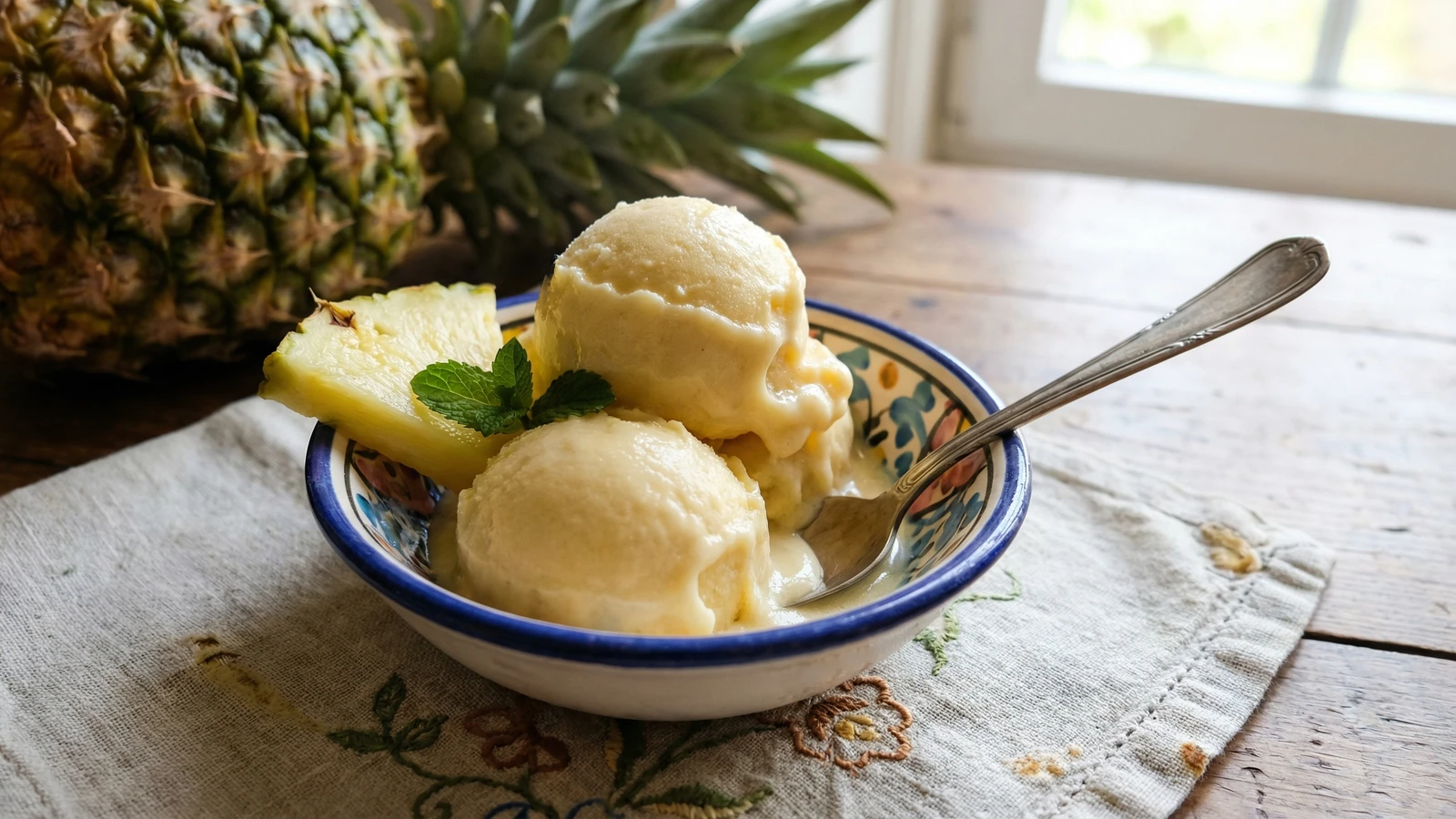
Frozen sunshine from the Azores, where volcanic soil and greenhouse glass produce pineapples sweeter than anywhere else on earth. Egg yolks make it Portuguese. Memory makes it home.
The first time I tasted ananás dos Açores, I understood why the islanders guard their greenhouses like treasure. This is not the pineapple you know. Not the tough, acidic fruit that travels thousands of miles in shipping containers. This is something else entirely. Honey-sweet. Fragrant enough to perfume a room. Grown in glass houses heated by volcanic steam on São Miguel island, each fruit pampered for two years before harvest.
When I started documenting desserts from the Azores, the grandmothers there taught me their secret: egg yolks. Always egg yolks. The convent tradition runs deep in Portugal, and the Azorean cooks carry it forward. A simple fruit ice becomes something richer, more luxurious, more Portuguese when you add those golden yolks.
Avó Leonor never made this particular dessert. Alentejo is too far from the islands, and fresh ananás dos Açores rarely made it to her kitchen. But she would have recognized the technique. The careful cooking of the custard. The patience required. The way egg yolks transform something good into something unforgettable.
This sorvete is what I serve at Mesa da Avó when summer heat makes heavy desserts impossible. Cold, bright, intensely fruity, but with that silky richness that tells you someone took the time to do it properly. The islands' sunshine, captured and frozen, waiting on a spoon.
Pineapple cultivation arrived in the Azores in the 1850s, when islanders converted orange greenhouses after citrus blight devastated their orchards. The volcanic soil of São Miguel and the humid greenhouse microclimate produce fruit with sugar levels impossible to achieve elsewhere. By the early 20th century, Azorean pineapples were prized across Europe, and local cooks began incorporating them into the rich egg-yolk dessert tradition inherited from mainland convents.
Quantity
1 ripe (about 1.2 kg)
or the sweetest pineapple available
Quantity
200g
Quantity
150ml
Quantity
4 large
at room temperature
Quantity
200ml
Quantity
1 tablespoon
Quantity
pinch
| Ingredient | Quantity |
|---|---|
| Azorean pineappleor the sweetest pineapple available | 1 ripe (about 1.2 kg) |
| sugar | 200g |
| water | 150ml |
| egg yolksat room temperature | 4 large |
| heavy cream (natas) | 200ml |
| white rum (optional) | 1 tablespoon |
| fine sea salt | pinch |
Cut the top and bottom from the pineapple. Stand it upright and slice away the skin, following the curve of the fruit. Remove any remaining eyes with the tip of a knife. Quarter the pineapple lengthwise and cut out the tough core from each piece. Chop the flesh roughly. You should have about 600g of fruit.
Blend the pineapple chunks until completely smooth. Strain through a fine-mesh sieve, pressing firmly on the pulp to extract all the juice. You want about 400ml of smooth purée. Discard the fibrous pulp. Set the purée aside.
In a small saucepan, combine the sugar and water. Place over medium heat and stir until the sugar dissolves completely. Stop stirring once it begins to simmer. Let it bubble for 2 minutes, then remove from heat. The syrup should be clear and slightly thickened.
In a medium bowl, whisk the egg yolks until smooth and slightly pale. While whisking constantly, pour the hot sugar syrup in a very thin stream into the yolks. Go slowly. You're tempering the eggs, warming them gently so they don't scramble. The mixture should become thick and pale, like thin custard.
Pour the egg mixture into a clean saucepan. Cook over low heat, stirring constantly with a wooden spoon, until the custard thickens enough to coat the back of the spoon, about 8 to 10 minutes. Never let it boil. The moment you see any hint of a bubble at the edges, remove it from heat. Strain immediately through a fine sieve into a clean bowl.
Stir the pineapple purée into the warm custard. Add the cream, rum if using, and salt. Whisk until completely smooth. The salt isn't optional. It makes the pineapple flavor sing. Press plastic wrap directly onto the surface to prevent a skin from forming. Refrigerate until completely cold, at least 4 hours or overnight.
Pour the chilled mixture into your ice cream maker and churn according to the manufacturer's instructions. It should take 20 to 25 minutes to reach soft-serve consistency. The color will be pale gold, like island sunshine.
Transfer the churned sorvete to a freezer-safe container. Press plastic wrap onto the surface and freeze until firm, at least 2 hours. Remove from the freezer 10 minutes before serving to soften slightly. Scoop into chilled bowls or glasses. The texture should be creamy and smooth, never icy. This is what egg yolks do. This is why we use them.
1 serving (about 190g)
Culinary guides, cultural storytelling, and the editorial depth that makes cooking meaningful.
Discover Culinary ExplorerChef Margarida
The Christmas twin of arroz doce, where angel hair pasta meets warm milk, golden egg yolks, and cinnamon. Convent sweetness born from surplus yolks, humble magic from grandmother's kitchen.

Chef Margarida
The rice pudding that appears on every Portuguese celebration table, golden with egg yolks from the convent tradition, crowned with cinnamon art that tells you someone cared enough to make it beautiful.

Chef Margarida
The cake that defines Portuguese childhood. Layers of Maria biscuits soaked in coffee, bound with golden egg yolk cream, chilled until it becomes something magical. Every birthday, every Sunday, every grandmother's kitchen.

Chef Margarida
The dark, dense Christmas cake of Madeira, perfumed with cinnamon and cloves, sweetened with sugarcane molasses, and packed with walnuts. Break it by hand. Never cut it. This is how it's been done for six centuries.