Culinary Explorer
A cooking platform built around craft, culture, and the stories behind what we eat.
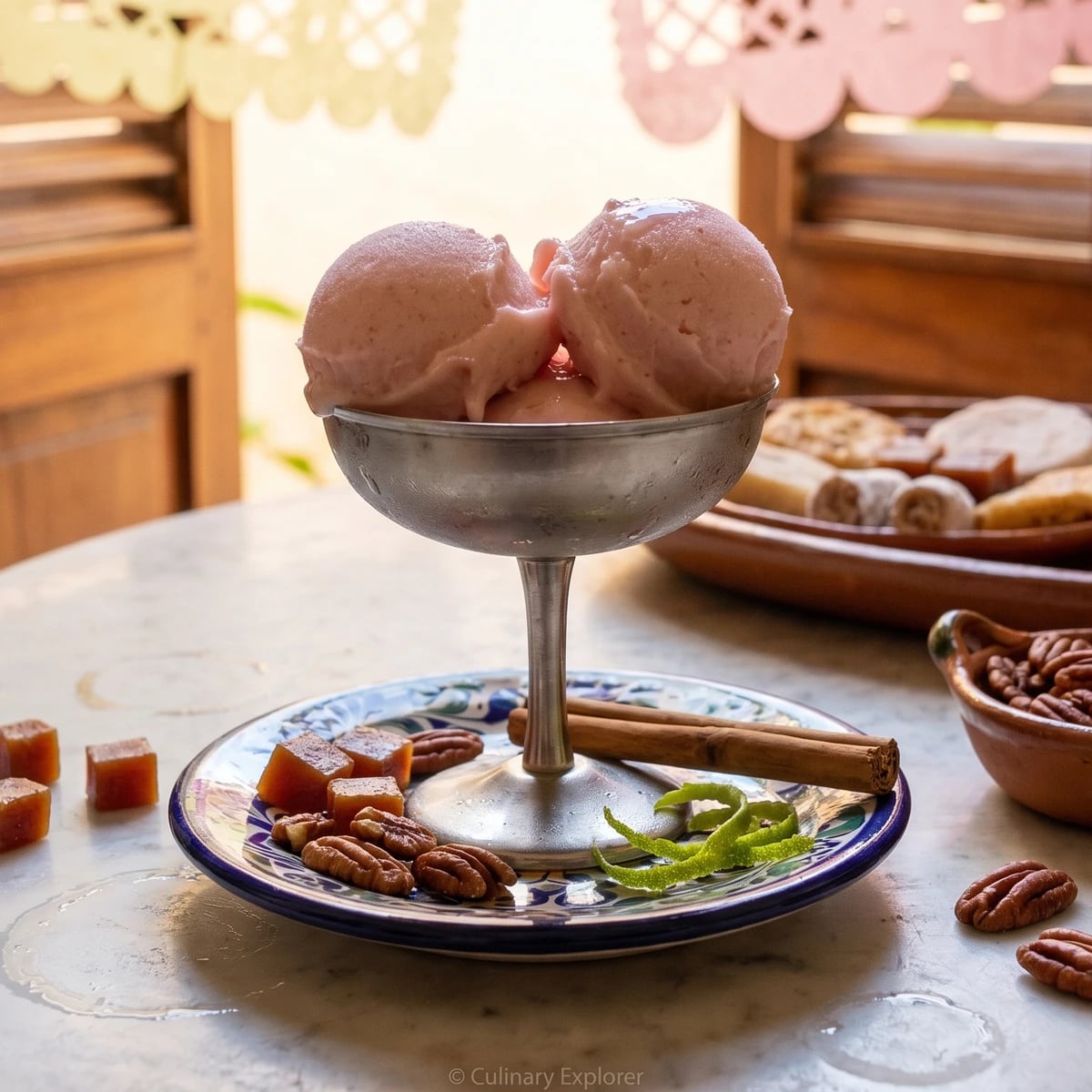
Sorbete de Crema Morisca Yucateco
Created by Chef Lupita
Mérida's 1876 dulce frío, born in the marble parlors of the Sorbetería Colón. Milk perfumed with canela de Ceylán and vainilla de Papantla, dissolved with ate de guayaba, finished with a chorrito of rum and the bright zest of lime.
This is Yucatán. Specifically Mérida, specifically the marble counter of the Sorbetería Colón on the Plaza Grande, where in 1876 don Manuel Jesús Pinzón patented a recipe he called crema morisca and froze it in metal cylinders packed with salt and ice hauled down from the volcanoes. The Moorish in the name is not decoration. The recipe traveled from Al-Andalus to Spain to the Yucatán peninsula by way of the trade routes that made Mérida a wealthier port than Mexico City for most of the 19th century, and it landed in a city that already knew what to do with milk, canela, and tropical fruit.
The defining ingredient is ate de guayaba. Not fresh guava, ate. The dense, sliceable paste that Mexican kitchens have made for centuries by cooking guava down with sugar until it sets like a brick. You melt it into the warm milk and it gives the dulce its pale rosa color and its particular texture, denser than gelato, softer than ice cream, something in between that belongs only to the old sorbeterías. The canela has to be canela de Ceylán, the soft Mexican kind, not the hard cassia sold as cinnamon in most foreign supermarkets. The vainilla has to be from Papantla in Veracruz, the only place in the world where vanilla is native and where it was domesticated by the Totonacs long before it ever crossed an ocean. And the chorrito of rum at the end is the Moorish signature, the small breath of liquor that the Andalusian recipe carried across the Atlantic.
My mother did not make this dulce. She was from Jalisco and her notebook was full of cajeta and rompope, not sorbetes. I learned it from doña Aurora, a señora I met at the Lucas de Gálvez market in 1994 who had worked the counter at the Sorbetería Colón as a girl in the 1940s. She wrote out the proportions on a paper bag, the kind they used to wrap dulces, and made me promise I would not call this 'guava ice cream' when I taught it. Cada estado, su propia cocina, and this one belongs to Mérida.
Ingredients
whole milk
Quantity
4 cups
the best you can find
heavy cream
Quantity
1 cup
granulated sugar
Quantity
3/4 cup
| Ingredient | Quantity |
|---|---|
| whole milkthe best you can find | 4 cups |
| heavy cream | 1 cup |
| granulated sugar | 3/4 cup |
Where cooking meets culture.
Culinary guides, cultural storytelling, and the editorial depth that makes cooking meaningful.
Discover Culinary Explorer