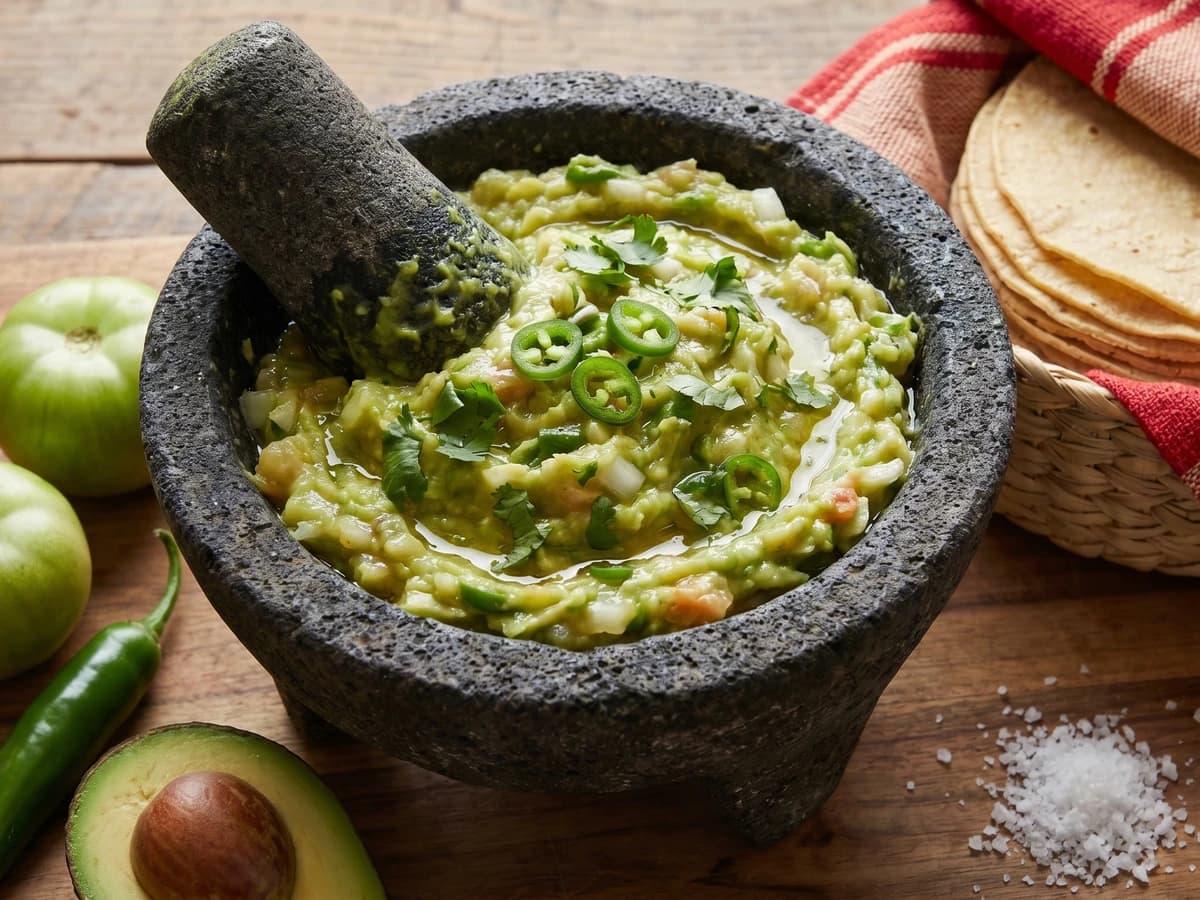
Guadalajara's thin masa boats, pinched by hand, fried in manteca de cerdo, and dressed like a proper cenaduria plate with beans, meat, cabbage, Cotija, and salsa roja.
Appetizers & Snacks
Mexican
Potluck
Budget Friendly
Comfort Food
45 min
Active Time
45 min cook•1 hr 30 min total
Yield16 small sopes, 4 to 6 servings
Jalisco, specifically Guadalajara, owns these sopes. Tapatio means from Guadalajara, and these belong to the cenadurias, the evening food stalls where the comal is black, the lard is ready, and nobody is pretending a sope should be a thick little brick.
The masa is pressed small and thin, cooked first on the comal, then pinched while still hot so it forms a low rim. That rim matters. It holds the beans and salsa without making the sope heavy. Then it goes into manteca de cerdo until the edges are crisp and the center stays tender. La manteca es el sabor. Use oil if you want, but don't ask why it tastes flat.
The salsa is jitomate with chile de arbol, preferably from Yahualica if your market has it, because Jalisco knows that chile. The toppings are practical: refried beans, shredded beef or pork, cabbage, queso Cotija or queso anejo, a little onion. Not cheddar. Not sour cream. No me vengas con atajos.
My mother made them smaller than most people do now, almost two bites each, because she said a botana should invite another plate, not defeat the eater. She was right. Cada estado, su propia cocina.
Sopes belong to the broad family of masa antojitos that developed from Indigenous corn cookery and were adapted regionally after the Spanish introduced pork and lard in the 16th century. In Guadalajara, the tapatio style became associated with cenadurias, evening eateries that served smaller fried masa dishes with beans, meat, cabbage, and tomato-based salsas rather than the thicker central Mexican sopes. Chile de arbol from Yahualica, protected by a Mexican denomination of origin in 2018, is one of Jalisco's defining chiles and gives this salsa its regional spine.
The technique, the tradition, and the story behind every dish.
fresh masa for tortillas or masa harina mixed with warm water
Quantity
2 cups fresh masa or 2 cups masa harina plus 1 1/2 cups warm water
fine sea salt
Quantity
1/2 teaspoon
warm water
Quantity
1 to 2 tablespoons
as needed for masa texture
manteca de cerdo
Quantity
1 cup
for frying the sopes
cooked pinto beans or bayo beans
Quantity
2 cups
with a little cooking broth
manteca de cerdo
Quantity
3 tablespoons
for refrying beans
white onion
Quantity
1/4 small
finely chopped
kosher salt
Quantity
1/2 teaspoon, plus more to taste
cooked shredded beef, pork, or chicken
Quantity
1 1/2 cups
warm and lightly salted
ripe Roma tomatoes
Quantity
3
dried chile de arbol, preferably from Yahualica
Quantity
4
stemmed
dried chile guajillo
Quantity
1
stemmed and seeded
garlic clove
Quantity
1 small
unpeeled
white onion
Quantity
1/4 small
for salsa
dried Mexican oregano
Quantity
1/4 teaspoon
manteca de cerdo
Quantity
1 tablespoon
for frying salsa
green cabbage
Quantity
2 cups
finely shredded
white onion
Quantity
1/3 cup
finely chopped, for serving
queso Cotija or queso anejo
Quantity
1/2 cup
crumbled
lime wedges (optional)
Quantity
for serving
Ingredient
Quantity
fresh masa for tortillas or masa harina mixed with warm water
2 cups fresh masa or 2 cups masa harina plus 1 1/2 cups warm water
fine sea salt
1/2 teaspoon
warm wateras needed for masa texture
1 to 2 tablespoons
manteca de cerdofor frying the sopes
1 cup
cooked pinto beans or bayo beanswith a little cooking broth
2 cups
manteca de cerdofor refrying beans
3 tablespoons
white onionfinely chopped
1/4 small
kosher salt
1/2 teaspoon, plus more to taste
cooked shredded beef, pork, or chickenwarm and lightly salted
1 1/2 cups
ripe Roma tomatoes
3
dried chile de arbol, preferably from Yahualicastemmed
4
dried chile guajillostemmed and seeded
1
garlic cloveunpeeled
1 small
white onionfor salsa
1/4 small
dried Mexican oregano
1/4 teaspoon
manteca de cerdofor frying salsa
1 tablespoon
green cabbagefinely shredded
2 cups
white onionfinely chopped, for serving
1/3 cup
queso Cotija or queso anejocrumbled
1/2 cup
lime wedges (optional)
for serving
Equipment Needed
•Tortilla press lined with plastic
•Cast iron comal
•Wide skillet or shallow clay cazuela for frying
•Bean masher
•Blender
•Wire rack set over a sheet pan
Instructions
1
Prepare the masa
Mix the masa with the salt. If using masa harina, let the mixed dough rest for 15 minutes so the corn fully hydrates. The masa should feel soft and alive, like a warm earlobe, not cracked and not sticky. If it cracks at the edge when pressed, knead in warm water a teaspoon at a time.
2
Cook the salsa base
Set the tomatoes, garlic, and onion on a hot comal. Turn them until the tomato skins blister, the onion browns at the edges, and the garlic softens inside its skin. Toast the chile de arbol for a few seconds per side and the guajillo for about 20 seconds per side. Watch them. Burned chile tastes bitter, and no blender can save it.
3
Blend and fry salsa
Peel the garlic. Blend the tomatoes, garlic, onion, toasted chiles, oregano, and salt until smooth. Melt 1 tablespoon manteca de cerdo in a small cazuela or skillet over medium heat. Pour in the salsa and cook 8 to 10 minutes, stirring, until it darkens slightly and the fat shines at the edges. This is salsa de jitomate with backbone, not raw tomato water.
4
Refry the beans
Melt 3 tablespoons manteca de cerdo in a skillet. Add the chopped onion and cook until translucent. Add the beans with a splash of their broth and mash them with a bean masher or the back of a spoon. Cook until thick enough to spread without running over the sope. Taste for salt. Beans are not filler. They carry the whole bite.
5
Press the sopes
Divide the masa into 16 balls, each about the size of a large walnut. Press each one between plastic in a tortilla press to about 3 inches wide and a little thicker than a tortilla. These are tapatios, small and delicate. If you make them thick, you've moved north or east. Guadalajara will notice.
Keep the masa balls covered with a damp towel while you work. Dry masa cracks when you pinch it.
6
Set on the comal
Cook the pressed rounds on a hot dry comal for about 45 seconds per side, just until the surface turns opaque and light brown freckles appear. They should be cooked enough to handle but still flexible. Do not crisp them yet. The lard will do that later.
7
Pinch the rims
While each round is still hot, pinch around the edge with your thumb and forefinger to make a low raised border. Work fast and use a folded towel if your fingers complain. The women at the cenadurias do this without looking because they have made thousands. You will look. That's fine. Get the rim even.
8
Fry in lard
Heat 1 cup manteca de cerdo in a wide skillet over medium-high heat. Fry the sopes in batches, flat side down first, then turn briefly, until the edges are crisp and the center is still tender. Drain on a rack, not paper towels if you have the rack. The sound should be a steady sizzle, not a violent splatter. Así se hace y punto.
9
Assemble and serve
Spread each hot sope with refried beans. Add a little shredded meat, spoon over the salsa de jitomate, then top with shredded cabbage, chopped white onion, and crumbled queso Cotija or queso anejo. Serve immediately with lime wedges. A sope waits badly. Eat it while the edge still answers under your teeth.
Chef Tips
•Buy fresh masa from a tortilleria if you can. Masa harina works, but fresh masa has the corn perfume that tells you where the dish begins. Si no conoces el mercado, no conoces la cocina.
•Use bayo beans if your market has them. Pinto beans are acceptable. Black beans belong to other regional tables, not this Jalisco plate.
•Chile de arbol from Yahualica is worth looking for. It has clean heat and a dry fruitiness that fits this salsa. If you use ordinary chile de arbol, it will work, but you are missing the Jalisco accent.
•The sopes should be small. These are botanas de Occidente, meant for sharing at a table with salsa, lime, and conversation. Oversized sopes turn heavy and lose the point.
•Do not use iceberg lettuce, cheddar, or sour cream. That is another border, another kitchen, another story.
Advance Preparation
•The salsa de jitomate can be made 2 days ahead and refrigerated. Rewarm it gently before serving so it loosens and shines.
•The beans can be refried 1 day ahead. Reheat with a spoonful of bean broth or water until spreadable.
•The masa rounds can be cooked and pinched up to 4 hours ahead, covered with a towel. Fry them just before serving. Fried sopes lose their edge as they sit.
Frequently Asked Questions
Nutrition Information
1 serving (about 265g)
Calories
565 calories
Total Fat
32 g
Saturated Fat
12 g
Trans Fat
0 g
Unsaturated Fat
17 g
Cholesterol
65 mg
Sodium
850 mg
Total Carbohydrates
47 g
Dietary Fiber
8 g
Sugars
5 g
Protein
23 g
Where cooking meets culture.
Culinary guides, cultural storytelling, and the editorial depth that makes cooking meaningful.