
Chef Isabel
Aguaillo de la Sierra de Cadiz
Aguaillo is from the Sierra de Cadiz: cold water, stale bread, garlic, oil and vinegar, closer to a field drink than a bowl of soup, and sharp enough to wake you in the heat.
A cooking platform built around craft, culture, and the stories behind what we eat.
Created by
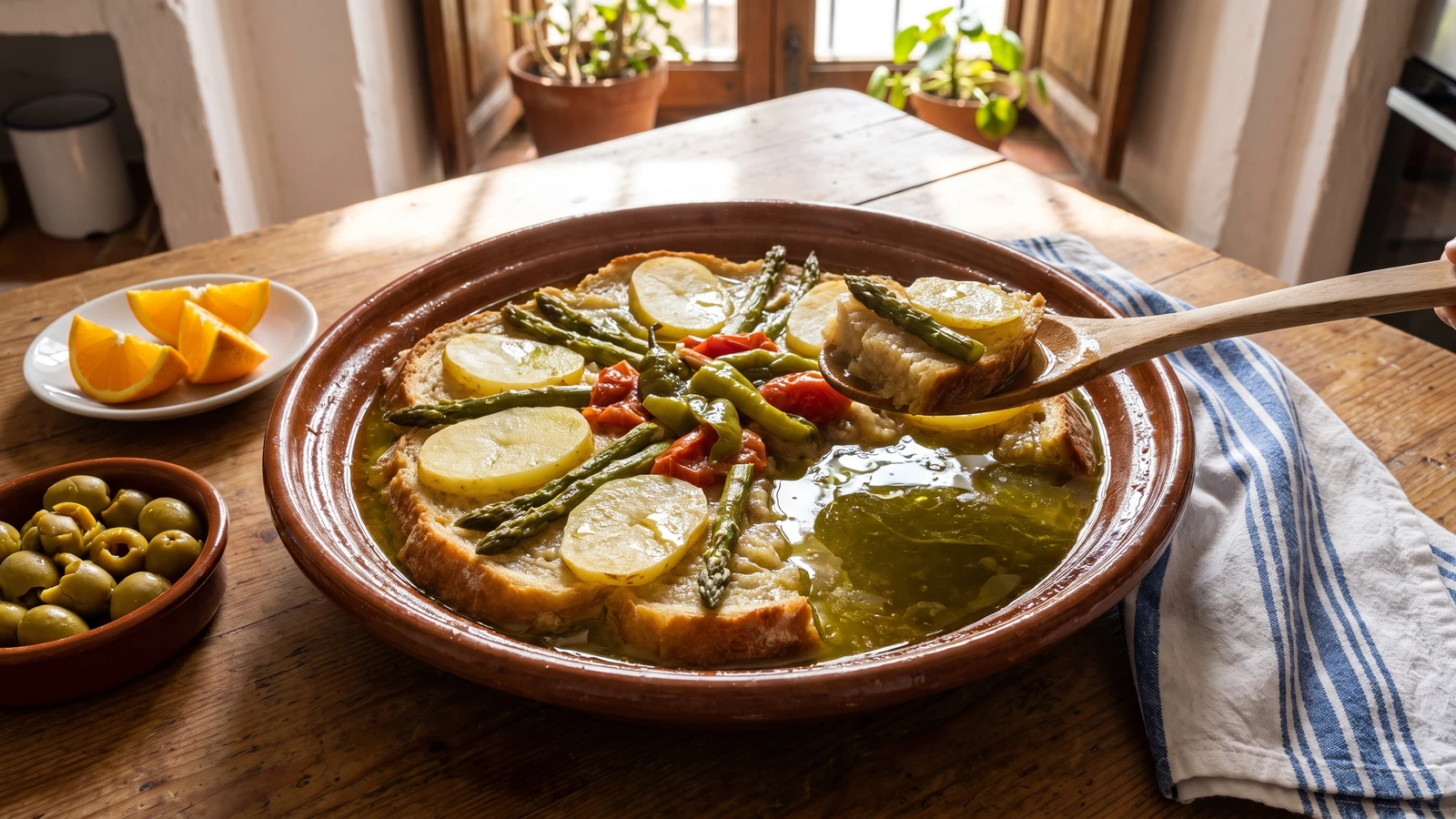
Sopas Perotas are Álora's Andaluz bread-and-vegetable soup: pan cateto soaked with potato, asparagus, pepper, and tomato, then rested off the heat so the bread softens without collapsing.
Sopas Perotas belong to Álora, in the Guadalhorce Valley of Málaga, and they are Andaluz cocina de cuchara, spoon food, made from bread, vegetables, olive oil, and the market's green things. What makes them perotas is not just stale bread in broth. It is the way the fried potato, asparagus, pepper, onion, garlic, and tomato are poured over thick slices of country bread and left to settle until the bread takes the broth but still stands up under the spoon.
The method that decides the dish is this: once the bread is in, you don't boil it. You make the vegetable broth lively and well seasoned first, then pour it over the bread in a deep bowl or earthenware dish, cover it, and let time do the last work. Boil the bread and you get paste. Rest it and you get sopas, soft, full, and separate enough to eat properly.
If you can't find pan cateto where you are, use a dense day-old country loaf with a tight crumb and a good crust, not sandwich bread. The change is simple: a lighter loaf drinks faster and falls apart sooner, so cut it thicker and pour a little less broth at first. No hace falta haber pisado España. With good bread, ripe tomato, and patience, this comes out. Siempre sale, si lo sigues.
Sopas Perotas are tied to Álora and the farms of the Guadalhorce Valley in inland Málaga, where day-old pan cateto, olive oil, and vegetables from the huerta made a filling meal from little money. The word perota names the people of Álora, so the dish carries the town's own nickname rather than a broad regional label. Its yearly celebration in Álora keeps the old form visible: bread soaked with a vegetable broth, often eaten with olives, cucumber, orange, or grapes alongside, depending on the season.
Quantity
300g
cut into 1.5cm slices
Quantity
80ml
Quantity
350g
peeled and cut into 5mm slices
Quantity
150g
woody ends trimmed, cut into 4cm pieces
Quantity
180g
seeded and sliced
Quantity
180g
thinly sliced
Quantity
4 cloves
sliced
Quantity
450g
peeled if you like, grated or finely chopped
Quantity
1 teaspoon
Quantity
900ml
Quantity
10g, plus more to taste
Quantity
1 small
sliced, to serve
Quantity
1
cut into wedges, to serve
Quantity
80g
to serve
| Ingredient | Quantity |
|---|---|
| day-old pan cateto or dense country breadcut into 1.5cm slices | 300g |
| extra virgin olive oil | 80ml |
| potatoespeeled and cut into 5mm slices | 350g |
| green asparaguswoody ends trimmed, cut into 4cm pieces | 150g |
| green pepperseeded and sliced | 180g |
| onionthinly sliced | 180g |
| garlicsliced | 4 cloves |
| ripe tomatoespeeled if you like, grated or finely chopped | 450g |
| sweet pimentón (optional) | 1 teaspoon |
| water | 900ml |
| fine sea salt | 10g, plus more to taste |
| cucumber (optional)sliced, to serve | 1 small |
| orange (optional)cut into wedges, to serve | 1 |
| cracked green olives (optional)to serve | 80g |
Put the sliced day-old bread in a deep earthenware dish, wide bowl, or cazuela, overlapping the pieces but not crushing them. The bread should be dry enough to drink the broth without turning to mush. If it is fresh, leave the slices uncovered for an hour while you cook the vegetables.
Warm the olive oil in a wide pan over medium heat. Add the potato slices with a pinch of the measured salt and cook for 8 to 10 minutes, turning now and then, until the edges turn pale gold and the centers are nearly tender. You are not making chips. You want the potato cooked through enough to hold its shape in the broth.
Add the asparagus, green pepper, onion, and garlic to the pan. Cook for 8 minutes, stirring gently, until the pepper softens and the onion loses its sharpness. Keep the heat moderate. If the garlic browns hard, it will taste bitter in the broth, and there is no hiding it.
Add the grated tomato and cook for 10 to 12 minutes, until the water cooks away and the oil shows at the edges. This is the small sofrito, the slow vegetable base, and it has to taste sweet and cooked before the water goes in. Stir in the pimentón off the heat if using it, just long enough to stain the oil red without scorching.
Pour in 900ml water, add the remaining salt, and bring it to a steady simmer. Cook for 6 to 8 minutes, until the potato is tender but not breaking and the asparagus still has a little bite. Taste the broth now. It should be a touch saltier than you think, because the bread will quiet it down.
Ladle the hot vegetables and broth evenly over the bread, making sure every slice is touched but not drowned. Press lightly with the back of the ladle so the bread drinks, then stop. Do not put the dish back on the heat and do not boil it. That is the line between sopas and paste.
Cover the dish with a clean cloth or lid and let it rest for 8 to 10 minutes, until the bread is swollen and tender but still keeps its shape. Serve from the same dish, with cucumber, orange wedges, and cracked green olives alongside if the season gives them to you. Prueba, y ya veremos.
1 serving (about 670g)
Culinary guides, cultural storytelling, and the editorial depth that makes cooking meaningful.
Discover Culinary ExplorerChef Isabel
Aguaillo is from the Sierra de Cadiz: cold water, stale bread, garlic, oil and vinegar, closer to a field drink than a bowl of soup, and sharp enough to wake you in the heat.

Chef Isabel
Ajilimojili is Jaen's tomato-free cold soup: potato, roasted red pepper, garlic, olive oil, and vinegar pounded into a cool, silky spoonful.

Chef Isabel
Ajo carretero is Soriano, from the pine country of Soria: lamb cooked in a plain garlicky broth, then served the old way, meat first and bread-soaked soup after.

Chef Isabel
Ajoblanco Extremeño is the poor-kitchen cold soup of Extremadura: bread, garlic, oil, egg yolk, vinegar, and icy water, with no almonds. Whisk it slowly and serve it bien fresquito.