Culinary Explorer

A cooking platform built around craft, culture, and the stories behind what we eat.
Discover Culinary Explorer
Sopa Seca de Fideo Jalisciense

Sopa Seca de Fideo Jalisciense

Created by

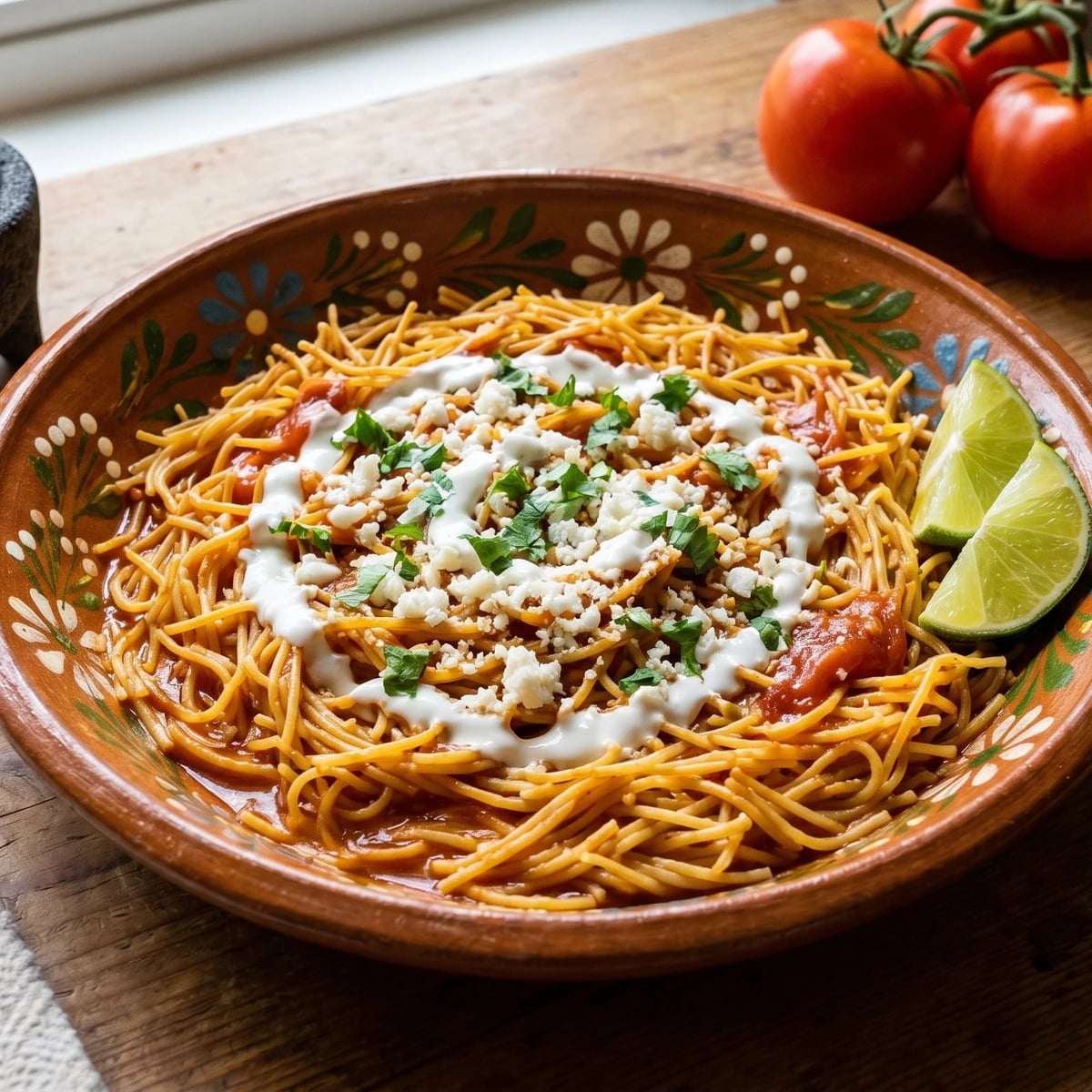
Jalisco's weeknight fideo, toasted golden in manteca de cerdo, simmered until dry in jitomate and chile chipotle, then brought to the table in a Tonala cazuela.

Main Dishes
Mexican
Weeknight
Comfort Food
15 min
Active Time
25 min cook40 min total
Yield4 to 6 servings

Jalisco, especially the home kitchens of Guadalajara and the towns around Los Altos, knows how to turn a handful of fideo into a proper comida. This is sopa seca, not soup. The noodles drink the jitomate and chile chipotle until the pan goes quiet and every strand is stained red-orange. That is the point.

The defining step is the toasting. You fry the fideo in manteca de cerdo until it smells nutty and turns the color of dry straw. If you pour sauce over pale noodles, they swell and taste flat. The women who perfected this dish knew economy and timing. A little pasta, a few saladet tomatoes, one chile chipotle adobado, good broth, and the family eats.

My mother made this on weeknights in Colonia Roma when she wanted Jalisco on the table without making pozole or birria. She wrote in her notebook: "que quede seco, no caldoso." Let it finish dry, not brothy. Serve it with crema mexicana and queso cotija, in a clay cazuela if you have one. Cada estado, su propia cocina.

Fideo entered Mexican kitchens through Spanish wheat noodle traditions during the colonial period, but Mexican cooks made it their own by frying the pasta first and finishing it in a tomato and chile sauce. The technique of sopa seca, a dry cooked first course, appears in 19th-century Mexican household cookbooks alongside rice dishes and vermicelli preparations. In Jalisco, fideo seco became a practical comida casera dish because it used pantry noodles, local tomatoes, broth from the day's cooking, and dairy garnishes from the state's strong ranching culture.

The technique, the tradition, and the story behind every dish.

Discover Culinary Explorer

Ingredients

ripe saladet tomatoes

Quantity

3 medium

cored and quartered

white onion

Quantity

1/4 medium

chopped

garlic cloves

Quantity

2

peeled

canned chile chipotle adobado

Quantity

1

with 1 teaspoon adobo sauce

chicken broth

Quantity

2 cups

preferably homemade

kosher salt

Quantity

1 teaspoon, plus more to taste

manteca de cerdo

Quantity

2 tablespoons

thin fideo noodles

Quantity

8 ounces

broken into 1-inch pieces if long

fresh epazote

Quantity

1 small sprig

dried Mexican oregano

Quantity

1/4 teaspoon

crumbled

crema mexicana (optional)

Quantity

1/3 cup

queso cotija (optional)

Quantity

1/2 cup

crumbled

fresh cilantro (optional)

Quantity

2 tablespoons

chopped

lime (optional)

Quantity

1

cut into wedges

Equipment Needed

  • 12-inch clay cazuela from Tonala or a heavy wide skillet
  • Blender
  • Wooden spoon
  • Measuring cup for broth

Instructions

  1. 1

    Blend the sauce

    Put the saladet tomatoes, white onion, garlic, chile chipotle adobado, adobo sauce, chicken broth, and salt in a blender. Blend until completely smooth. The sauce should be loose and brick red. Do not leave chunks of tomato. The fideo needs an even liquid to cook properly.

  2. 2

    Toast the fideo

    Melt the manteca de cerdo in a wide 12-inch cazuela or heavy skillet over medium heat. Add the fideo and stir constantly for 5 to 7 minutes, until the noodles turn golden with some deeper brown edges. They should smell nutty, not burned. La manteca es el sabor, and the toasting is what keeps the noodles from turning pasty.

    Do not walk away. Fideo goes from golden to bitter fast. If many pieces turn black, start over. Burned noodles will mark the whole pan.
  3. 3

    Fry the sauce

    Pour the blended tomato-chipotle sauce into the pan. It will hiss hard when it hits the hot fat. Stir once, scraping the bottom so the toasted noodles loosen. Add the epazote and Mexican oregano. Let the sauce boil for 1 minute so the raw tomato flavor settles.

  4. 4

    Simmer until dry

    Lower the heat to medium-low, cover the pan, and cook for 10 to 12 minutes. Stir gently once halfway through. The noodles are ready when they are tender, the liquid has been absorbed, and the fideo holds together in soft spoonfuls without sitting in broth. Sopa seca means dry soup. The name tells you the technique.

  5. 5

    Rest the noodles

    Turn off the heat and let the covered pan rest for 5 minutes. This is when the last bit of sauce finishes moving through the noodles. Remove the epazote sprig. Taste for salt. If the broth was weak, you may need another pinch. No me vengas con atajos: bland broth makes bland fideo.

  6. 6

    Finish and serve

    Spoon the fideo into a warm serving cazuela. Drizzle with crema mexicana, scatter queso cotija and cilantro over the top, and set lime wedges at the table. Serve immediately while the noodles are soft but still distinct. Recetas probadas y garantizadas.

Chef Tips

  • Use saladet or Roma tomatoes when they are ripe and heavy for their size. If the tomatoes at the market are pale and hard, use good canned whole tomatoes instead. That is a compromise, not an upgrade, but it is better than cooking with fruit that tastes like water.
  • Chile chipotle adobado gives smoke, sweetness, and a little heat. This dish is not supposed to punish anyone. One chile is enough for a family pan. Add a second only if your table wants it.
  • Fideo seco is not spaghetti with salsa. Do not boil the noodles separately. They must toast in fat and cook inside the sauce. Así se hace y punto.
  • Queso cotija belongs here because Jalisco's table is comfortable with salty aged cheese and crema. Do not use yellow cheese. That is another kitchen.

Advance Preparation

  • The tomato-chipotle sauce can be blended up to one day ahead and refrigerated. Stir it before using because the tomato pulp settles.
  • Toast the fideo only when you are ready to cook. Toasted noodles sitting around absorb humidity and lose the clean nutty flavor.
  • Leftovers keep refrigerated for two days. Reheat gently in a covered skillet with a splash of chicken broth, just enough to loosen the noodles.

Frequently Asked Questions

Nutrition Information

1 serving (about 165g)

Calories
250 calories
Total Fat
9 g
Saturated Fat
4 g
Trans Fat
0 g
Unsaturated Fat
4 g
Cholesterol
20 mg
Sodium
830 mg
Total Carbohydrates
35 g
Dietary Fiber
2 g
Sugars
4 g
Protein
8 g

Note: Chef personas and recipes are created with AI assistance. Cook with care: follow safe food-handling practices, check doneness with a thermometer when needed, and adapt for allergies and your kitchen.

Where cooking meets culture.

Culinary guides, cultural storytelling, and the editorial depth that makes cooking meaningful.

Discover Culinary Explorer

More from Occidente Main Dishes

Browse the full collection