
Chef Isabel
Aguaillo de la Sierra de Cadiz
Aguaillo is from the Sierra de Cadiz: cold water, stale bread, garlic, oil and vinegar, closer to a field drink than a bowl of soup, and sharp enough to wake you in the heat.
A cooking platform built around craft, culture, and the stories behind what we eat.
Created by
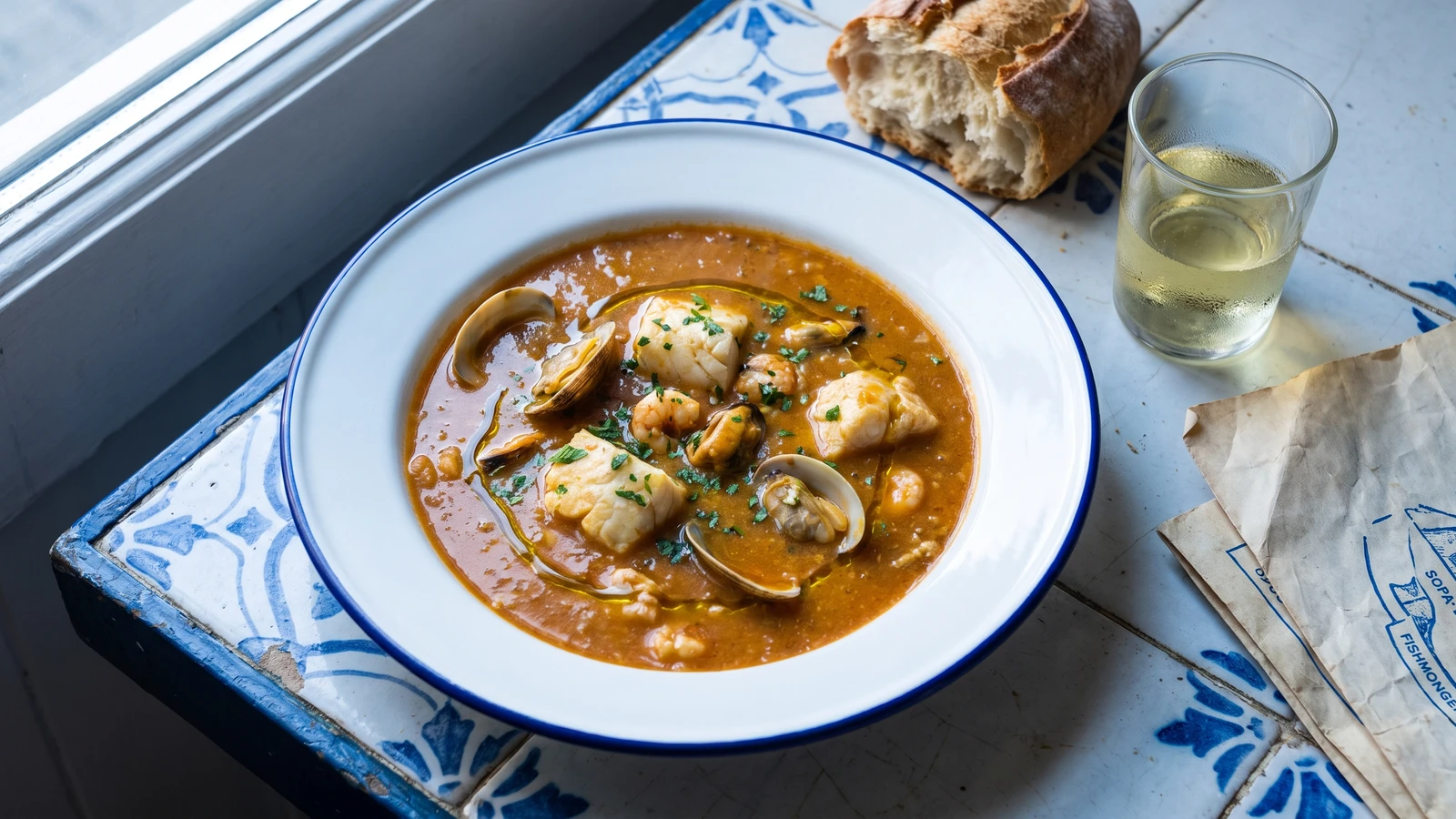
Sopa de pescado a la Donostiarra belongs to San Sebastián: a deep fish stock, slow vegetables, dense sopako bread, and the shellfish added only at the end.
Sopa de pescado a la Donostiarra is Basque, from San Sebastián, and it is not a thin fish broth with a few polite pieces floating in it. It is cocina de cuchara, spoon food: a stock made from rockfish heads, bones, and shells, a slow sofrito, the onion base cooked until sweet, and sopako bread that thickens the soup until it holds the taste of the sea.
The method that decides it is the stock. Use heads and bones from hake, monkfish, red mullet, gurnard, or any good rockfish your fishmonger has, plus shrimp shells if you have them. Simmer gently and briefly, then strain hard. Boil it for an hour and you pull bitterness from the bones. Treat it well and the soup tastes deep without turning heavy.
If you can't find pan sopako, use a dense stale country loaf, toasted dark, not soft sandwich bread. It won't taste exactly of Donostia, but it will give the soup its body. Add the clams, mussels, and hake at the end, because shellfish waits for no one. Siempre sale, si lo sigues.
Sopa de pescado a la Donostiarra belongs to the fishing kitchens of Donostia, San Sebastián, where fish bones, heads, and shells were never waste but the base of a serious soup. Pan sopako, the hard bread kept for soups, gave body to a stock that had to feed a table from what the boats and market left behind. The Donostiarra version is known for its depth and its restraint: strong fish stock, slow vegetables, bread, and seafood added late enough to stay tender.
Quantity
1kg
from hake, monkfish, gurnard, red mullet, or rockfish
Quantity
250g
peeled, shells reserved
Quantity
2 litres
Quantity
1
cleaned and roughly chopped
Quantity
1
halved
Quantity
1
roughly chopped
Quantity
1
Quantity
40ml
Quantity
1 large
finely chopped
Quantity
1
finely chopped
Quantity
1
finely diced
Quantity
2 cloves
minced
Quantity
200g
grated
Quantity
1 tablespoon
Quantity
1 teaspoon
Quantity
100g
toasted and broken up
Quantity
80ml
Quantity
500g
scrubbed
Quantity
500g
scrubbed and debearded
Quantity
350g
skinless, boneless, cut into 3cm pieces
Quantity
to taste
Quantity
2 tablespoons
chopped
| Ingredient | Quantity |
|---|---|
| fish heads, bones, and trimmingsfrom hake, monkfish, gurnard, red mullet, or rockfish | 1kg |
| raw shrimp with shellspeeled, shells reserved | 250g |
| cold water | 2 litres |
| leek for stockcleaned and roughly chopped | 1 |
| onion for stockhalved | 1 |
| carrot for stockroughly chopped | 1 |
| bay leaf | 1 |
| olive oil | 40ml |
| onionfinely chopped | 1 large |
| leekfinely chopped | 1 |
| carrotfinely diced | 1 |
| garlicminced | 2 cloves |
| ripe tomatograted | 200g |
| choricero pepper pulp (optional) | 1 tablespoon |
| sweet pimentón (optional) | 1 teaspoon |
| pan sopako or dense stale country breadtoasted and broken up | 100g |
| dry white wine or txakoli | 80ml |
| clamsscrubbed | 500g |
| musselsscrubbed and debearded | 500g |
| hake filletskinless, boneless, cut into 3cm pieces | 350g |
| salt | to taste |
| parsleychopped | 2 tablespoons |
Rinse the fish heads and bones under cold water. Put them in a large pot with the shrimp shells, cold water, leek, onion, carrot, and bay leaf. Bring slowly to a bare simmer, skim the foam, and cook gently for 25 minutes. Do not boil it hard; fish bones give what they have quickly, then turn bitter.
Strain the stock through a fine sieve, pressing lightly on the solids but not crushing them into paste. You should have about 1.5 litres. If you have more, reduce it gently for a few minutes. If you have less, add a little water. Keep it warm.
Warm the olive oil in a heavy pot. Add the chopped onion, leek, carrot, and a pinch of salt, then cook over low heat for 20 to 25 minutes, stirring now and then, until soft, dark gold, and sweet. This slow sofrito is the floor of the soup. Rush it and the whole pot tastes thinner.
Stir in the garlic for 1 minute, then add the grated tomato and cook until the liquid is gone and the oil shows at the edges, about 8 minutes. Add the choricero pepper pulp, or the pimentón off the heat so it does not scorch. Stir in the toasted sopako bread and the wine, scraping the bottom of the pot.
Pour in the warm fish stock, bring to a gentle simmer, and cook for 20 minutes, until the bread has softened and thickened the soup. Blend until smooth, then pass through a sieve if you want the Donostiarra texture especially fine. Taste for salt only now, because the shellfish will bring its own.
Return the soup to the pot and keep it at a gentle simmer. Add the clams and mussels, cover, and cook for 3 to 5 minutes, removing them as they open. Discard any that stay closed. Add the hake and peeled shrimp, then cook 3 minutes more, just until the fish turns opaque and flakes at the edge.
Return the opened shellfish to the pot or divide them among bowls. Ladle over the thick red-gold soup with pieces of hake and shrimp in each serving. Finish with chopped parsley and a thin thread of olive oil if you like. Serve with bread for the bowl, because leaving that last spoonful behind would be poor judgement.
1 serving (about 535g)
Culinary guides, cultural storytelling, and the editorial depth that makes cooking meaningful.
Discover Culinary ExplorerChef Isabel
Aguaillo is from the Sierra de Cadiz: cold water, stale bread, garlic, oil and vinegar, closer to a field drink than a bowl of soup, and sharp enough to wake you in the heat.

Chef Isabel
Ajilimojili is Jaen's tomato-free cold soup: potato, roasted red pepper, garlic, olive oil, and vinegar pounded into a cool, silky spoonful.

Chef Isabel
Ajo carretero is Soriano, from the pine country of Soria: lamb cooked in a plain garlicky broth, then served the old way, meat first and bread-soaked soup after.

Chef Isabel
Ajoblanco Extremeño is the poor-kitchen cold soup of Extremadura: bread, garlic, oil, egg yolk, vinegar, and icy water, with no almonds. Whisk it slowly and serve it bien fresquito.