
Chef Isabel
Aguaillo de la Sierra de Cadiz
Aguaillo is from the Sierra de Cadiz: cold water, stale bread, garlic, oil and vinegar, closer to a field drink than a bowl of soup, and sharp enough to wake you in the heat.
A cooking platform built around craft, culture, and the stories behind what we eat.
Created by
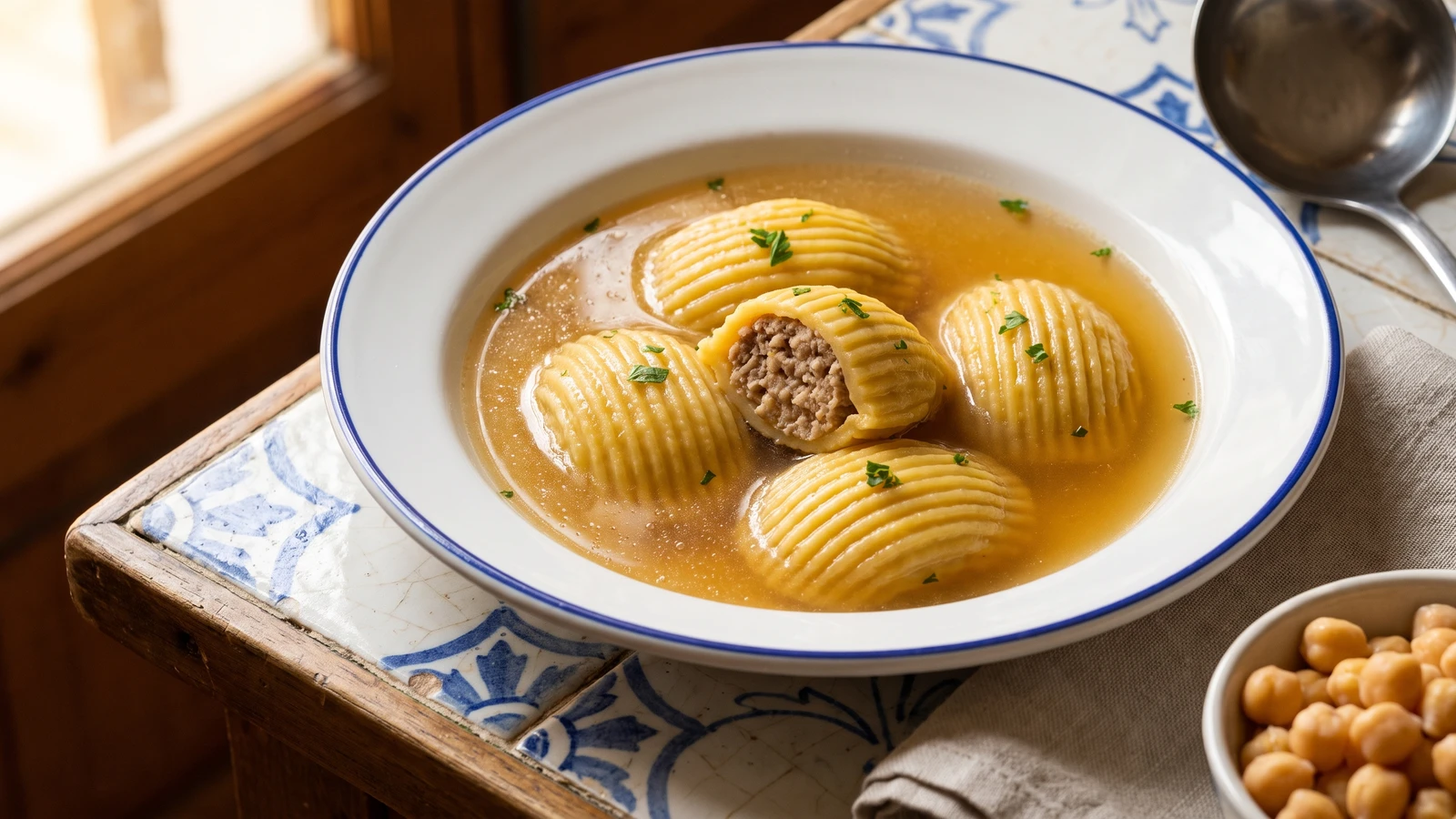
Sopa de galets is Catalonia's Christmas soup, with great shell pasta stuffed with pilota and cooked in a clean escudella broth. Strain the caldo well, and the galets stay glossy.
Sopa de galets is Catalan, the Christmas soup that opens the table before the carn d'olla, the boiled meats and vegetables from the escudella. What makes it itself is the size of the pasta, those big snail-shaped galets, and the pilota, the seasoned meat mixture tucked inside each shell so every spoonful carries broth, pasta, and meat together.
The method that decides it is the broth. Make the escudella slowly with bones, chicken, pork, beef, vegetables, and chickpeas if you use them, then strain it clean before the pasta goes in. A cloudy broth still feeds you, no shame, but a clean caldo lets the galets cook glossy instead of heavy and grey. Do not boil the stuffed shells hard. They are not stones.
If you are far from Catalonia, no hace falta haber pisado España. Use the largest shell pasta you can find if true galets are missing, and stuff them gently with a piping bag or a teaspoon. The shape will be a little different, but the dish still works if the broth is good and the filling is seasoned properly. Siempre sale, si lo sigues.
In the Margin of my notebook, this one has only a warning: count the galets. People pretend they want a small bowl at Christmas, then look offended when the pot is empty.
Sopa de galets belongs to the Catalan Christmas escudella i carn d'olla, the great boiled dinner in which the broth is served first and the meats, vegetables, chickpeas, and pilota follow. The large galet pasta became the festive mark of the soup, especially when filled with pilota, a minced pork and beef mixture seasoned with garlic, parsley, egg, and bread. It is a dish of abundance, but also of order: one pot gives the family both the clear caldo and the second course.
Quantity
300g
Quantity
250g
Quantity
250g
Quantity
1
Quantity
40g
Quantity
2 tablespoons
Quantity
2 cloves
finely grated
Quantity
12g
finely chopped
Quantity
8g, divided
Quantity
1/2 teaspoon
Quantity
2 tablespoons
for dusting
Quantity
600g
Quantity
400g
in one piece
Quantity
250g
Quantity
1 bone or 150g
Quantity
1
Quantity
200g
soaked overnight
Quantity
2
cleaned and halved
Quantity
2
peeled
Quantity
1 large
peeled and halved
Quantity
1
Quantity
1 small
peeled
Quantity
1 small
peeled
Quantity
1/4 head
Quantity
3.5 litres, plus more as needed
| Ingredient | Quantity |
|---|---|
| large galets or largest dried shell pasta | 300g |
| minced pork | 250g |
| minced beef | 250g |
| large egg | 1 |
| fresh breadcrumbs | 40g |
| whole milk | 2 tablespoons |
| garlicfinely grated | 2 cloves |
| flat-leaf parsleyfinely chopped | 12g |
| fine salt | 8g, divided |
| freshly ground black pepper | 1/2 teaspoon |
| plain flourfor dusting | 2 tablespoons |
| chicken thighs or half small hen | 600g |
| beef shin or brisketin one piece | 400g |
| pork ribs or pork neck bones | 250g |
| ham bone or serrano ham end | 1 bone or 150g |
| beef marrow bone (optional) | 1 |
| dried chickpeas (optional)soaked overnight | 200g |
| leekscleaned and halved | 2 |
| carrotspeeled | 2 |
| onionpeeled and halved | 1 large |
| celery stalk | 1 |
| turnippeeled | 1 small |
| parsnip (optional)peeled | 1 small |
| green cabbage (optional) | 1/4 head |
| cold water | 3.5 litres, plus more as needed |
Put the chicken, beef, pork bones, ham bone, marrow bone if using, soaked chickpeas, leeks, carrots, onion, celery, turnip, parsnip if using, and cabbage if using into a tall heavy pot. Add 3.5 litres cold water and bring it slowly to a bare simmer. Skim the grey foam that rises in the first 20 minutes; it is dull work, but it gives you the clean caldo this soup needs.
Lower the heat and hold the pot at the gentlest simmer for 2 hours 45 minutes to 3 hours, topping up with hot water only if the meats are no longer covered. Do not let it boil hard. A hard boil breaks fat into the broth and makes it cloudy; slow heat draws out flavour and leaves you something clear enough for Christmas.
While the broth cooks, soak the breadcrumbs in the milk for 5 minutes. Mix them with the pork, beef, egg, garlic, parsley, 6g of the salt, and the black pepper until the mixture is sticky and holds together. That stickiness matters; it keeps the pilota inside the galets instead of floating out into the pot.
Fill a piping bag with the pilota mixture, or use a small spoon if that is what you have. Stuff each dry galet firmly but without cracking it, then lightly dust the openings with a little flour. Set them in one layer on a tray. Count on 8 to 10 large galets per person, depending on their size and the appetite at your table.
Lift the meats, vegetables, and chickpeas from the pot and save them for carn d'olla or another meal. Strain the broth through a fine sieve into a clean pot, then let it settle 5 minutes and skim the surface fat if there is too much. Taste and add the remaining 2g salt only if it needs it. The broth should taste full, clean, and gently salted.
Bring 2.2 litres of the strained caldo to a steady simmer in a wide pot. Slide in the stuffed galets one by one and cook gently, stirring only enough to keep them from catching, until the pasta is tender and the pilota is cooked through, 18 to 22 minutes depending on the brand. Keep the broth moving softly, not jumping. A fierce boil tears the shells and wastes the work.
Ladle the galets into warm deep bowls and cover them with the clear caldo. Serve at once, with extra broth at the table if the pasta drinks too much. The shells should be tender, glossy, and full, the broth golden and clean. Tal como se hace allí, with no trick hiding in it.
1 serving (about 600g)
Culinary guides, cultural storytelling, and the editorial depth that makes cooking meaningful.
Discover Culinary ExplorerChef Isabel
Aguaillo is from the Sierra de Cadiz: cold water, stale bread, garlic, oil and vinegar, closer to a field drink than a bowl of soup, and sharp enough to wake you in the heat.

Chef Isabel
Ajilimojili is Jaen's tomato-free cold soup: potato, roasted red pepper, garlic, olive oil, and vinegar pounded into a cool, silky spoonful.

Chef Isabel
Ajo carretero is Soriano, from the pine country of Soria: lamb cooked in a plain garlicky broth, then served the old way, meat first and bread-soaked soup after.

Chef Isabel
Ajoblanco Extremeño is the poor-kitchen cold soup of Extremadura: bread, garlic, oil, egg yolk, vinegar, and icy water, with no almonds. Whisk it slowly and serve it bien fresquito.