
Chef Lupita
Aguascalientes Beef Tongue Pozole (Pozole de Lengua)
Aguascalientes' Bajio pozole de lengua, built with cacahuazintle hominy, tender beef tongue, chile ancho and guajillo, with xoconostle brightness and table garnishes.
A cooking platform built around craft, culture, and the stories behind what we eat.
Created by
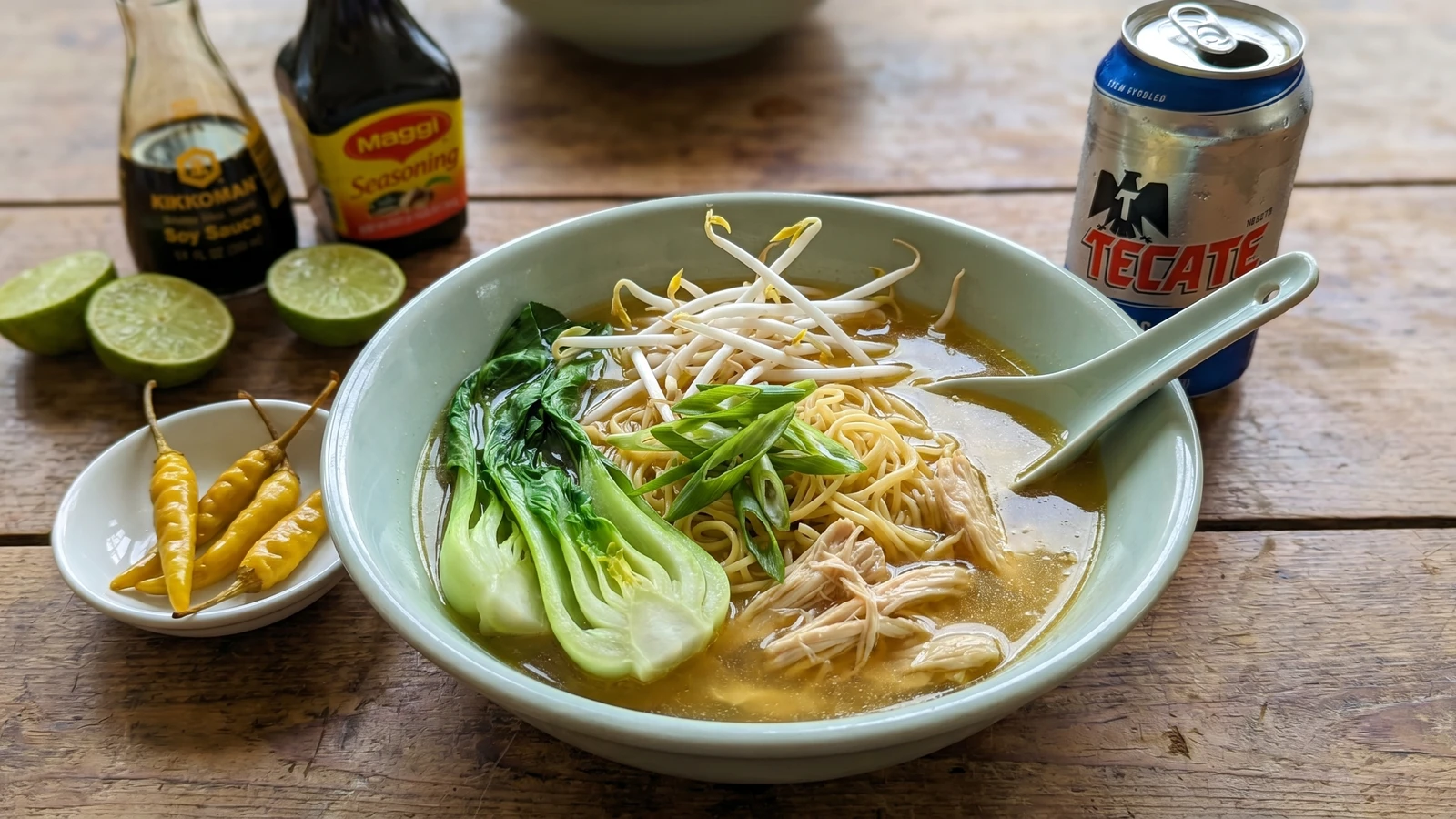
Mexicali's Cantonese-Mexican fideo chino: thin egg noodles in a clear chicken-bone broth with ginger, garlic, soy, and shredded chicken. A weeknight pot from La Chinesca, finished at the table with lime and fried yellow chiles.
This is a Mexicali dish. Baja California, on the border with Calexico, in the only neighborhood in Mexico called La Chinesca, the Chinatown that the Cantonese workers who came north to build the railroads and irrigate the Valle de Mexicali made their own a hundred years ago. The dish is fideo chino, sopa china, and it belongs to that neighborhood the way mole poblano belongs to Puebla.
Do not call it fusion. Fusion is a marketing word for cooks who borrow what they do not understand. Cocina chicalense is a tradition with its own century-long history: Cantonese cooks who learned to read a Mexican market, Mexican cooks who learned to keep a wok hot, and the second and third generation that grew up eating both at the same table. The broth is chicken bones, ginger, garlic, scallion, and soy. The noodle is thin egg or rice vermicelli, what you find at any tiendita in La Chinesca. The fried yellow chile in escabeche on the side is what makes it Mexicali and not Guangzhou.
My mother did not cook this. She was from Jalisco and her notebook had no fideo chino in it. I learned this dish from a senora named Dona Mercedes at a small lonchera off Avenida Reforma in Mexicali, who told me her grandfather came from Toishan in 1919 and her grandmother was from Sonora, and the soup was what they ate on weeknights for sixty years. She made me write it down twice. Saber cocinar es saber vivir, and Mexicali has been living this way longer than most people outside Baja realize.
Mexicali's Chinese community took root in the early 20th century when Cantonese laborers, many from the Toishan and Pearl River Delta regions, were recruited to dig the irrigation canals of the Colorado River Land Company in the Valle de Mexicali between 1903 and 1920. By the 1920s Mexicali had the largest Chinese population of any Mexican city, and La Chinesca, much of it built into a network of underground tunnels to escape the desert heat, became the cultural and commercial center of cocina chicalense. The Cantonese-Mexican kitchen that emerged, with dishes like sopa china, chow mein de res, and the local wonton, is recognized today as a distinct regional Mexican cuisine, and Mexicali's restaurants serving it predate by decades the Chinese-American restaurants that became famous in California.
Quantity
3 pounds
Quantity
1 (about 1 pound)
Quantity
12 cups
Quantity
1 medium
halved
Quantity
1
halved crosswise
Quantity
4
smashed
Quantity
1 piece (about 3 inches)
sliced into coins
Quantity
6
white parts smashed, green parts thinly sliced and reserved
Quantity
2 tablespoons, plus more for the table
Quantity
1 tablespoon, plus more to taste
Quantity
1 teaspoon
Quantity
8 ounces
Quantity
2 tablespoons
Quantity
2
quartered lengthwise
Quantity
1
julienned
Quantity
1 cup
Quantity
for serving
Quantity
for serving
Quantity
for serving
Quantity
for serving
| Ingredient | Quantity |
|---|---|
| chicken backs, necks, and wings (huacales de pollo) | 3 pounds |
| bone-in, skin-on chicken breast | 1 (about 1 pound) |
| cold water | 12 cups |
| white onionhalved | 1 medium |
| head of garlichalved crosswise | 1 |
| garlic clovessmashed | 4 |
| fresh gingersliced into coins | 1 piece (about 3 inches) |
| scallionswhite parts smashed, green parts thinly sliced and reserved | 6 |
| soy sauce | 2 tablespoons, plus more for the table |
| kosher salt | 1 tablespoon, plus more to taste |
| whole black peppercorns | 1 teaspoon |
| thin Chinese egg noodles or rice vermicelli (fideo chino) | 8 ounces |
| vegetable oil | 2 tablespoons |
| baby bok choyquartered lengthwise | 2 |
| small carrotjulienned | 1 |
| bean sprouts | 1 cup |
| lime halves (optional) | for serving |
| fried yellow chiles (chiles guerros en escabeche) (optional) | for serving |
| soy sauce (optional) | for serving |
| Maggi sauce (optional) | for serving |
Place the chicken backs, necks, wings, and the bone-in breast in a heavy stockpot. Cover with the cold water. Bring up to a gentle simmer over medium heat. Skim the gray foam that rises in the first fifteen minutes and discard it. Cold water and a slow rise pull the flavor out of the bones cleanly. A rolling boil clouds the broth, and a cloudy broth has no place in a sopa china. The clarity is the point.
Once the broth is clean, add the halved onion, halved head of garlic, ginger coins, the smashed white parts of the scallions, the soy sauce, salt, and peppercorns. Lower the heat until you see a few lazy bubbles per second. Partially cover and simmer for one hour. Pull the chicken breast out at the 30-minute mark and set it aside to cool. Let the bones keep going.
When the breast is cool enough to handle, pull the skin off, take the meat off the bone, and shred it with your fingers into long, thin pieces. Return the bones and skin to the pot to keep simmering. Cover the shredded meat and set aside. You want it ready to drop into the bowls at the end.
After the full hour, strain the broth through a fine-mesh sieve lined with cheesecloth into a clean pot. Discard the bones and aromatics. You should have about 8 cups of clear, golden broth that smells of ginger and chicken in equal measure. Taste for salt now. The broth is the dish. If it tastes flat in the pot, it will taste flat in the bowl.
Heat the vegetable oil in a small skillet over medium. Add the smashed garlic cloves and let them turn golden, about one minute, then fish them out. If you are using rice vermicelli, leave it as it comes from the package. If you are using thin egg noodles in a coiled nest, break them into rough pieces over the skillet and toast them in the garlic-scented oil for about a minute, just until they smell nutty. This is the touch the Cantonese-Mexican cooks of La Chinesca brought to the dish: a quick fry in fat before the broth hits, the same way a Mexican grandmother toasts fideo for sopa de fideo. Two traditions, same instinct.
Pour the toasted noodles and their oil back into the pot of broth. Bring it up to a gentle simmer. Add the carrot julienne and the bok choy. Egg noodles take about three to four minutes. Rice vermicelli takes two. Pull the pot off the heat the moment the noodles are tender but still have a little bite. Overcooked noodles turn this dish into porridge.
Stir the shredded chicken back in to warm it through, about 30 seconds. Ladle into deep bowls. Top each bowl with a generous handful of bean sprouts and the reserved sliced scallion greens. Set the limes, fried yellow chiles, soy sauce, and Maggi on the table. Each person finishes their own bowl. A squeeze of lime, a few drops of Maggi, a fried guerro on the side. Asi se hace y punto.
1 serving (about 480g)
Culinary guides, cultural storytelling, and the editorial depth that makes cooking meaningful.
Discover Culinary ExplorerChef Lupita
Aguascalientes' Bajio pozole de lengua, built with cacahuazintle hominy, tender beef tongue, chile ancho and guajillo, with xoconostle brightness and table garnishes.

Chef Lupita
Veracruz's Gulf coast rice from Alvarado, built with seafood stock, tomato, chile chipotle, epazote, shrimp, fish, jaiba, and pulpo, served loose and brothy in a clay cazuela.

Chef Lupita
Costa Chica's wet salt-beef stew, built from chile costeño, guajillo, tomato, manteca, yuca, plantain, and masa dumplings, the ranching pot of Cuajinicuilapa and Pinotepa.

Chef Lupita
Michoacán's P'urhépecha atápakua is a masa-thickened sauce and stew at once, built with pork, chile guajillo, and hierbabuena added only at the end.