Chef Juliette
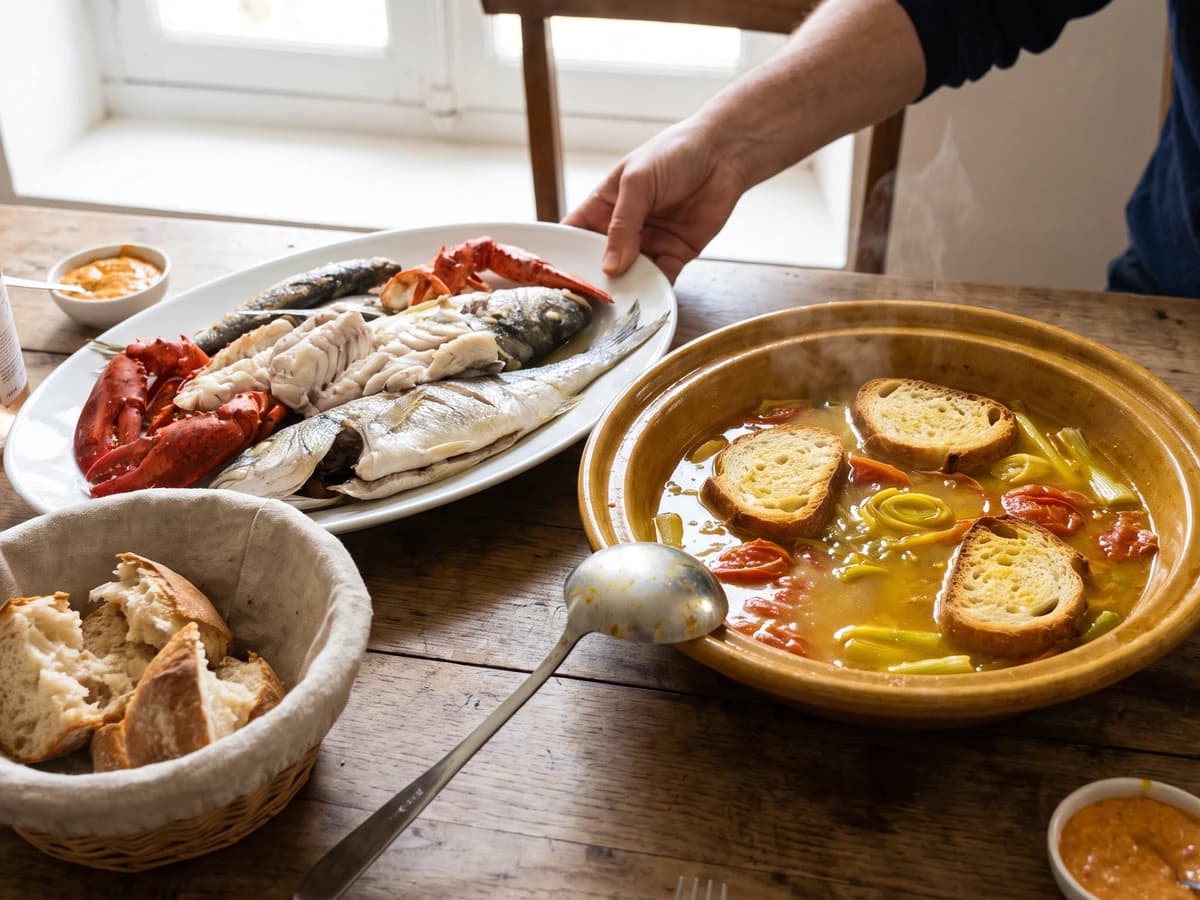
Bouillabaisse à la Marseillaise
Marseille's great fish stew, saffron-gold and garlic-scented, proves that a hard boil can be the careful choice: it binds olive oil into broth before the whole pot meets bread.
A cooking platform built around craft, culture, and the stories behind what we eat.

Created by
The red bean soup of Beira's mountains, where shepherds and farmers have warmed themselves against the cold for centuries. Thick with potatoes, perfumed with bay, rich with chouriço. Peasant genius in a bowl.
Ifirst tasted this soup in a village near Guarda, sitting in the kitchen of a woman named Dona Emília who had been making it for seventy years. She was ninety-three. Her hands shook when she poured the azeite, but she knew exactly how much by feel. A cozinha é memória.
This is mountain food. Beira food. The kind of cooking that happens when winters are long and the work is hard and you need something that sticks to your ribs and warms you from the inside out. Feijão encarnado, batatas, chouriço, louro. Red beans, potatoes, chouriço, bay. Nothing fancy. Everything essential.
The secret is patience. The beans need time to soften. The refogado needs time to sweeten. The potatoes need time to break down and thicken the broth. Dona Emília told me her mother made this soup the same way, and her grandmother before that. Four generations at least. Probably more. That's what I'm trying to preserve.
At Mesa da Avó, we serve this on the coldest nights of winter. People arrive shivering and leave warm. The bowls come back empty, scraped clean with bread. That's how you know a soup is right. When there's nothing left but the satisfaction of having eaten something that fed not just your body but your sense of where you come from.
Sopa de feijão encarnado has sustained the people of Beira Interior for centuries, emerging from a region where harsh mountain winters demanded calorie-dense, warming meals. Red kidney beans arrived in Portugal from the Americas in the 16th century and quickly became a staple of peasant cooking, cheaper than meat and just as filling. The addition of chouriço and presunto reflects the Beira tradition of matança, the annual pig slaughter that provided preserved meats to last through winter.
Quantity
300g
soaked overnight
Quantity
200g
sliced into thick rounds
Quantity
150g
in one piece
Quantity
500g
peeled and cubed
Quantity
1 large
diced
Quantity
4 cloves
minced
Quantity
3
Quantity
1/4 cup, plus more for serving
Quantity
2 liters
Quantity
1 teaspoon
Quantity
to taste
Quantity
to taste
freshly ground
Quantity
for serving
chopped
Quantity
for serving
| Ingredient | Quantity |
|---|---|
| dried red kidney beans (feijão encarnado)soaked overnight | 300g |
| chouriçosliced into thick rounds | 200g |
| presunto or baconin one piece | 150g |
| potatoespeeled and cubed | 500g |
| oniondiced | 1 large |
| garlicminced | 4 cloves |
| bay leaves | 3 |
| extra virgin olive oil (azeite) | 1/4 cup, plus more for serving |
| water | 2 liters |
| sweet paprika (pimentão doce) | 1 teaspoon |
| salt | to taste |
| black pepperfreshly ground | to taste |
| fresh parsleychopped | for serving |
| crusty bread | for serving |
Drain the soaked beans and place them in a large heavy pot with the 2 liters of fresh water, bay leaves, and the piece of presunto or bacon. Bring to a boil, then reduce to a gentle simmer. Let the beans cook until they're tender but not falling apart, about 45 minutes to 1 hour. The presunto will perfume the broth while the beans soften. This is the foundation. Don't rush it.
While the beans simmer, heat the olive oil in a small pan over medium-low heat. Add the diced onion and cook slowly until soft and golden, about 12 minutes. Add the garlic and paprika in the last minute, stirring until fragrant. This refogado is the soul of the soup. Não tenhas pressa. The onion should practically melt.
When the beans are tender, add the refogado to the pot along with the cubed potatoes. Stir to combine. The potatoes will cook in the bean broth, absorbing all that flavor. Continue simmering for another 20 to 25 minutes until the potatoes are completely soft.
Remove the piece of presunto and set aside. Using a wooden spoon or potato masher, crush some of the beans and potatoes against the side of the pot. You want about half mashed, half whole. This gives the soup its characteristic thickness, that velvety body that coats the spoon. The grandmothers in Beira never used blenders. Neither do I.
Add the sliced chouriço to the pot and let it simmer for 10 more minutes. The fat will render into the soup, turning it slightly orange and adding that smoky depth that makes this dish what it is. Now taste. Season with salt and pepper. Remember, the presunto and chouriço are already salty, so go carefully.
Remove the bay leaves. Ladle the soup into deep bowls, making sure each portion gets plenty of beans, potatoes, and chouriço. Drizzle with your best azeite. Scatter fresh parsley over the top. Slice the reserved presunto and add a piece to each bowl if you like. Serve immediately with thick slices of crusty bread for dipping. This is a meal. This is what warmth tastes like.
1 serving (about 500g)
Culinary guides, cultural storytelling, and the editorial depth that makes cooking meaningful.
Discover Culinary ExplorerChef Juliette
Marseille's great fish stew, saffron-gold and garlic-scented, proves that a hard boil can be the careful choice: it binds olive oil into broth before the whole pot meets bread.
Chef Juliette
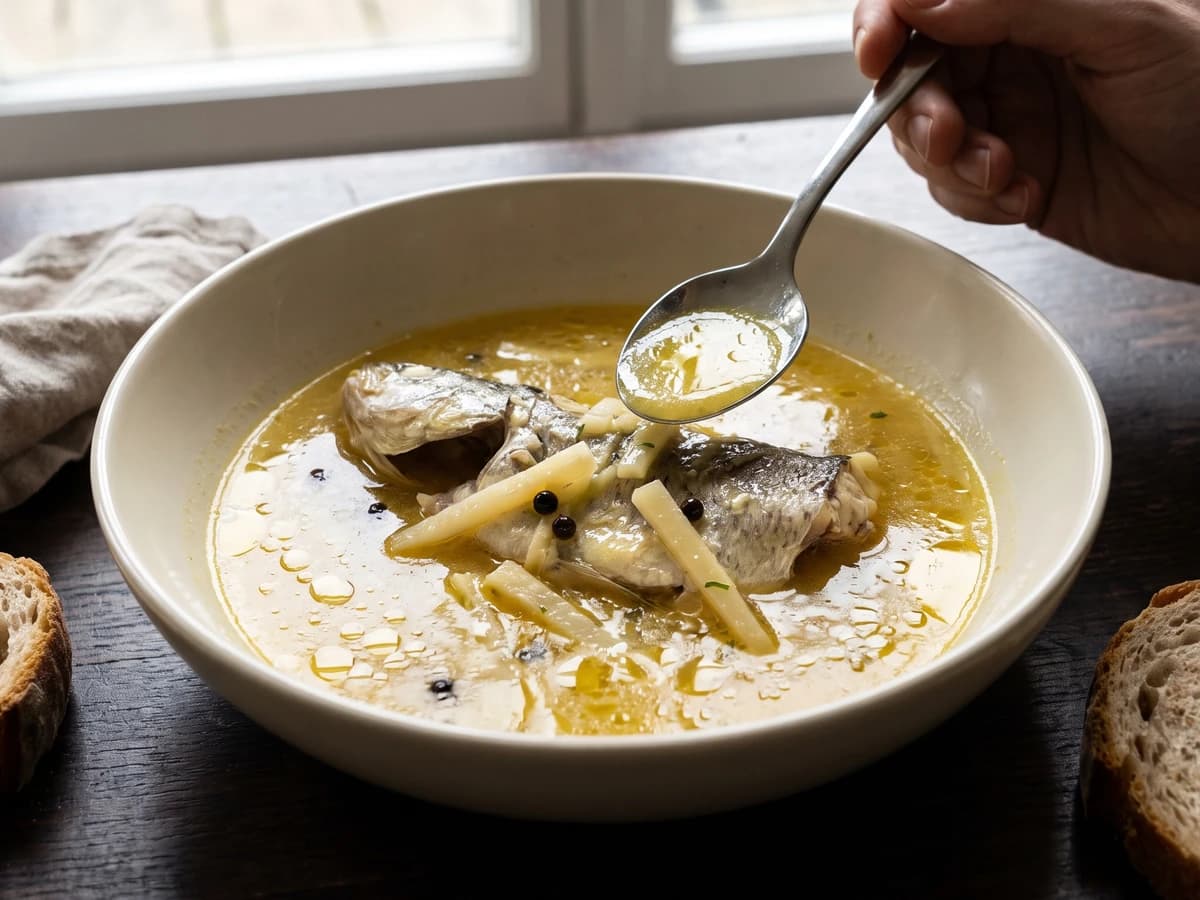
Waterzoi asks fresh, bone-in river fish to thicken its own buttery broth, with parsley root and pepper for company. No flour, no stockpot, just a brisk simmer watched closely.
Chef Juliette
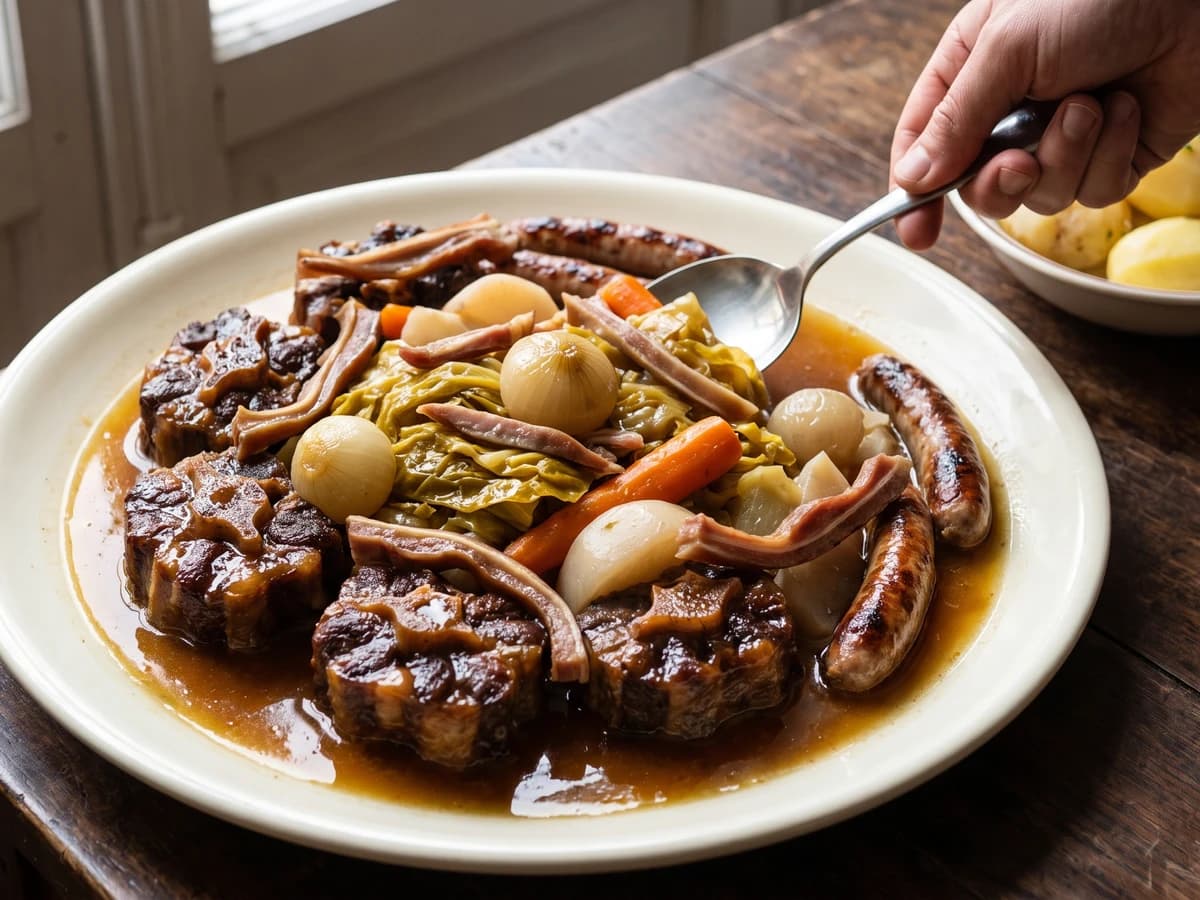
Queue de Bœuf en Hochepot gathers oxtail, pig's trotter and ear, cabbage, roots, and grilled chipolatas around a clear, gelatin-rich broth whose quiet simmer keeps every piece tender and distinct.
Chef Juliette
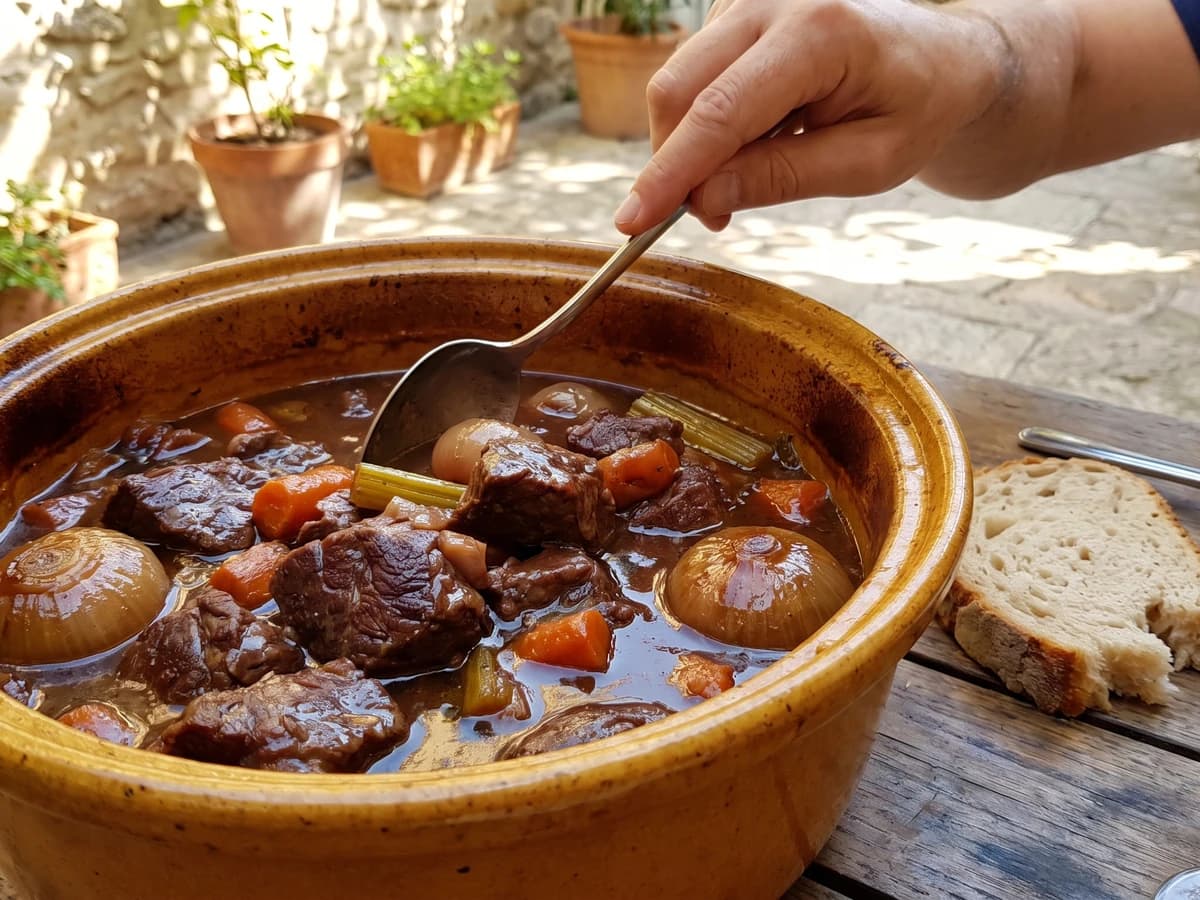
Beef shoulder larded with bacon, sharpened by red wine and vinegar, then sealed with garlic, vegetables, and dry lemon peel until the low oven turns it yielding and the gravy darkly glossy.