
Chef Isabel
Aguaillo de la Sierra de Cadiz
Aguaillo is from the Sierra de Cadiz: cold water, stale bread, garlic, oil and vinegar, closer to a field drink than a bowl of soup, and sharp enough to wake you in the heat.
A cooking platform built around craft, culture, and the stories behind what we eat.
Created by
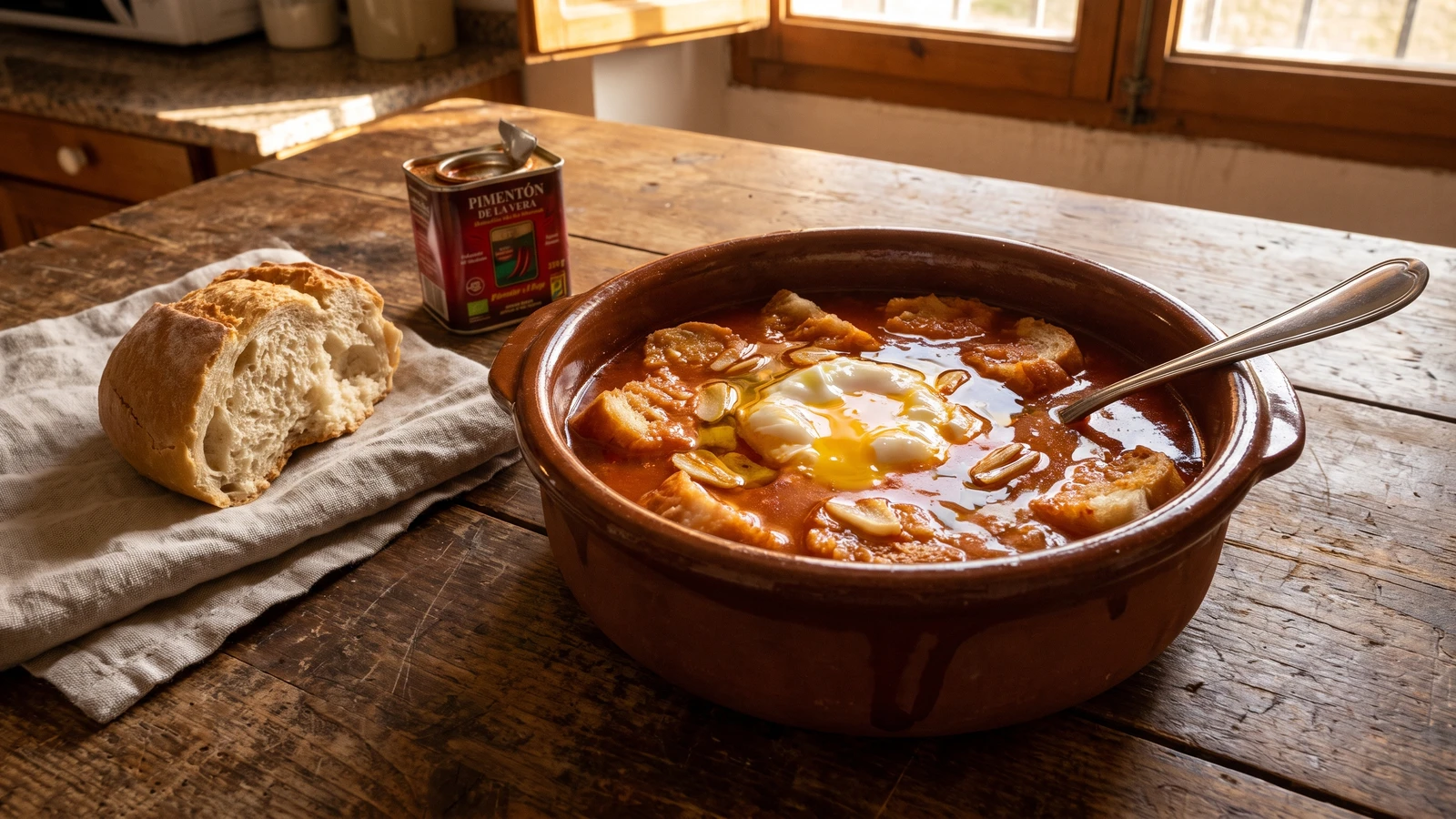
Sopa de ajo is Castilian cocina de cuchara: stale bread, garlic, pimentón, and broth turned into supper, with the egg poached right in the soup.
Sopa de Ajo Castellana belongs to Castile, the hard inland country where bread is never thrown away and garlic is allowed to do honest work. Day-old bread, sliced garlic, pimentón, broth or water, and an egg. That is the dish. It isn't a rich stew pretending to be poor. It is poor cooking that knows exactly what it is doing.
The step that decides it is the pimentón. Fry the garlic until it is pale gold, not brown, add the bread so it drinks the oil, then pull the pan off the heat before the pimentón goes in. Pimentón burns quickly and turns bitter. Off the heat it blooms sweet and red, staining the oil and giving the soup its Castilian backbone.
If you can't find pan candeal or a Spanish hogaza where you are, use a day-old country loaf with a tight crumb. Not sandwich bread. It falls apart into paste and gives you a sad bowl. A light chicken broth gives more body, water gives the leaner Lenten version, tal como se hace en many Castilian homes during Semana Santa.
Poach the eggs gently in the soup, one per person, until the whites set and the yolks stay soft. Break the yolk into the broth at the table and you'll understand why the recipe has lasted. Siempre sale, si lo sigues.
Sopa de ajo is rooted in Castile's inland cooking, where bread, garlic, olive oil, and pimentón made a filling meal from a lean pantry. It has long belonged to cocina de cuchara, spoon food, and to the Lenten table, especially around Semana Santa, when meatless versions were served after church or on cold nights. In many Castilian houses the soup was also breakfast for shepherds and field workers, because stale bread and garlic traveled better than fresh provisions.
Quantity
120g
cut into 1cm slices
Quantity
8 large
thinly sliced
Quantity
4 tablespoons
Quantity
1 tablespoon
Quantity
1.2 liters
Quantity
1
Quantity
4
Quantity
1 teaspoon, plus more to taste
Quantity
to taste
| Ingredient | Quantity |
|---|---|
| day-old pan candeal or country breadcut into 1cm slices | 120g |
| garlic clovesthinly sliced | 8 large |
| extra virgin olive oil | 4 tablespoons |
| sweet pimentón de la Vera | 1 tablespoon |
| light chicken broth, vegetable broth, or water | 1.2 liters |
| bay leaf | 1 |
| large eggs | 4 |
| fine sea salt | 1 teaspoon, plus more to taste |
| freshly ground black pepper (optional) | to taste |
Cut the day-old bread into thin slices or rough bite-size pieces, keeping the crusts. If the bread is fresh, leave it uncovered for a few hours so it firms up. You want bread that can drink the broth without dissolving at once.
Warm the olive oil in a wide cazuela or heavy saucepan over medium-low heat. Add the sliced garlic and cook gently for 2 to 3 minutes, stirring, until it turns pale gold at the edges. Do not brown it. Dark garlic tastes harsh, and this soup has nowhere to hide that mistake.
Add the bread to the garlicky oil and turn it for 2 minutes, until the slices take on shine and a few toasted spots. The bread should smell nutty and soak up the oil, but it should not scorch.
Take the pan off the heat. Sprinkle in the pimentón and stir for 10 seconds so it stains the oil and bread red. This is the step that decides the soup: pimentón must bloom, not burn. Put it over heat and it goes bitter before you've had time to apologize.
Pour in the broth or water at once, add the bay leaf and salt, and return the pan to medium heat. Bring it to a gentle simmer, then lower the heat and cook for 12 to 15 minutes, until the bread softens and thickens the broth lightly. Stir now and then, breaking only some of the bread so the soup keeps body.
Crack each egg into a small cup. Make four shallow spaces in the soup and slide in the eggs one by one. Cover and simmer gently for 3 to 5 minutes, until the whites are set and the yolks are still soft. Taste the broth for salt before serving.
Ladle the soup into warm bowls, giving each person one egg and plenty of bread. Finish with black pepper if you like. Break the yolk into the pimentón-red broth at the table and eat it straight away, while the bread is soft but still has a little shape.
1 serving (about 375g)
Culinary guides, cultural storytelling, and the editorial depth that makes cooking meaningful.
Discover Culinary ExplorerChef Isabel
Aguaillo is from the Sierra de Cadiz: cold water, stale bread, garlic, oil and vinegar, closer to a field drink than a bowl of soup, and sharp enough to wake you in the heat.

Chef Isabel
Ajilimojili is Jaen's tomato-free cold soup: potato, roasted red pepper, garlic, olive oil, and vinegar pounded into a cool, silky spoonful.

Chef Isabel
Ajo carretero is Soriano, from the pine country of Soria: lamb cooked in a plain garlicky broth, then served the old way, meat first and bread-soaked soup after.

Chef Isabel
Ajoblanco Extremeño is the poor-kitchen cold soup of Extremadura: bread, garlic, oil, egg yolk, vinegar, and icy water, with no almonds. Whisk it slowly and serve it bien fresquito.