
Chef Lupita
Aceite de Chiltepin Bajacaliforniano
Baja California's wild chiltepin steeped in olive oil with garlic, orejon, and lime peel, until the oil turns ruby-amber and carries the slow, sneaky burn of the desert coast.
A cooking platform built around craft, culture, and the stories behind what we eat.

Created by
Sonora's norteño pico de gallo, cut large for the parrilla, built on tomate saladet, cebolla blanca, and the wild chiltepín of the desert sierras. The salsa that rides on top of carne asada wrapped in a flour tortilla sobaquera.
This is from Sonora. Specifically from the north of Sonora and the borderlands that stretch into Chihuahua, where the parrilla is the center of the table and the tortilla is flour, not corn. The salsa that sits next to a Sonoran carne asada is not the same salsa you find in Mexico City. The cut is bigger. The chile is different. The whole thing is built for a different kind of meal.
The chile is chiltepín. Not jalapeño. Not serrano. Chiltepín. The wild pea-sized berry that grows in the desert sierras of Sonora, harvested by hand by chiltepineros who walk the monte at the end of the rainy season looking for the red and green berries on thorny bushes. It is the only chile native to what is now northern Mexico that was never fully domesticated, and Sonorans treat it accordingly. The heat is sharp and clean and disappears as fast as it arrives. A pico made with chiltepín tastes like the desert. A pico made with jalapeño tastes like a different state.
The other rule is the cut. Mexico City pico is fine-diced. Sonoran pico is chunked. The pieces have to be big enough to hold up under a slab of grilled flank steak wrapped in a flour tortilla sobaquera the size of a dinner plate. If you cut it small, the salsa drowns in the juice of the meat. If you cut it large, every bite has structure. Cada estado, su propia cocina, and this one belongs to the noroeste.
My mother was not from Sonora. She was from Jalisco and she made the central-Mexican version with serrano and small dice. The first time I tasted norteño pico was in Hermosillo at a backyard carne asada in 1998, and I remember standing there with a taco in my hand thinking: this is not the same dish. The cook, a woman named Doña Carmela, told me her family had been crushing chiltepines on the same wooden cutting board for three generations. Saber cocinar es saber vivir, and saber qué estado estás cocinando matters even more.
Chiltepín (Capsicum annuum var. glabriusculum) is the wild ancestor of every domesticated chile in the Americas and grows wild across the Sonoran Desert, where it has been harvested by the Yaqui, Mayo, Seri, and O'odham peoples for thousands of years. The Sonoran chiltepín harvest, concentrated in the sierra communities of Bavispe, Sahuaripa, and Yécora, is one of the last commercially significant wild chile harvests in Mexico, and the chile has been classified as a protected species under Mexican law due to overharvesting pressure. The norteño preference for large-cut salsas alongside carne asada and flour tortillas sobaqueras reflects the cattle-ranching and wheat-growing economy that defined Sonora after the 19th century, distinguishing the cuisine of the noroeste from the corn-based traditions of central and southern Mexico.
Quantity
4 medium
cored
Quantity
1 medium
Quantity
15 to 25
stemmed (or 2 to 3 tablespoons brined chiltepines, drained)
Quantity
1/2 cup
roughly chopped
Quantity
from 2 to 3 limes (about 3 tablespoons)
Quantity
1 teaspoon, plus more to taste
Quantity
1 teaspoon
for finishing
| Ingredient | Quantity |
|---|---|
| ripe tomate saladet (Roma)cored | 4 medium |
| white onion (cebolla blanca) | 1 medium |
| fresh chiltepínstemmed (or 2 to 3 tablespoons brined chiltepines, drained) | 15 to 25 |
| fresh cilantro leaves and tender stemsroughly chopped | 1/2 cup |
| Mexican lime juice | from 2 to 3 limes (about 3 tablespoons) |
| kosher salt | 1 teaspoon, plus more to taste |
| flaky sea salt from Guaymas or Bahía de Kino (optional)for finishing | 1 teaspoon |
Quarter the tomates lengthwise. Scrape out the wet seed pulp with the tip of a knife and reserve it for a caldo or discard it. You only want the firm flesh. Cut each quarter into chunks roughly the size of the tip of your thumb. This is not Mexico City pico. The cuts are bigger. In Sonora the salsa rides on top of a piece of carne asada wrapped in a flour tortilla and the chunks have to hold their shape under the weight of the meat.
Cebolla blanca, not red. The northwest uses white onion for the bite and the cleaner flavor on the parrilla. Halve the onion, then dice it into pieces the same size as your tomate. The cuts should match. If the onion is smaller than the tomate, every bite ends up uneven and one ingredient dominates.
Chiltepín fresco is the wild chile of the Sonoran desert. The pea-sized green or red berries grow on bushes in the sierras of Sonora and Chihuahua, harvested by hand by the chiltepineros who walk the desert at the end of the rainy season. The heat is sharp and clean and it comes and it goes. Crush the fresh chiltepines lightly between your fingers or with the back of a spoon. Do not blend them. Do not chop them fine. You want broken berries, not paste, so the heat hits in pockets across the salsa. Wash your hands afterward and keep them away from your face. No me vengas con atajos: jalapeño is not a substitute. If you cannot find fresh chiltepín, use the brined ones from a jar, well drained.
In a wide ceramic or clay bowl, combine the tomate, onion, and crushed chiltepines. Add the chopped cilantro. Squeeze the lime juice over the top. Add the kosher salt. Toss gently with your hands or a wooden spoon, lifting from the bottom. Do not crush the tomate. This is a chunky salsa and the texture is the dish.
Let the pico sit for ten minutes at room temperature. The salt draws out a little tomato juice and the lime starts to soften the onion. Taste it now. It should be bright, hot in pockets, and unmistakably savory. If the chiltepín is shy, crush in a few more. If the lime is timid, add another squeeze. Finish with the flaky Guaymas sea salt at the last moment if you have it. Asi se hace y punto.
Serve the pico in the same wide bowl, set on the table next to the platter of carne asada, the flour tortillas sobaqueras wrapped in cloth, and the guacamole. This is a parrilla salsa. It belongs next to grilled meat, not on chips. Eat it within two hours. The tomato breaks down, the onion goes flat, and the chiltepín loses its sharpness. Pico de gallo is not a make-ahead dish.
1 serving (about 65g)
Culinary guides, cultural storytelling, and the editorial depth that makes cooking meaningful.
Discover Culinary ExplorerChef Lupita
Baja California's wild chiltepin steeped in olive oil with garlic, orejon, and lime peel, until the oil turns ruby-amber and carries the slow, sneaky burn of the desert coast.

Chef Lupita
Puebla's Lenten convent adobo, a brick-red vinegar chile paste of ancho, guajillo, garlic, oregano, and comino made to dress fish for the meatless calendar.
Chef Lupita
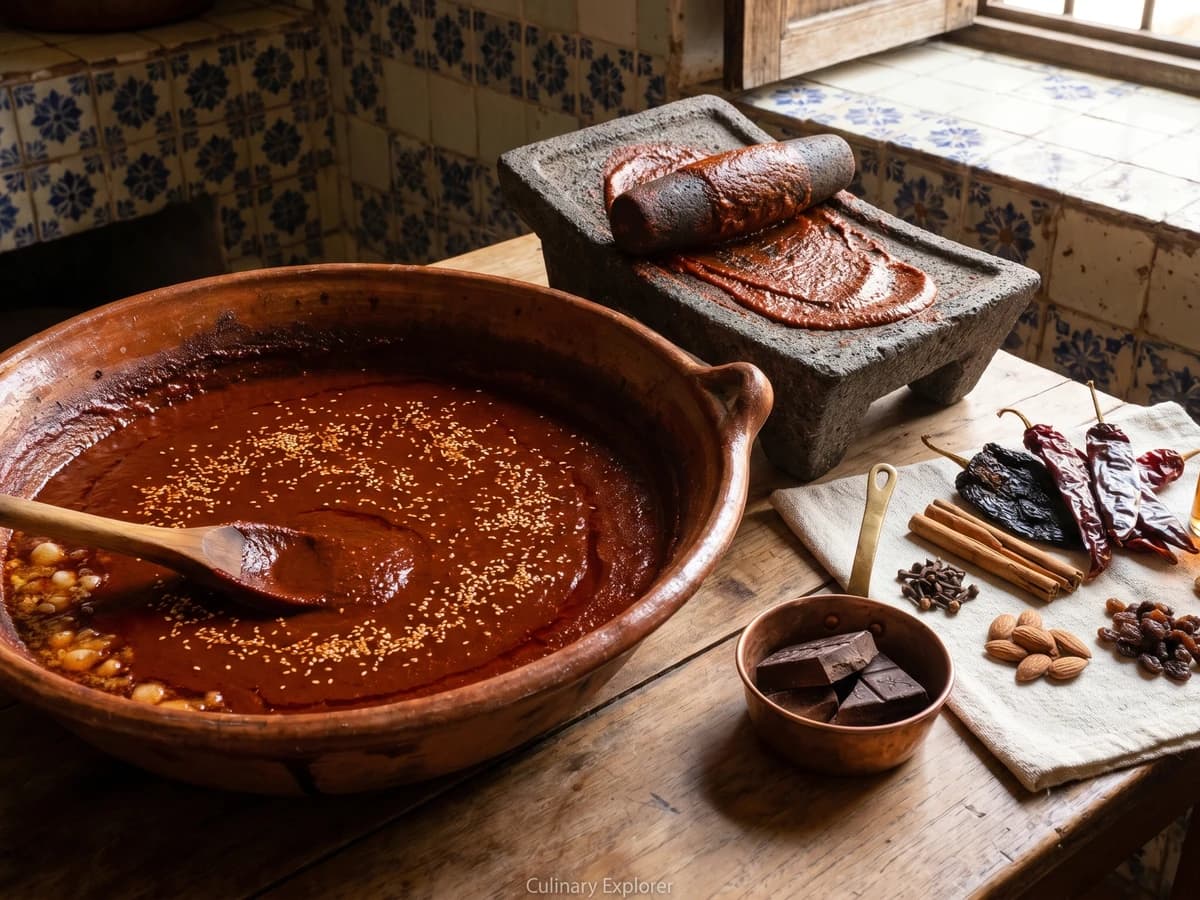
Zacatecas' wedding-table adobo, built from toasted guajillo and ancho, piloncillo, sour orange, chocolate, canela, clavo, almonds, sesame, and lard.

Chef Lupita
Puebla's convent kitchens built this adobo with ancho, guajillo, jerez, almonds, raisins, clove, and lard, a baroque marinade that stains pork loin and finishes as the sauce.