
Chef Margarida
Areias de Cascais
The sand cookies of Cascais, where three simple ingredients become something that melts on your tongue and sparkles like the beach at sunset. Butter, flour, sugar. That's all. That's enough.
A cooking platform built around craft, culture, and the stories behind what we eat.
Created by
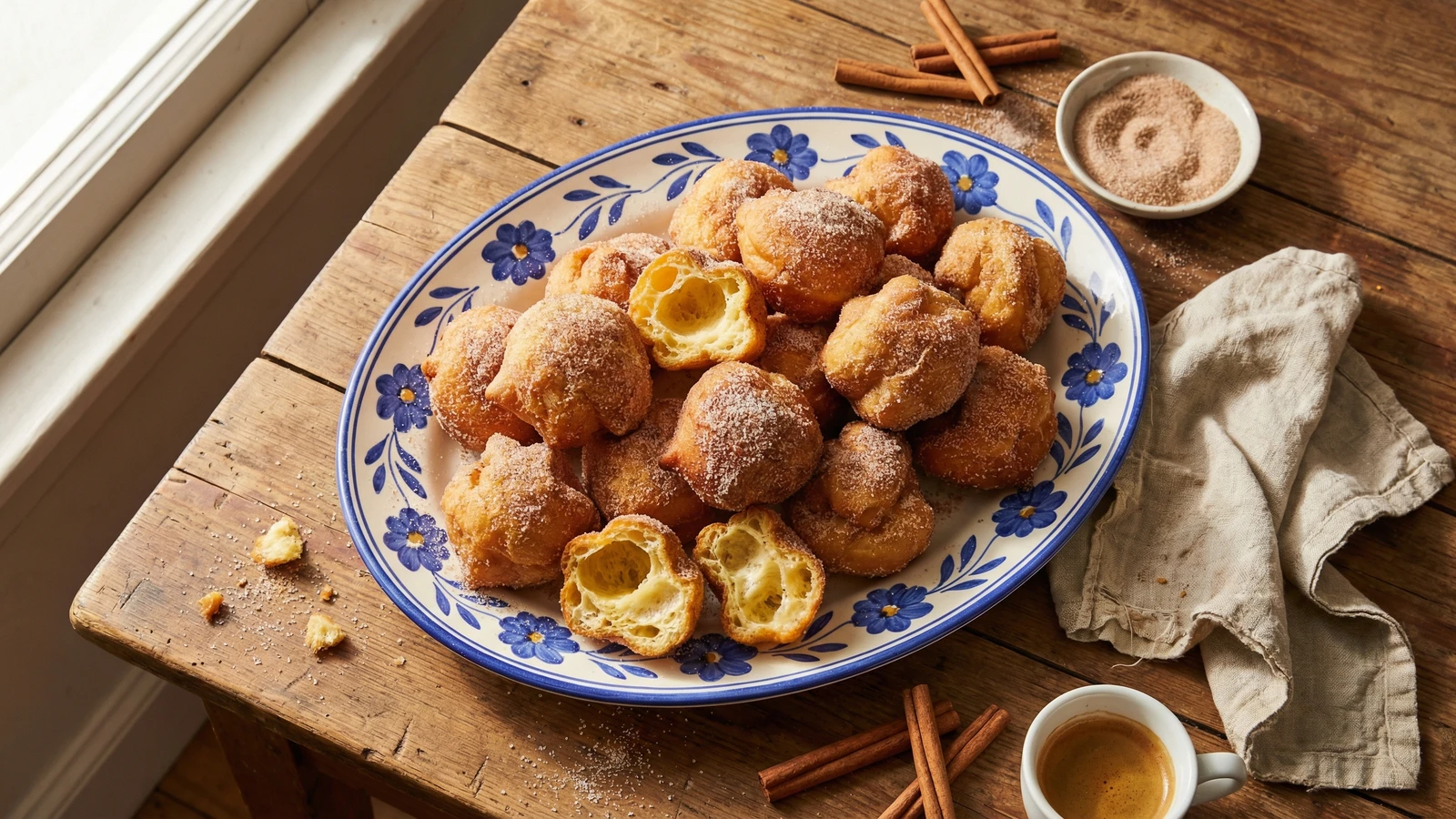
They're called dreams because that's exactly what they taste like. Pillowy fried dough, warm cinnamon sugar, the smell of Christmas morning in every Portuguese household. Light as air, gone in one bite.
Every Christmas Eve, Avó Leonor's kitchen filled with the smell of hot oil and cinnamon. She'd stand at the stove with a wooden spoon, dropping spoonfuls of dough into shimmering azeite while my cousins and I waited with powdered fingers, fighting over the sonhos still warm from the pan.
Sonhos. Dreams. Because that's what they taste like. Light as clouds, crispy on the outside, hollow and soft within, rolled in cinnamon sugar while still warm enough that it sticks to everything. They're gone in one bite. You reach for another before you've finished chewing the first.
The technique is choux, the same base the French use for éclairs and profiteroles, but we Portuguese were frying this dough for celebrations long before anyone thought to bake it. The magic happens when the wet dough hits hot oil: steam puffs it from inside, creating that characteristic hollow center, that impossibly light texture that earns the name.
No Portuguese Christmas is complete without a mountain of sonhos on the table. They appear on Christmas Eve, again on Christmas Day, and keep appearing until Epiphany. At Mesa da Avó, we serve them still warm, dusted generously, with coffee strong enough to stand up to all that sweetness. As avós sabem. The grandmothers know what Christmas tastes like.
Sonhos belong to Portugal's rich tradition of convent sweets, where cloistered nuns developed elaborate recipes using the abundant eggs donated by local farms. The technique of frying choux dough dates to at least the 16th century in Portuguese convents. The name 'sonhos' (dreams) references their impossibly light, cloud-like texture that seems to dissolve on the tongue.
Quantity
250ml
Quantity
100g
cut into pieces
Quantity
1 tablespoon
Quantity
1/2 teaspoon
Quantity
1
zested
Quantity
150g
Quantity
4 large
at room temperature
Quantity
about 1 liter
for frying
Quantity
150g
for coating
Quantity
2 teaspoons
| Ingredient | Quantity |
|---|---|
| water | 250ml |
| unsalted buttercut into pieces | 100g |
| granulated sugar | 1 tablespoon |
| fine sea salt | 1/2 teaspoon |
| lemonzested | 1 |
| all-purpose flour | 150g |
| eggsat room temperature | 4 large |
| olive oil or vegetable oilfor frying | about 1 liter |
| granulated sugarfor coating | 150g |
| Portuguese cinnamon (canela) | 2 teaspoons |
In a medium saucepan, combine the water, butter, sugar, salt, and lemon zest. Set over medium heat and stir until the butter melts completely. The moment it reaches a full rolling boil, remove from heat immediately. Timing matters here. If you let it boil too long, you lose water to evaporation and your proportions shift.
Add all the flour at once and stir vigorously with a wooden spoon. Return the pan to low heat and keep stirring. The dough will come together into a ball that pulls away from the sides of the pan. Keep stirring for another minute or two until a thin film forms on the bottom of the pan. This dries out the dough slightly, which is what you want. It should look smooth and slightly shiny.
Transfer the dough to a bowl and let it cool for 5 minutes. You don't want to cook the eggs when you add them. Beat in the eggs one at a time, mixing thoroughly after each addition. After the first egg, the dough will look like a disaster, broken and slimy. Keep mixing. By the fourth egg, you should have a thick, glossy paste that falls from the spoon in a heavy ribbon. If you lift the spoon and the dough forms a V shape that slowly droops, you're there.
Mix the sugar and cinnamon together in a wide shallow bowl. Set it near your frying station. You'll need to roll the sonhos while they're still warm, so have everything ready.
Pour oil into a deep, heavy pot to a depth of about 8cm. Heat to 170°C (340°F). Use a thermometer. The temperature matters. Too hot and they brown before the inside cooks through. Too cool and they absorb oil and turn heavy. You want them to puff and float, turning golden slowly over about 3 minutes per batch.
Using two spoons, drop rounded tablespoons of dough into the hot oil, working in batches of 5 or 6. Don't crowd the pan. The sonhos will sink, then rise to the surface as they puff. They'll turn themselves as they cook, but help them along with a slotted spoon to ensure even browning. Fry until deep golden all over, about 3 to 4 minutes total. They should feel light when you lift them.
Lift the sonhos from the oil with a slotted spoon and drain briefly on paper. While still warm, roll them in the cinnamon sugar, coating generously. The warmth helps the sugar stick. Transfer to a serving platter. Repeat with remaining dough, adjusting oil temperature between batches if needed.
Pile the sonhos on a platter and serve while still warm. They're best within an hour of frying, when the outside is still slightly crisp and the inside is pillowy. By the next day they soften, which is fine but not the same. At Christmas, they disappear long before that's a concern.
1 serving (about 28g)
Culinary guides, cultural storytelling, and the editorial depth that makes cooking meaningful.
Discover Culinary ExplorerChef Margarida
The sand cookies of Cascais, where three simple ingredients become something that melts on your tongue and sparkles like the beach at sunset. Butter, flour, sugar. That's all. That's enough.

Chef Margarida
The Christmas turnovers of Alentejo, where humble chickpeas become something miraculous inside a crispy shell. Proof that Portuguese grandmothers could turn anything into celebration.

Chef Margarida
The butter cookies of the Azores, shaped into golden rings by island grandmothers who knew that the best things in life are simple: good butter, fresh eggs, and a cup of strong coffee.

Chef Margarida
The almond cookies of the Algarve, where Moorish orchards still bloom white against blue January skies. Three ingredients, centuries of tradition, the taste of southern Portugal in every tender bite.