Chef Lesia
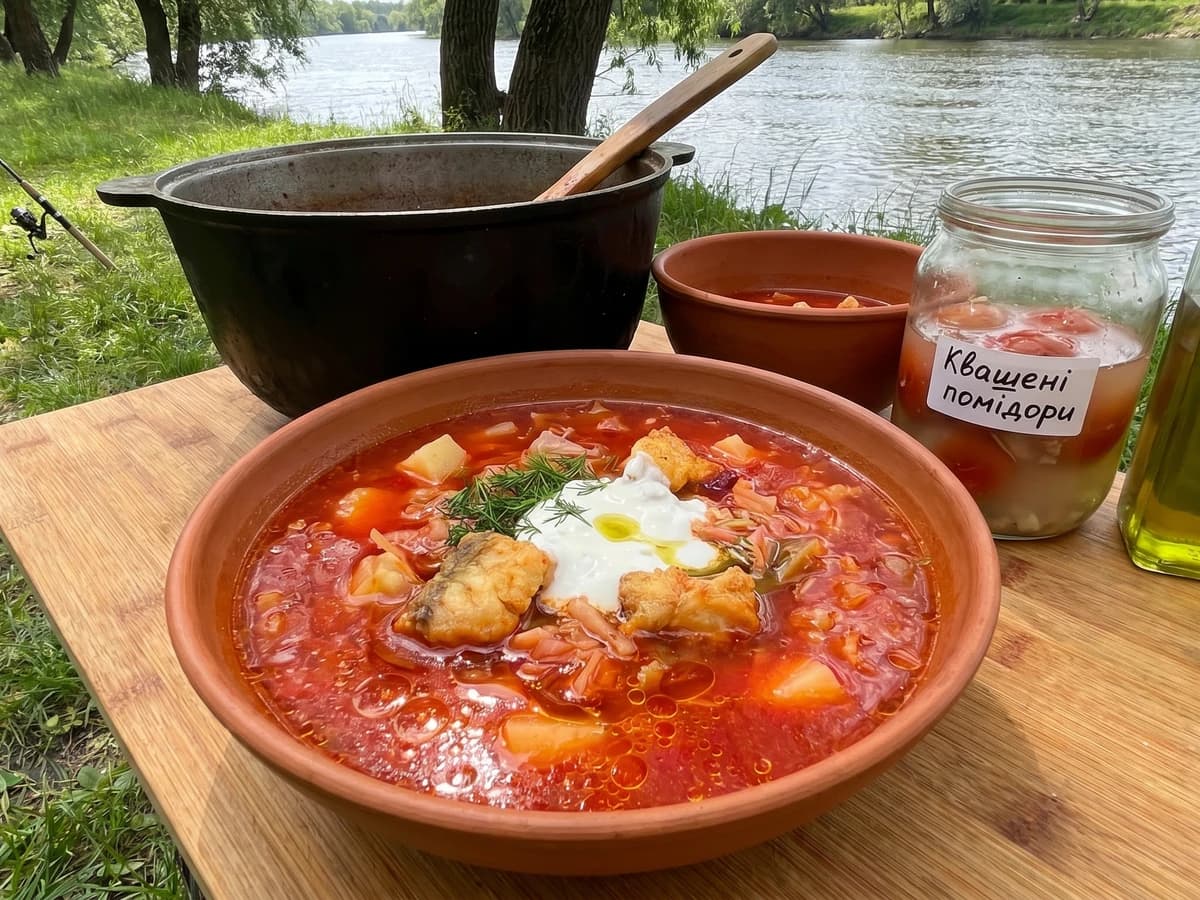
Bessarabskyi Borshch (бессарабський борщ, fish borshch)
The catch goes into the pan before it ever meets the pot, so Danube fish stays whole in a tomato-red broth sour enough to wake the table.
A cooking platform built around craft, culture, and the stories behind what we eat.
Created by
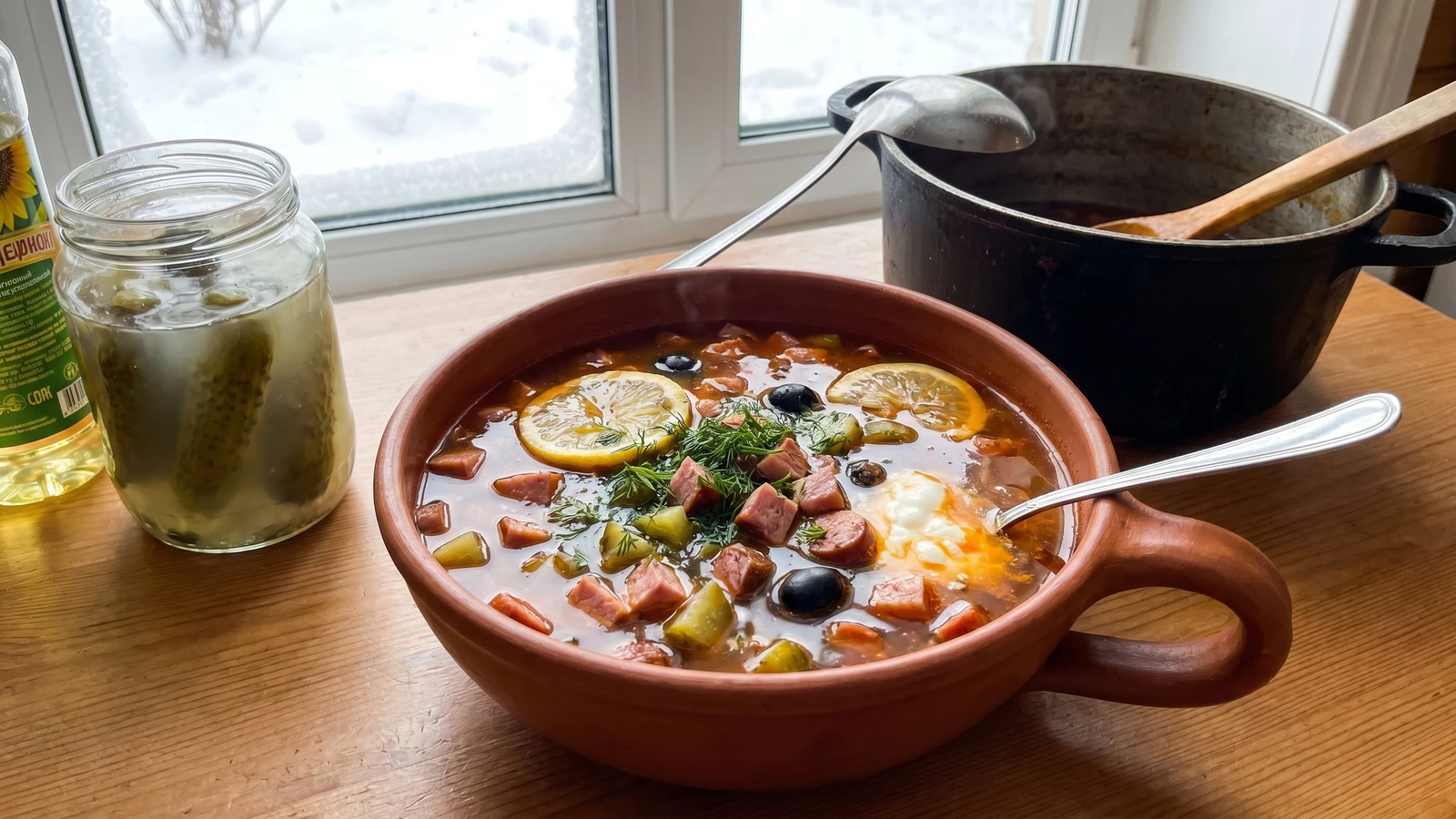
This is the soup for a cold table after the holidays: sour from cucumber brine, dark with smoked meat, loud with lemon, olives, dill, and all the good scraps.
The first thing solyanka gives you is not salt, it's smoke. It comes off the pot before the lid is fully lifted: smoked ribs, ham, sausage, cucumber brine, tomato darkening in the fat until the kitchen smells like winter coats hung near a stove. This is not a quiet soup. It is sour, glossy, crowded, and entirely pleased with itself.
I cook it when the fridge has little ends of good things after guests have gone: a heel of smoked pork, one sausage, the last salt cucumbers from a jar, half a lemon that looks accused. Aunt Nadia's letter says only, "everything smoked, everything sour, but don't make it mud." That means balance. The brine wakes the meat, the lemon sharpens the top, and the olives bring that bitter black edge that makes the next spoonful necessary.
The one why that decides the pot is the zasmazhka, the slow-sweated onion and carrot with tomato. Add it at the end so its sweetness sits brightly on the broth instead of flattening into the stock. Let the smoked meat speak first, then let the vegetables answer.
Make a big pot. Solyanka behaves better the next day, once the brine has stopped shouting and the smoke has settled into the broth. Enough for eight guests or one hungry Ukrainian.
Solyanka entered Ukrainian urban cooking through taverns, railway buffets, and later Soviet canteens, but home kitchens made it their own with local smoked pork, kovbasa, salt cucumbers, and their brine. The dish sits in the same preservation logic as Ukrainian kvashennia: sour cucumbers from the jar are not a garnish here, they are the engine of the soup. Regional versions vary from meat-heavy city pots to fish solyanka near river and Black Sea kitchens, especially around Odesa and the southern steppe.
Quantity
700g
Quantity
300g
diced
Quantity
250g
sliced
Quantity
2 tablespoons
Quantity
2 large
finely diced
Quantity
1 large
coarsely grated
Quantity
2 tablespoons
Quantity
4
diced
Quantity
150ml
Quantity
2
Quantity
8
Quantity
1.8 litres
Quantity
150g
sliced
Quantity
1
half juiced and half sliced for serving
Quantity
1 small bunch
chopped
Quantity
to serve
Quantity
to taste
| Ingredient | Quantity |
|---|---|
| smoked pork ribs or smoked pork bones | 700g |
| smoked ham or pork shoulderdiced | 300g |
| smoked sausage or kovbasasliced | 250g |
| unrefined sunflower oil | 2 tablespoons |
| onionsfinely diced | 2 large |
| carrotcoarsely grated | 1 large |
| tomato paste | 2 tablespoons |
| salt cucumbersdiced | 4 |
| cucumber brine | 150ml |
| bay leaves | 2 |
| black peppercorns | 8 |
| water or light unsalted stock | 1.8 litres |
| pitted black or green olivessliced | 150g |
| lemonhalf juiced and half sliced for serving | 1 |
| dillchopped | 1 small bunch |
| smetana (optional) | to serve |
| sea salt and black pepper | to taste |
Put the smoked ribs or bones into a big pot with the bay leaves, peppercorns, and water or light stock. Bring it slowly to a gentle simmer and keep it there until the kitchen smells smoky and rounded, not sharp. Skim if foam rises, but don't bully the pot with a hard boil.
In a wide pan, warm the sunflower oil and add the diced ham and sausage. Let the edges darken and the fat gloss the pan. You're not frying them dry; you're waking the smoke so it can carry through the soup.
Lift the browned meats into the broth and use the same pan for the onion. Cook it low until it turns translucent and sweet-smelling, then add the carrot and let it soften. Stir in the tomato paste and cook until the red darkens, the oil turns orange, and the raw tomato smell changes.
Add the diced salt cucumbers to the pan with the zasmazhka and let them soften until they lose their raw crunch but still smell fresh and briny. Pour in the cucumber brine, scrape the pan clean, and tip everything into the soup. Taste before adding salt; the meats and brine may have done most of the work.
Let the pot murmur until the broth tastes joined together: smoky first, sour second, tomato-sweet underneath. Add the olives and a squeeze of lemon juice, then taste again. If it feels heavy, add more brine or lemon. If it feels too sharp, give it a little longer and let the meat soften the edge.
Turn off the heat and let the solyanka sit before serving. The surface should be glossy with orange fat beads, the spoon should come up with meat, cucumber, and olive in one lift, and the smell should make people drift toward the table without being called. Serve with dill, lemon slices, and smetana.
1 serving (about 460g)
Culinary guides, cultural storytelling, and the editorial depth that makes cooking meaningful.
Discover Culinary ExplorerChef Lesia
The catch goes into the pan before it ever meets the pot, so Danube fish stays whole in a tomato-red broth sour enough to wake the table.

Chef Lesia
The fish leaves the pot before the soup reaches the table: broth in the bowl, river fish on a platter, garlic salamur waiting to wake both.

Chef Lesia
Brick-red paprika blooms in bacon fat, beef darkens at the edges, and potatoes thicken the cauldron until it stands between soup and stew. This is comfort with a fire under it.
Chef Lesia
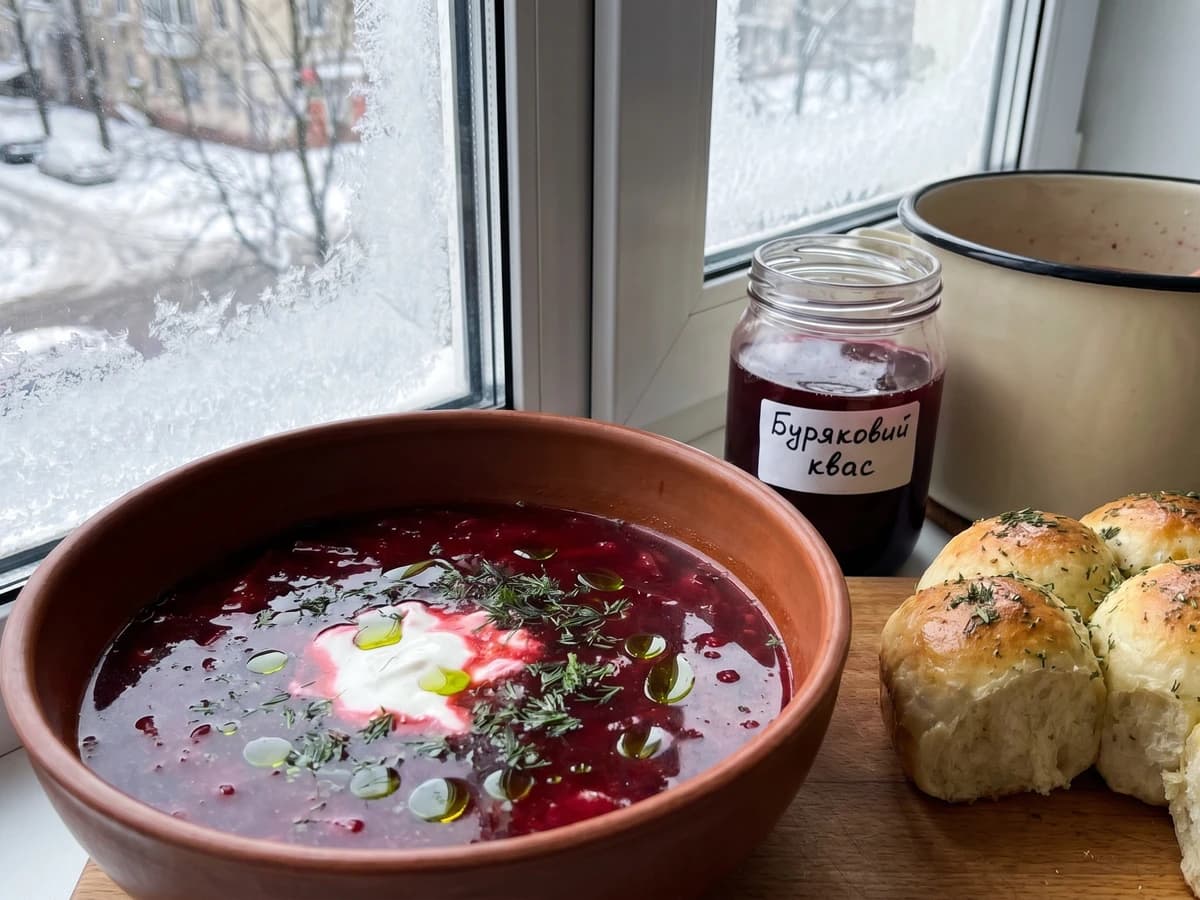
Beets hit slow-sweated zasmazhka and the broth goes dark ruby, sour from beet zakwas, sweet from bone and garden, thick enough for the spoon to stand up straight.