
Chef Lesia
Gombovtsi (ґомбовці, plum-stuffed steamed dumplings)
The first cut is the whole argument: pale potato dough, toasted butter crumbs, then a hot purple plum collapsing into syrup at the center.
A cooking platform built around craft, culture, and the stories behind what we eat.
Created by
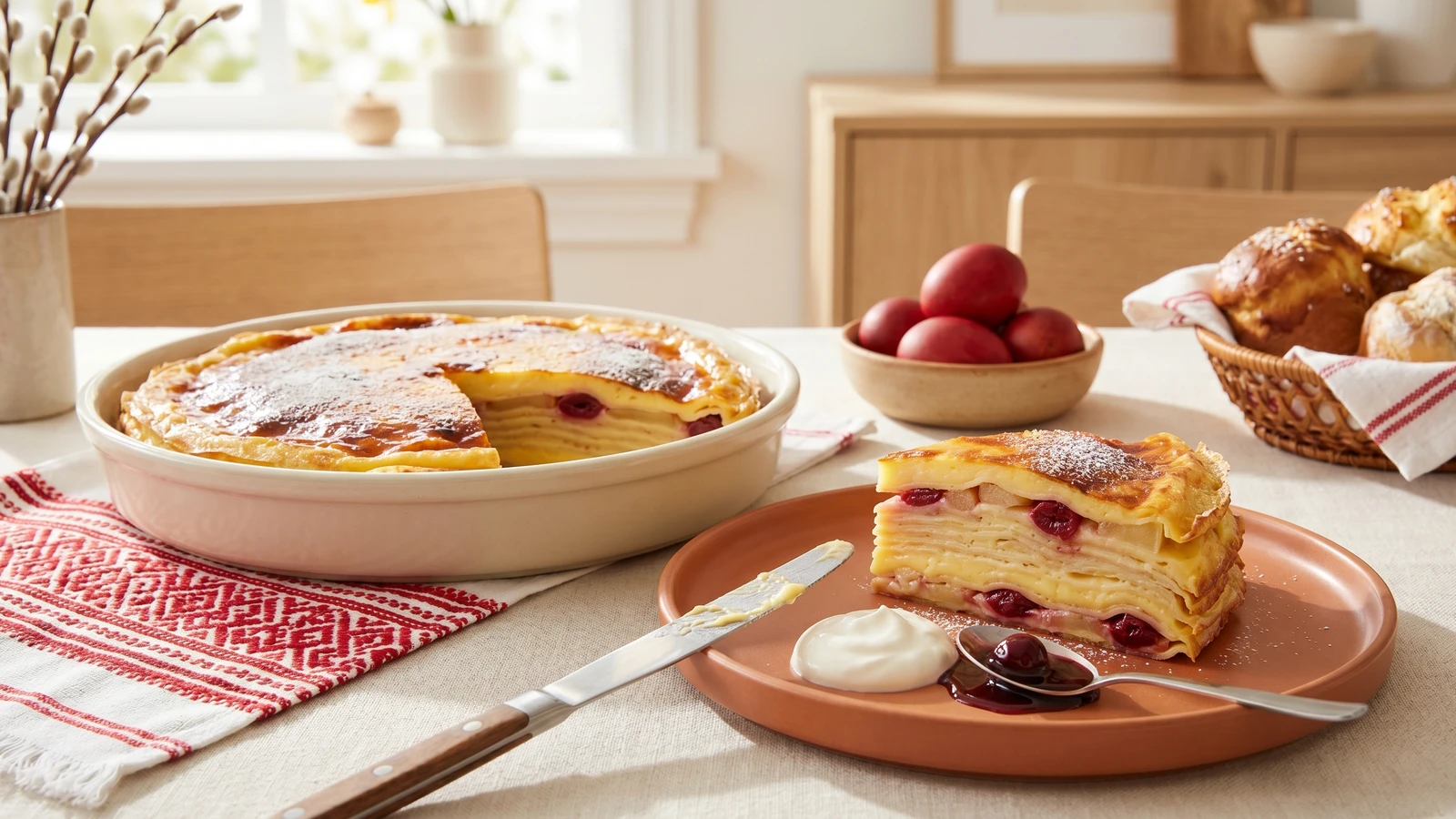
Twelve eggs is not a mistake; it is the Easter signal, turning thin crepes and sharp fruit into a golden baked custard cake that quivers when you cut it.
Twelve eggs is not a mistake. It is the point, the color, the Easter boast, the reason this old sweet sits so proudly on the table after the long lean weeks and says: we are eating richly again. Thin mlyntsi, Ukrainian crepes, are fried pale and soft, stacked with tart apple or sour cherry, then soaked with smetana custard until the layers swell into one golden cake.
The fruit must have a little bite. Sweet apples make a nursery pudding; sour cherries make the eggs stand up and behave. In April we'd be drowning in dyed eggs, not cherries, so we open a jar from summer. That's not a substitute, that's the actual tradition: the litnya kuhnia, the summer kitchen, working months ahead for the Easter table.
The one thing that decides solozhenyk is restraint after all that abundance. Don't brown the crepes hard, don't drown the layers, don't cut it the moment it leaves the oven. Bake until the center trembles but no longer sloshes, then let it settle. Aunt Nadia's note says "don't be frightened by eggs," and she was right. Without them it is pancakes with fruit. With them, it is a celebration you can slice.
Solozhenyk belongs to the older central Ukrainian sweet table, especially around Poltava, where thin mlyntsi (crepes) were layered with fruit, egg, and dairy for feast days. Early twentieth-century Ukrainian household cookbooks record apple, cherry, and curd solozhenyky, which tells you this was a flexible domestic form rather than one fixed cake. After Lent, the extravagance of eggs was not wasteful; it announced that the fast was over.
Quantity
6 large
Quantity
300ml
Quantity
180g
Quantity
25g
Quantity
1/4 teaspoon
Quantity
40g, plus extra
melted, with extra for the pan
Quantity
500g
peeled, cored, and thinly sliced
Quantity
250g
fresh, frozen, or jarred, drained very well
Quantity
80g
Quantity
1 teaspoon
Quantity
1 tablespoon
Quantity
6 large
Quantity
300g
Quantity
150ml
Quantity
80g
Quantity
1 teaspoon
Quantity
1/4 teaspoon
Quantity
20g
Quantity
to serve
Quantity
to serve
| Ingredient | Quantity |
|---|---|
| eggs for the crepes | 6 large |
| whole milk for the crepes | 300ml |
| plain flour | 180g |
| sugar for the crepes | 25g |
| fine sea salt for the crepes | 1/4 teaspoon |
| unsalted buttermelted, with extra for the pan | 40g, plus extra |
| tart applespeeled, cored, and thinly sliced | 500g |
| pitted sour cherriesfresh, frozen, or jarred, drained very well | 250g |
| sugar for the fruit | 80g |
| lemon zest | 1 teaspoon |
| potato starch or cornstarch | 1 tablespoon |
| eggs for the custard | 6 large |
| full-fat smetana (sour cream) | 300g |
| whole milk for the custard | 150ml |
| sugar for the custard | 80g |
| vanilla sugar or vanilla extract | 1 teaspoon |
| fine sea salt for the custard | 1/4 teaspoon |
| unsalted butter for the dish and top | 20g |
| icing sugar (optional) | to serve |
| extra smetana or sour cherry syrup (optional) | to serve |
Melt a small knob from the 20g butter in a wide pan and add the apples, fruit sugar, lemon zest, and a pinch of salt. Cook gently until the apples lose their raw snap and the smell changes from sharp orchard to warm compote. Fold in the drained sour cherries and potato starch, then cook until the juices turn glossy and cling to the fruit instead of running around the pan. Cool before layering.
Whisk the 6 crepe eggs with the milk until loose, then whisk in the flour, sugar, salt, and melted butter. The batter should pour like single cream and coat the back of a ladle in a thin veil. Let it stand until the flour swells and the bubbles settle; if it thickens too much, loosen it with a splash more milk.
Warm a 20cm crepe pan and wipe it with butter. The first ladleful should make a low quick hiss, not an angry crackle; that's the pan sounding right. Pour in just enough batter to cover the base, swirl it thin, and cook until the surface loses its wet shine and the edges lift. Flip once, keep it pale with a few golden freckles, and stack the mlyntsi, Ukrainian crepes, on a plate. You want 10 to 12 soft crepes.
Heat the oven to 170C, or 150C fan, or 325F. Butter a 20 to 22cm round baking dish generously. Whisk the 6 custard eggs with the sugar, vanilla, and salt, then whisk in the smetana and milk until smooth. It should look creamy and pour easily, with no lumps of smetana hiding at the bottom.
Lay one crepe in the buttered dish. Spread over a thin layer of fruit, spoon on a little custard, then repeat: crepe, fruit, custard, until the stack is built. Finish with a crepe on top. Pour the remaining custard slowly around the edge and over the surface, then press the stack very gently so the custard slips between the layers. Dot the top with the last small pieces of butter.
Bake until the top is golden in patches, the edges have puffed slightly, and the center trembles like thick yogurt when you nudge the dish. It should not slosh. If the top colors before the middle has settled, cover it loosely with parchment or foil and keep baking gently. Trust the wobble more than the clock.
Let the solozhenyk rest until it stops looking fragile and cuts into clean, custardy wedges. Dust lightly with icing sugar if you like, and serve with a spoon of smetana or a little sour cherry syrup. Too hot, it collapses. Warm or room temperature, it behaves beautifully.
1 serving (about 210g)
Culinary guides, cultural storytelling, and the editorial depth that makes cooking meaningful.
Discover Culinary ExplorerChef Lesia
The first cut is the whole argument: pale potato dough, toasted butter crumbs, then a hot purple plum collapsing into syrup at the center.

Chef Lesia
The first spoonful of Christmas Eve is dark wheat, white poppy milk, honey, nuts, and memory. Kutia comes before everything else because grain must speak first.

Chef Lesia
Two dry, crackling hazelnut meringues hold a whole city's pride between them, with cocoa buttercream, pale cream flowers, and the sound of a knife breaking through sugar.

Chef Lesia
A cake made from white curd goes to the table wearing black: dense, lemon-scented syr under dark chocolate glaze, sliced cold and proud from the west.