
Chef Dean
Baked Ham and Cheese Croissants
Buttery, shatteringly crisp croissants filled with smoky ham and molten Gruyère, brushed with honey mustard glaze and baked until the kitchen smells like a Parisian bakery on Christmas morning.
A cooking platform built around craft, culture, and the stories behind what we eat.
Created by
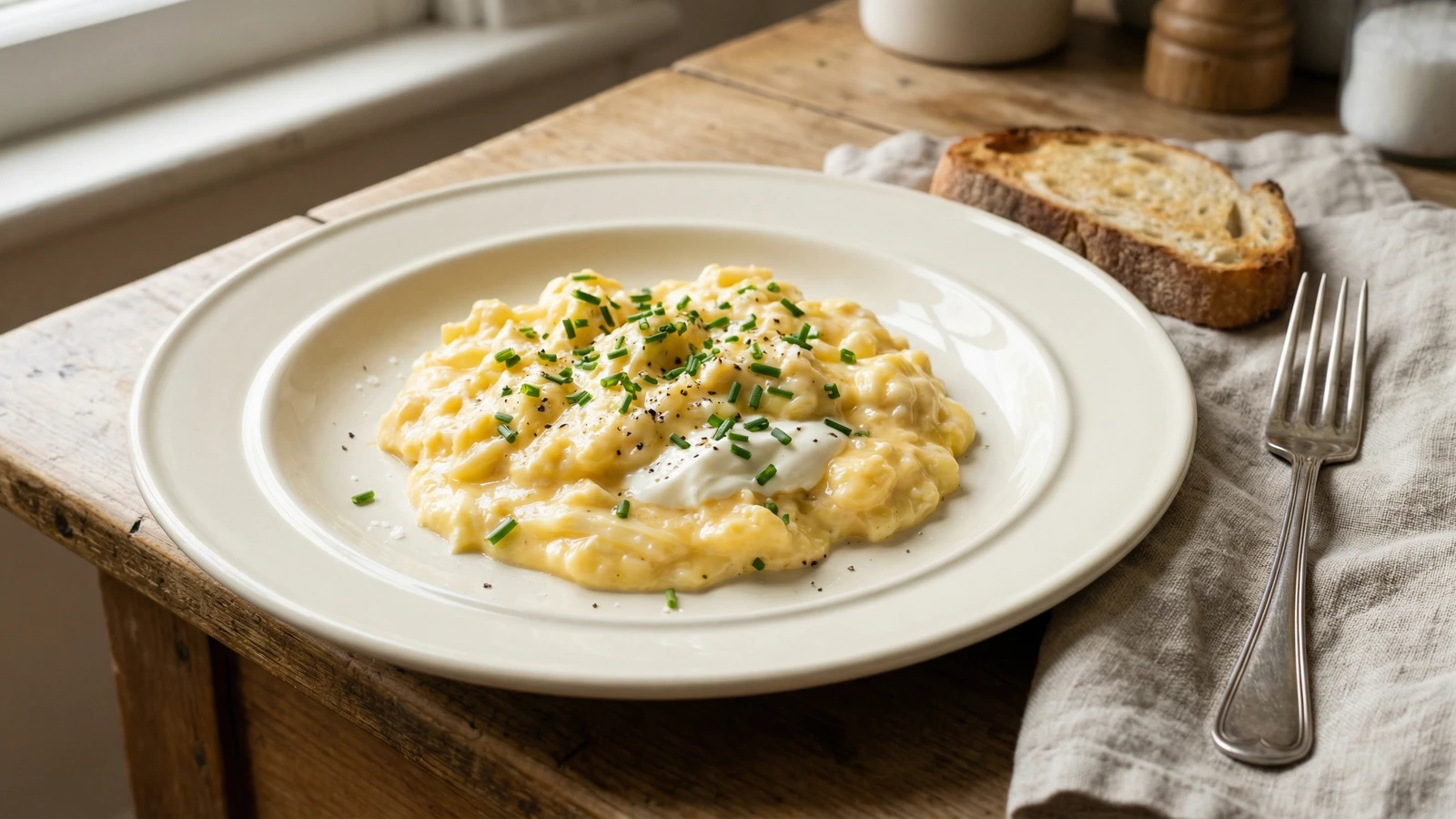
The French understood something essential about eggs: cook them slowly, finish them with cream, and let their richness speak without interference. Ten patient minutes at the stove is all that separates ordinary scrambled eggs from something transcendent.
Start with the eggs. They should come from hens that lived outdoors, ate well, and had space to move. You will taste the difference immediately. The yolks of pastured eggs are deeper orange, richer in flavor, and they scramble into something that pale factory eggs simply cannot match. Find a farmer. Go to a market. Ask questions. Your choices shape the food system.
The technique here is almost embarrassingly simple. Low heat. Constant stirring. Patience. The French call these oeufs brouillés, and they treat them as a measure of a cook's restraint. Anyone can scramble eggs quickly over high heat. It takes discipline to stand at the stove for ten minutes, stirring, waiting, resisting the urge to rush.
Crème fraîche at the end is not optional. It stops the cooking, adds a subtle tang, and creates a texture so silky that you will wonder what you have been doing wrong all these years. Fresh chives bring brightness and color. That is all. Let things taste of what they are.
Quantity
6
preferably pasture-raised
Quantity
2 tablespoons
cut into small pieces
Quantity
1/4 teaspoon
Quantity
2 tablespoons
Quantity
1 tablespoon
finely snipped
Quantity
to taste
freshly cracked
Quantity
for finishing
| Ingredient | Quantity |
|---|---|
| large eggspreferably pasture-raised | 6 |
| unsalted buttercut into small pieces | 2 tablespoons |
| fine sea salt | 1/4 teaspoon |
| crème fraîche | 2 tablespoons |
| fresh chivesfinely snipped | 1 tablespoon |
| black pepperfreshly cracked | to taste |
| flaky sea salt (optional) | for finishing |
Crack eggs into a cold nonstick pan or well-seasoned skillet. Do not whisk them in a bowl first. Add the butter in pieces and a pinch of fine sea salt. The eggs should pool around the butter, yolks sitting whole alongside the whites.
Set the pan over the lowest heat your stove will hold. Begin stirring immediately with a rubber spatula, moving the eggs constantly across the bottom and sides of the pan. The butter will melt and mingle with the eggs as they warm together.
Keep stirring, scraping the bottom and folding the eggs over themselves. After three or four minutes, you will see small curds beginning to form in the liquid. The transformation is slow and then sudden. Stay with it. The eggs will look loose and wet for what feels like too long, then come together all at once.
When the eggs are still slightly wetter than you want them, pull the pan from the heat entirely. They will continue cooking in the residual warmth. The finished texture should be creamy and barely holding together, like soft custard that moves when you tilt the pan.
Stir in the crème fraîche while the eggs are still in the pan but off the heat. The cool cream stops the cooking and adds richness that butter alone cannot give. Taste. Adjust salt if needed.
Spoon the eggs gently onto warm plates. Scatter snipped chives over the top. Add a few flakes of good sea salt and a crack of black pepper. Serve immediately with toast or nothing at all. These eggs need very little.
1 serving (about 180g)
Culinary guides, cultural storytelling, and the editorial depth that makes cooking meaningful.
Discover Culinary ExplorerChef Dean
Buttery, shatteringly crisp croissants filled with smoky ham and molten Gruyère, brushed with honey mustard glaze and baked until the kitchen smells like a Parisian bakery on Christmas morning.
Chef Ally
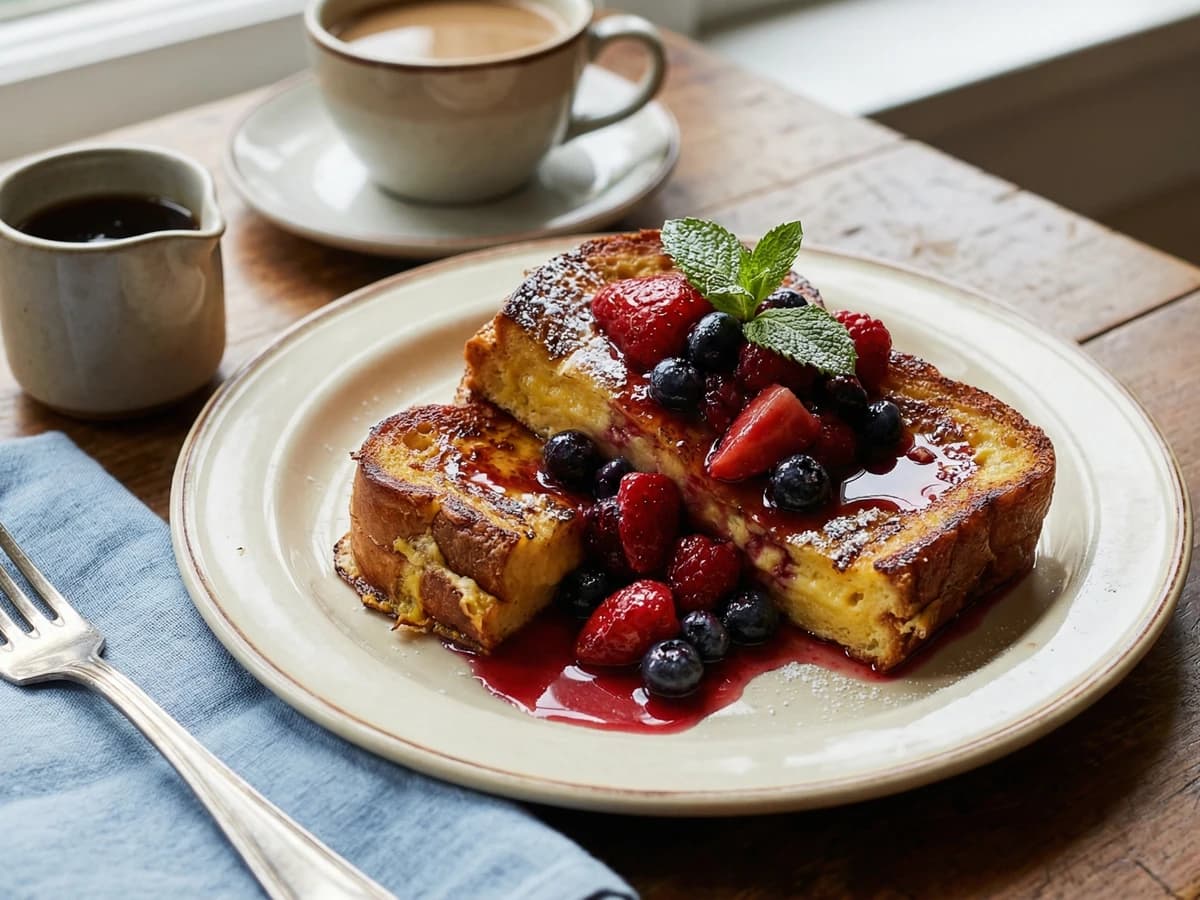
Thick slices of buttery brioche soaked in vanilla custard and cooked to a golden crust, crowned with summer berries that have surrendered their juices into a natural syrup no bottle could match.

Chef Ally
Tender, nutty buckwheat pancakes crowned with a simple compote of whatever fruit the market offers, the kind of breakfast that turns a slow morning into something worth remembering.

Chef Ally
Tender leeks melted in butter until sweet, folded into silky custard with aged Gruyère, and baked in a shatteringly flaky crust that speaks of French farmhouse kitchens and unhurried weekend mornings.