
Chef Ally
Braided Challah
A golden, egg-enriched loaf braided by hand, its burnished crust giving way to a crumb so tender it pulls apart in soft, sweet strands. The bread of Friday nights, holidays, and ordinary weeks made sacred.
A cooking platform built around craft, culture, and the stories behind what we eat.
Created by
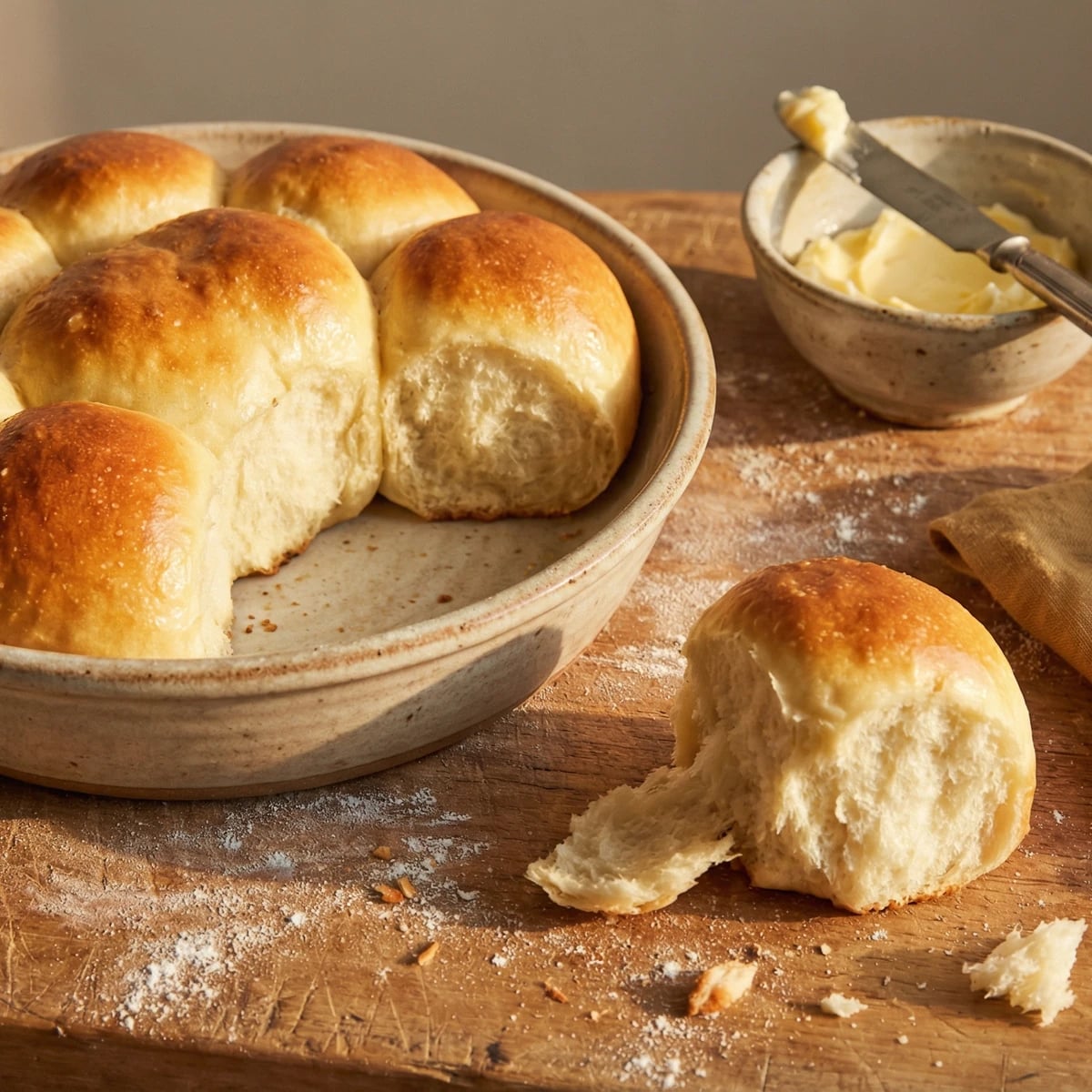
Mashed russet potatoes folded into the dough create rolls so impossibly soft they pull apart like clouds. Golden tops, tender crumb, and the kind of honest bread that makes the whole table reach for seconds.
Start with the potatoes. Russets, specifically, for their starch. When you fold mashed potato into bread dough, something quiet and remarkable happens. The starch holds moisture. The crumb becomes impossibly tender. This is not a trick or a shortcut. It is what bakers have known for generations.
Good bread asks for time and observation. You watch the yeast bloom, feel the dough change under your hands, learn to recognize when enough kneading is enough. These are not complicated skills. They are patient ones. A child can learn them. Anyone willing to pay attention can make bread that transforms a meal.
Source the best flour you can find. Stone-ground from a mill you trust, if possible. The difference shows in the texture and flavor, in the way the dough handles, in the finished roll that tears apart to reveal its soft interior. Every ingredient matters, but flour matters most.
These rolls belong at your holiday table, yes. But do not save them only for celebrations. Make them for a Sunday dinner. Bring them to a neighbor. Let the smell of baking bread fill your kitchen on an ordinary Tuesday. That is the point. Good bread, made with your own hands, for the people you feed.
Quantity
1 pound (about 2 medium)
Quantity
1 cup
warmed to 110°F
Quantity
2 1/4 teaspoons (1 packet)
Quantity
6 tablespoons
softened
Quantity
2 tablespoons
Quantity
2 teaspoons
Quantity
2
at room temperature
Quantity
4 1/2 to 5 cups (540-600g)
preferably stone-ground
Quantity
3 tablespoons
for brushing
| Ingredient | Quantity |
|---|---|
| russet potatoes | 1 pound (about 2 medium) |
| whole milkwarmed to 110°F | 1 cup |
| active dry yeast | 2 1/4 teaspoons (1 packet) |
| unsalted buttersoftened | 6 tablespoons |
| honey | 2 tablespoons |
| fine sea salt | 2 teaspoons |
| large eggsat room temperature | 2 |
| bread flourpreferably stone-ground | 4 1/2 to 5 cups (540-600g) |
| melted butterfor brushing | 3 tablespoons |
Peel the russets and cut them into two-inch chunks. Place them in a pot and cover with cold water by an inch. Add a generous pinch of salt. Bring to a boil, then reduce to a simmer and cook until completely tender, about fifteen to twenty minutes. A fork should slide through with no resistance at all.
Drain the potatoes well, reserving half a cup of the cooking water. Return potatoes to the warm pot and mash until completely smooth with no lumps. You need one cup of mashed potato, measured and packed. Spread the mash on a plate to cool to room temperature. Hot potatoes will kill your yeast.
Pour the warm milk into a large mixing bowl. It should feel like bathwater against your wrist, warm but not hot. Sprinkle the yeast over the surface and let it sit undisturbed for five minutes. The yeast should foam and smell alive, like bread rising somewhere in your memory.
Add the cooled mashed potato, softened butter, honey, salt, and eggs to the yeast mixture. Stir until combined. The mixture will look rough and lumpy. That is fine. Add four and a half cups of flour, one cup at a time, stirring after each addition until a shaggy dough forms.
Turn the dough onto a floured surface. Knead for eight to ten minutes, adding flour a tablespoon at a time only if the dough sticks badly to your hands. The dough should become smooth, supple, and slightly tacky. When you press it with a floured finger, it should spring back slowly. This is the moment when you have done enough.
Place the dough in a lightly oiled bowl and turn to coat all sides. Cover with a clean kitchen towel or plastic wrap. Set in a warm spot, away from drafts. Let it rise until doubled in size, about one and a half hours. The dough is ready when you poke it with a finger and the indent remains.
Gently deflate the dough and turn it onto a clean surface. Divide into twenty-four equal pieces. Cup each piece under your palm and roll in tight circles against the counter until you have a smooth, taut ball. The surface tension is what gives rolls their shape. Arrange in a buttered nine-by-thirteen baking dish, spacing evenly in rows of four by six.
Cover the pan loosely with a towel and let the rolls rise until puffy and touching each other, about forty-five minutes to an hour. They should look pillowy and have nearly doubled. When you press gently, the dough should feel like a firm pillow.
Preheat your oven to 375°F during the last twenty minutes of rising. Bake the rolls until the tops are deep golden brown and the internal temperature reaches 190°F, about twenty to twenty-five minutes. The rolls should sound hollow when you tap them. If the tops brown too quickly, tent loosely with foil.
Remove from the oven and immediately brush the tops generously with melted butter. Let the rolls rest in the pan for five minutes, then serve warm. They are meant to be torn and shared while the butter still glistens.
1 serving (about 55g)
Culinary guides, cultural storytelling, and the editorial depth that makes cooking meaningful.
Discover Culinary Explorer
Chef Ally
A golden, egg-enriched loaf braided by hand, its burnished crust giving way to a crumb so tender it pulls apart in soft, sweet strands. The bread of Friday nights, holidays, and ordinary weeks made sacred.

Chef Ally
A loaf born from what most people discard: those too-brown bananas on your counter transformed by the nutty depth of browned butter and the crunch of toasted walnuts.

Chef Ally
A golden loaf of butter-rich French bread with a mahogany crust and a crumb so tender it tears like cotton. This is bread meant for holiday mornings, French toast that matters, and the simple pleasure of something made with your own hands.

Chef Ally
Four ingredients, two hands, and one day of unhurried attention. This is the loaf that connects you to ten thousand years of bread-making, and it starts with flour you can trust.