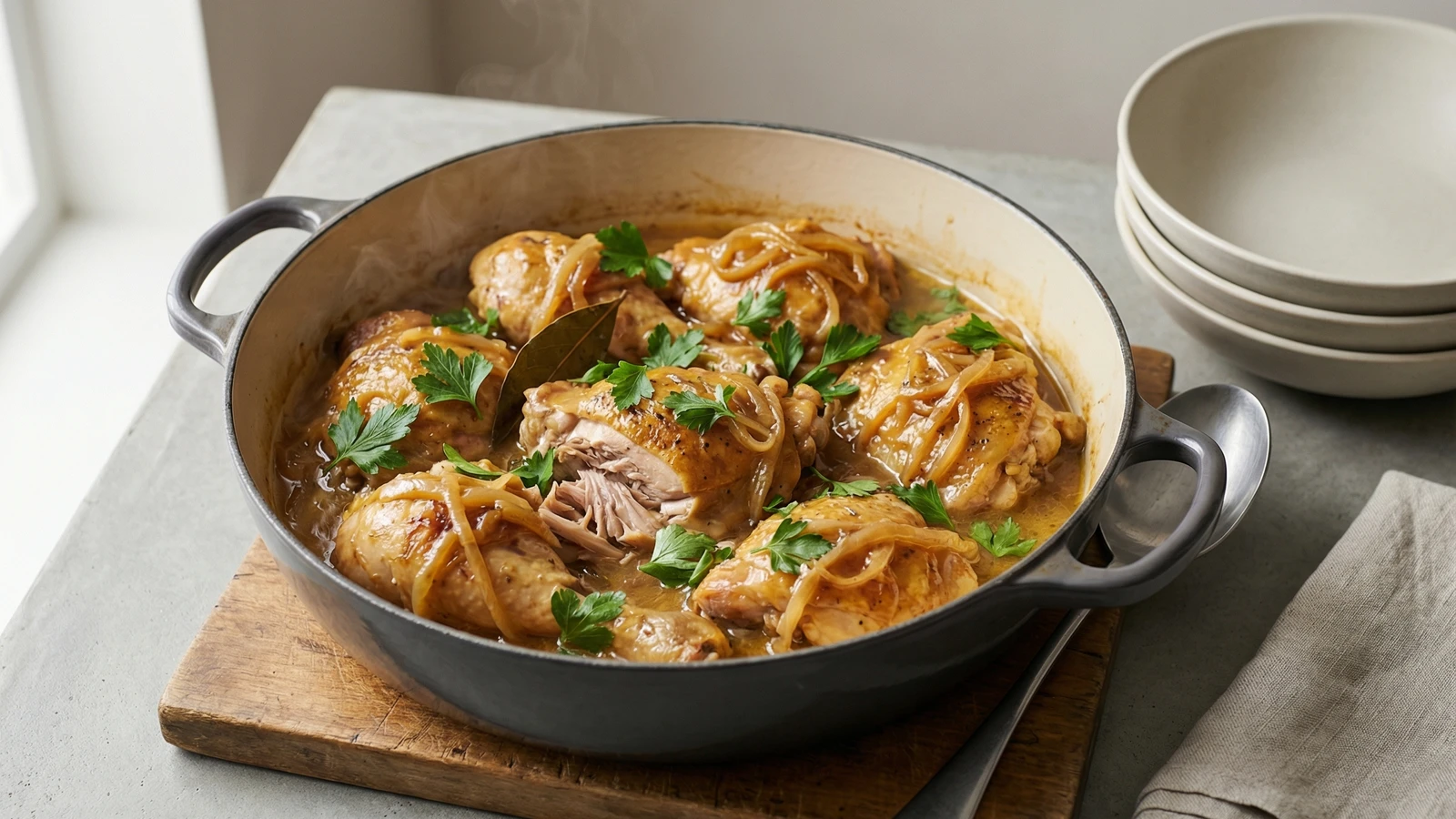
Golden-crusted chicken pieces nestled in a silky gravy built from pounds of slow-cooked onions, the kind of honest Southern cooking that turns a weeknight into something worth remembering.
Main Dishes
Southern
Comfort Food
Weeknight
25 min
Active Time
1 hr 45 min cook•2 hr 10 min total
Yield6 servings
This dish tells the story of American home cooking at its most resourceful. African American cooks in the Deep South perfected smothered chicken generations ago, transforming inexpensive cuts into something magnificent through patience and technique. The gravy begins with onions, cooked low and slow until they surrender their sharpness and become almost sweet. The chicken browns first, building a fond on the pan bottom that will enrich every spoonful of that gravy. Then everything braises together, the meat absorbing the onion's essence while the gravy thickens to coat a spoon.
I've watched cooks argue about the proper ratio of onions to chicken. My position is simple: more onions. Always more onions. They cook down to nearly nothing, concentrating their flavor into the gravy. Three pounds sounds excessive until you see them melt into silk. Trust the process.
The beauty of smothered chicken lies in its forgiving nature. You cannot rush it, but you also cannot ruin it. Keep the heat gentle, check it occasionally, and the dish practically cooks itself. Serve it over rice to catch every drop of that gravy, or with buttermilk biscuits if you want to do it properly. Either way, make enough for seconds. There will be requests.
The technique, the tradition, and the story behind every dish.
bone-in, skin-on chicken pieces (thighs and drumsticks)
Quantity
4 pounds
all-purpose flour, divided
Quantity
1 cup
kosher salt, plus more for seasoning
Quantity
2 teaspoons
freshly ground black pepper
Quantity
1 teaspoon
smoked paprika
Quantity
1 teaspoon
cayenne pepper
Quantity
1/2 teaspoon
dried thyme
Quantity
1/2 teaspoon
vegetable oil or bacon drippings
Quantity
1/4 cup
yellow onions
Quantity
3 pounds (about 6 large)
halved and thinly sliced
garlic
Quantity
4 cloves
minced
celery
Quantity
2 stalks
diced
chicken broth, preferably homemade
Quantity
3 cups
bay leaves
Quantity
2
fresh parsley (optional)
Quantity
for garnish
Ingredient
Quantity
bone-in, skin-on chicken pieces (thighs and drumsticks)
4 pounds
all-purpose flour, divided
1 cup
kosher salt, plus more for seasoning
2 teaspoons
freshly ground black pepper
1 teaspoon
smoked paprika
1 teaspoon
cayenne pepper
1/2 teaspoon
dried thyme
1/2 teaspoon
vegetable oil or bacon drippings
1/4 cup
yellow onionshalved and thinly sliced
3 pounds (about 6 large)
garlicminced
4 cloves
celerydiced
2 stalks
chicken broth, preferably homemade
3 cups
bay leaves
2
fresh parsley (optional)
for garnish
Equipment Needed
•Large Dutch oven or deep 12-inch cast iron skillet with lid
•Wire cooling rack
•Instant-read thermometer
Instructions
1
Season the chicken
Pat the chicken pieces thoroughly dry with paper towels. Moisture is the enemy of browning. In a shallow dish, combine 3/4 cup of the flour with the salt, black pepper, paprika, cayenne, and thyme. Stir until the spices are evenly distributed. Dredge each piece of chicken in the seasoned flour, shaking off the excess. Set aside on a wire rack while you heat the pan.
Reserve the remaining 1/4 cup flour for the gravy. This keeps it clean and unseasoned for proper roux-building.
2
Brown the chicken
Heat the oil in a large Dutch oven or deep cast iron skillet over medium-high heat until it shimmers and a pinch of flour sizzles immediately on contact. Working in batches to avoid crowding, brown the chicken pieces skin-side down first. Listen for an aggressive sizzle. If the pan goes quiet, your heat is too low. Cook until deeply golden, about 4 to 5 minutes per side. The crust should release easily when ready to flip. Transfer browned pieces to a plate. Do not clean the pan.
If using bacon drippings instead of vegetable oil, you'll add a subtle smokiness that traditional Southern cooks prize.
3
Build the onion base
Reduce heat to medium. Add the sliced onions to the pan in their entirety. Yes, this will seem like far too many onions. The pile will reach the rim. Season with a generous pinch of salt. Stir to coat the onions in the rendered fat and scrape up any browned bits from the chicken. Cook, stirring occasionally, until the onions collapse and turn soft and golden, about 20 to 25 minutes. They will reduce to roughly one quarter of their original volume. The kitchen will smell of caramelized sweetness.
If the onions begin to stick or the fond threatens to burn, add a splash of broth and scrape the bottom. This adds flavor rather than losing it.
4
Add aromatics and flour
Push the onions to the sides of the pan and add the garlic and celery to the center. Cook for 1 minute until fragrant. Sprinkle the reserved 1/4 cup flour over the onions and stir constantly for 2 minutes to cook out the raw flour taste. The mixture will look pasty. This is your roux forming within the vegetables themselves.
5
Create the gravy
Pour in the chicken broth gradually, stirring as you go to prevent lumps. Add the bay leaves. Bring to a simmer. The gravy should be the consistency of heavy cream at this point. It will thicken further as it braises. Taste and adjust seasoning. It should taste slightly underseasoned now because the chicken will release some of its salt as it cooks.
6
Braise the chicken
Nestle the browned chicken pieces into the gravy, skin-side up. The gravy should come about two-thirds of the way up the chicken. Spoon some onions and liquid over the exposed portions. Reduce heat to low, cover with a tight-fitting lid, and simmer gently for 1 hour. Check occasionally to ensure the liquid is barely bubbling, not rolling. The chicken is done when the meat pulls easily from the bone and the internal temperature reaches 185°F in the thickest part.
7
Finish and serve
Remove the lid and let the chicken rest in the gravy for 10 minutes. The gravy will thicken slightly as it cools. Discard the bay leaves. If the gravy seems too thin, remove the chicken pieces and simmer uncovered for 5 minutes to reduce. Taste one final time for seasoning. Transfer to a deep serving platter, spooning the onion gravy generously over and around the chicken. Scatter fresh parsley over the top and bring to the table with pride.
Chef Tips
•Bone-in, skin-on pieces are not optional here. The bones release collagen that enriches the gravy, and the skin protects the meat from drying out during the long braise. Boneless chicken breasts would turn to cardboard.
•This dish improves dramatically overnight. The flavors meld and deepen as it sits. Refrigerate in the Dutch oven, then reheat gently over low heat, adding a splash of broth if the gravy has thickened too much.
•Serve over long-grain white rice cooked until fluffy, not sticky. The rice exists to absorb that gravy. Alternatively, buttermilk biscuits split and placed face-up on the plate will accomplish the same mission with more Southern authenticity.
•For a deeper, more complex gravy, use half chicken broth and half turkey or pork stock. The mingled flavors create something richer than any single stock can provide.
Advance Preparation
•Season and dredge chicken up to 2 hours ahead; refrigerate uncovered on a rack so the coating adheres.
•Slice onions up to a day ahead and store refrigerated in a sealed container.
•Complete dish keeps refrigerated for 4 days and freezes beautifully for up to 3 months. Reheat covered in a 325°F oven until warmed through, about 30 minutes from refrigerated.
Frequently Asked Questions
Nutrition Information
1 serving (about 350g)
Calories
770 calories
Total Fat
19 g
Saturated Fat
5 g
Trans Fat
0 g
Unsaturated Fat
12 g
Cholesterol
135 mg
Sodium
870 mg
Total Carbohydrates
20 g
Dietary Fiber
1 g
Sugars
1 g
Protein
50 g
Where cooking meets culture.
Culinary guides, cultural storytelling, and the editorial depth that makes cooking meaningful.