
Chef Thomas
A Proper Roast Chicken
A whole bird rubbed with butter, stuffed with lemon and thyme, roasted until the skin crackles and the kitchen smells like the kind of evening you want to sit down and stay in.
A cooking platform built around craft, culture, and the stories behind what we eat.
Created by Chef Thomas
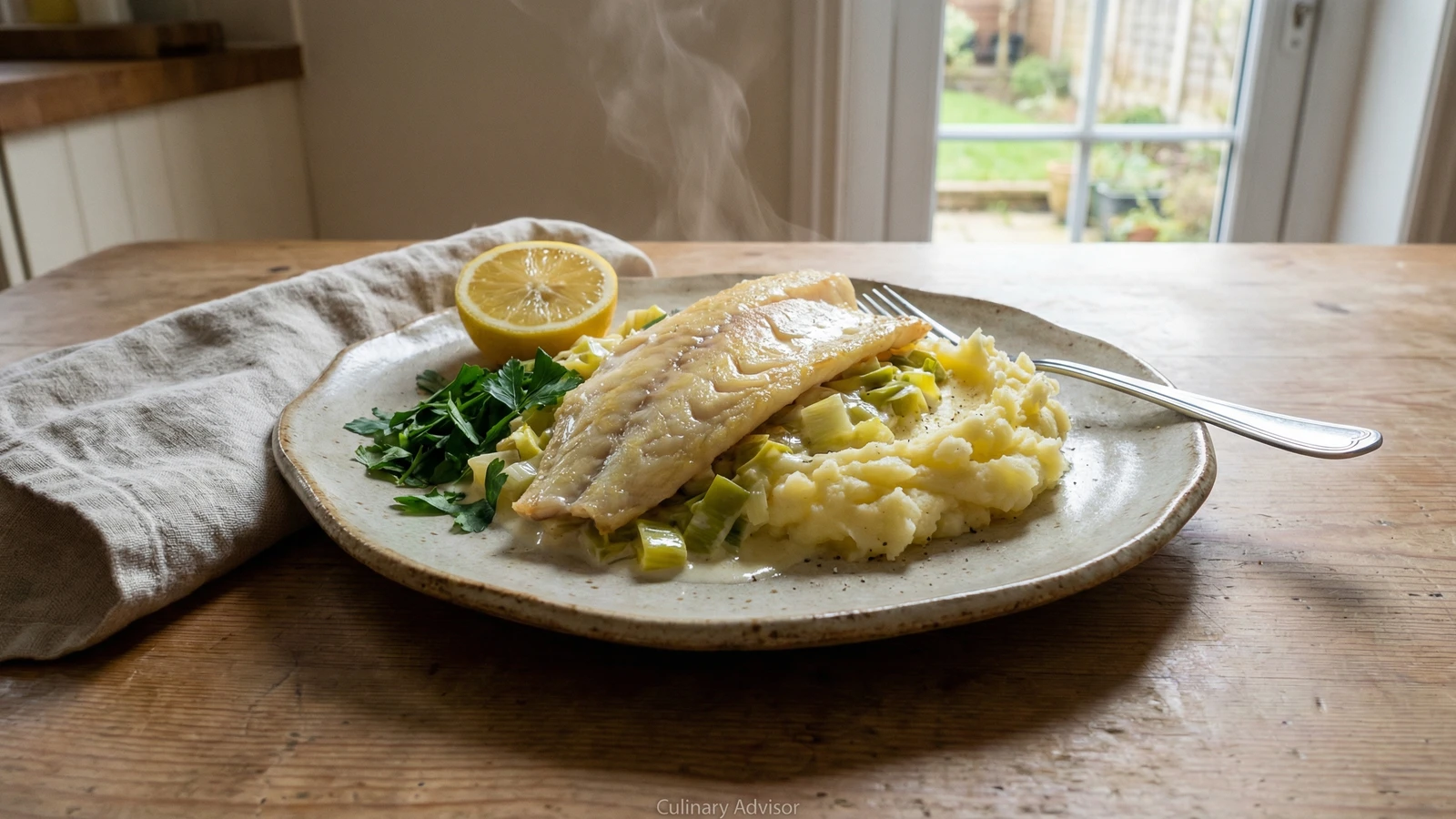
Poached smoked haddock resting on a bed of soft, creamy leeks beside a mound of buttery mash made loose with the smoky poaching milk. A proper winter plate for a cold Tuesday.
January rain on the kitchen window, the heating on, and the smell of smoked haddock poaching in milk. There are evenings when you know what you want before you've even opened the fridge. This is one of them.
I buy undyed haddock from the fishmonger on Saturday mornings. The real thing, pale and pearlescent, none of that lurid yellow nonsense. It smells of the sea and the smokehouse, quietly, not shouting. The milk it poaches in turns golden and takes on the smoke, and that milk goes into the mash, which means the whole plate speaks the same language. Leeks, cooked slowly in butter until they've given up every trace of resistance, finished with cream. Mash that's loose and generous. The fish laid on top, barely held together, flaking at the touch of a fork. Right food, right evening.
This is a plate I come back to every winter. I wrote it down in the notebook years ago, just three words: haddock, leeks, Tuesday. That was enough. The dish hasn't changed because it doesn't need to. It takes less than an hour, most of it gentle simmering, and it asks very little of you except attention. Feed it to someone on a cold night and watch their shoulders drop. There are few better feelings than putting a warm plate in front of someone when the weather is against them.
Quantity
2, about 180g each
Quantity
300ml
Quantity
2
Quantity
a few
Quantity
3 large
white and pale green parts, sliced
Quantity
30g, plus extra for the mash
Quantity
100ml
Quantity
4 medium
peeled and cut into even chunks
Quantity
to taste
Quantity
to taste
Quantity
small handful
roughly chopped
Quantity
a squeeze
| Ingredient | Quantity |
|---|---|
| undyed smoked haddock fillets | 2, about 180g each |
| whole milk | 300ml |
| bay leaves | 2 |
| black peppercorns | a few |
| leekswhite and pale green parts, sliced | 3 large |
| unsalted butter | 30g, plus extra for the mash |
| double cream | 100ml |
| floury potatoespeeled and cut into even chunks | 4 medium |
| fine sea salt | to taste |
| white pepper | to taste |
| flat-leaf parsley (optional)roughly chopped | small handful |
| lemon juice | a squeeze |
Put the potatoes into a large pan of cold, salted water. Bring to a steady simmer and cook until they give way completely to a knife, no resistance at all, which takes about twenty minutes depending on their size. Don't rush this. Undercooked potato won't mash, it'll just break into stubborn lumps that nothing can fix.
While the potatoes are on, melt the butter in a wide pan over a low heat. Add the sliced leeks and a good pinch of salt. Stir them through the butter, put a lid on, and let them sweat gently for ten to twelve minutes. You want them completely soft, silky, almost collapsed, with no colour at all. Stir now and then. If you hear sizzling rather than a quiet murmur, the heat is too high. When they've surrendered, pour in the cream, stir it through, and leave it on the lowest heat while you poach the fish.
Lay the haddock fillets in a shallow pan, skin side down. Pour the milk over them, tuck in the bay leaves and peppercorns, and bring it up to a bare simmer. You want the surface of the milk barely trembling, not bubbling. Poach for four to five minutes, until the fish has turned opaque and the flesh flakes easily when you press it gently with the back of a spoon. Lift the fillets out carefully and set them aside. Keep the poaching milk. It's golden and smoky and too good to waste.
Drain the potatoes well and let them steam dry in the colander for a minute. Return them to the warm pan and mash with a generous knob of butter and a few splashes of the warm poaching milk. Work it until smooth and loose enough to fall lazily off a spoon. Season with salt and white pepper. Taste it. The poaching milk brings a whisper of smoke into the mash, which is the whole point.
Spoon a generous mound of mash onto each warm plate. Settle the creamy leeks alongside, letting them spread and pool slightly. Lay the haddock on top of the leeks, skin peeled away if you like. Squeeze a little lemon juice over the fish, scatter the parsley if you have it, and carry the plates to the table. A recipe is a conversation, not a contract. Taste the leeks, adjust the salt, trust your instincts. That's all there is to it.
1 serving (about 630g)
Culinary guides, cultural storytelling, and the editorial depth that makes cooking meaningful.
Discover Culinary ExplorerChef Thomas
A whole bird rubbed with butter, stuffed with lemon and thyme, roasted until the skin crackles and the kitchen smells like the kind of evening you want to sit down and stay in.

Chef Thomas
Eggs bedded into leek-flecked mash under a blanket of sharp cheese sauce, baked until golden and bubbling. A Welsh supper dish that proves the simplest things are usually the best.

Chef Thomas
A cold evening carbonara made with good smoked back bacon, eggs, Parmesan, and more black pepper than seems reasonable, tossed together in the time it takes to boil the pasta.

Chef Thomas
Thick bacon chops, bronzed in butter and slicked with a mustard and honey glaze that catches and caramelises under a hot grill. Twenty minutes, two plates, a very good Tuesday.