
Chef Thomas
A Proper Roast Chicken
A whole bird rubbed with butter, stuffed with lemon and thyme, roasted until the skin crackles and the kitchen smells like the kind of evening you want to sit down and stay in.
A cooking platform built around craft, culture, and the stories behind what we eat.
Created by Chef Thomas
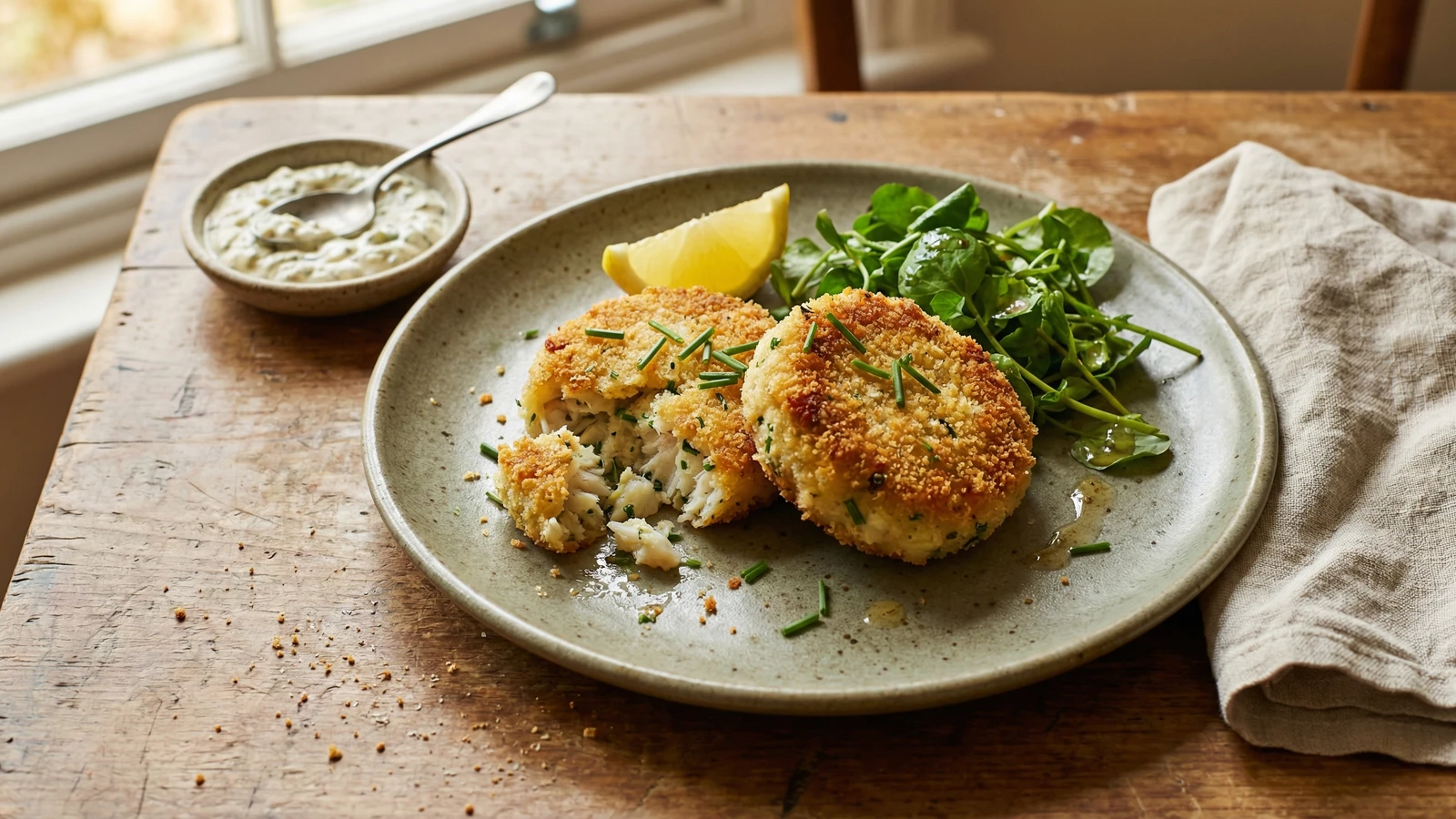
Smoked haddock flaked through buttery mash with chives and lemon zest, crumbed and fried to a deep golden crust that cracks when you cut into it. Proper cold-weather cooking.
The smell of smoked haddock poaching in milk is one of the great kitchen smells. It fills the room slowly, salt and smoke and something faintly sweet from the warming milk, and by the time the fish is done, the whole house knows dinner is on its way. This is a Tuesday smell. A coat-still-damp-from-the-walk-home smell. It belongs to the colder months, when the evenings close in early and you want something on the plate that feels like it's paying attention.
Fishcakes are forgiving things. They don't demand precision. The potatoes want to be a bit drier than you'd serve them on their own, the fish wants to be flaked in big, generous pieces so you find it in every bite, and the chives want to be stirred through at the last moment so they stay bright and sharp against all that smoke. A scrape of Dijon mustard and a little lemon zest, and you've got a mixture that smells better than it has any right to, given how little you've done.
The crumbing and frying is the only part that asks for your full attention, and even that is ten minutes at the stove. Get the oil hot, leave the fishcakes alone once they're in the pan, and wait for that deep golden crust before you turn them. A squeeze of lemon at the table. Some watercress if you've got it, or a few leaves of whatever salad is in the fridge. There are few better feelings than putting a warm plate of these in front of someone on a cold night.
I wrote it down in the notebook last February: haddock fishcakes, rain on the window, the kitchen golden. That's all the recipe I needed.
Quantity
400g
Quantity
500g
peeled and cut into chunks (Maris Piper or King Edward)
Quantity
300ml
Quantity
1
Quantity
a few
Quantity
30g
Quantity
small bunch
finely snipped
Quantity
1 tablespoon
Quantity
1
zested, then cut into wedges for serving
Quantity
to taste
Quantity
to taste
Quantity
75g
for coating
Quantity
2
beaten
Quantity
100g
Quantity
for frying
Quantity
to serve
| Ingredient | Quantity |
|---|---|
| undyed smoked haddock fillet | 400g |
| floury potatoespeeled and cut into chunks (Maris Piper or King Edward) | 500g |
| whole milk | 300ml |
| bay leaf | 1 |
| black peppercorns | a few |
| unsalted butter | 30g |
| chivesfinely snipped | small bunch |
| Dijon mustard | 1 tablespoon |
| lemonzested, then cut into wedges for serving | 1 |
| fine sea salt | to taste |
| black pepper | to taste |
| plain flourfor coating | 75g |
| large eggsbeaten | 2 |
| fresh white breadcrumbs | 100g |
| vegetable oil or light olive oil | for frying |
| lemon wedges (optional) | to serve |
Lay the smoked haddock in a wide pan, skin side down. Pour the milk over, drop in the bay leaf and peppercorns, and bring to a bare simmer. Not a boil. You want the surface trembling, nothing more. Give it five minutes, then take the pan off the heat and leave the fish in the milk for another five. It will finish cooking gently in the residual warmth. The kitchen will smell of smoke and salt and something deeply savoury. That's how you know it's right.
While the fish poaches, boil the potatoes in well-salted water until they fall apart when prodded with a knife. Drain thoroughly and let them steam dry in the colander for a few minutes. This matters. Wet potatoes make wet fishcakes, and wet fishcakes fall apart in the pan. Mash with the butter until smooth but not overworked. You want it a little drier and stiffer than you'd serve at the table. Season with salt and a good grinding of pepper.
Lift the haddock from the milk and peel away the skin. It should come off in one piece. Flake the fish into the mash in large, generous pieces, using your fingers rather than a fork. You want to find chunks of smoky fish in the finished fishcake, not a uniform paste. Fold in the chives, the mustard, and the lemon zest. Be gentle. The less you work this, the more interesting the texture. Taste the mixture. The smoked fish may give you enough salt on its own, but add more if it needs it.
Divide the mixture into eight. Flour your hands lightly and shape each portion into a round cake about two centimetres thick. Don't press too firmly. A fishcake that's been squeezed into submission will be dense and heavy. You want it to hold its shape, nothing more. Place them on a tray and refrigerate for at least thirty minutes. Cold fishcakes hold together in the pan. Impatient fishcakes don't.
Set out three shallow dishes: flour in the first, beaten egg in the second, breadcrumbs in the third. Take each fishcake through the stations, flour first, then egg, then crumbs, turning to coat evenly. The flour gives the egg something to grip. The egg gives the crumbs something to grip. Skip a stage and the whole thing falls apart in the pan. This is the only part of the process where order matters.
Pour enough oil into a wide, heavy pan to come about a centimetre up the sides. Heat it over a medium flame until a breadcrumb dropped in sizzles immediately and turns golden in about twenty seconds. Fry the fishcakes in batches, three or four minutes a side, until the crust is deep gold and properly crisp. Don't move them for the first couple of minutes. Let the crumb set and colour. When you turn them, the underside should be the colour of a good conker. Drain on kitchen paper for a moment, then serve.
1 serving (about 275g)
Culinary guides, cultural storytelling, and the editorial depth that makes cooking meaningful.
Discover Culinary ExplorerChef Thomas
A whole bird rubbed with butter, stuffed with lemon and thyme, roasted until the skin crackles and the kitchen smells like the kind of evening you want to sit down and stay in.

Chef Thomas
Eggs bedded into leek-flecked mash under a blanket of sharp cheese sauce, baked until golden and bubbling. A Welsh supper dish that proves the simplest things are usually the best.

Chef Thomas
A cold evening carbonara made with good smoked back bacon, eggs, Parmesan, and more black pepper than seems reasonable, tossed together in the time it takes to boil the pasta.

Chef Thomas
Thick bacon chops, bronzed in butter and slicked with a mustard and honey glaze that catches and caramelises under a hot grill. Twenty minutes, two plates, a very good Tuesday.