
Chef Lesia
Buzhenyna (буженина, garlic-studded roast pork)
A whole pork neck takes garlic into little knife pockets, roasts until the crust goes dark and fragrant, then rests overnight so every cold slice tastes better than shop ham.
A cooking platform built around craft, culture, and the stories behind what we eat.
Created by
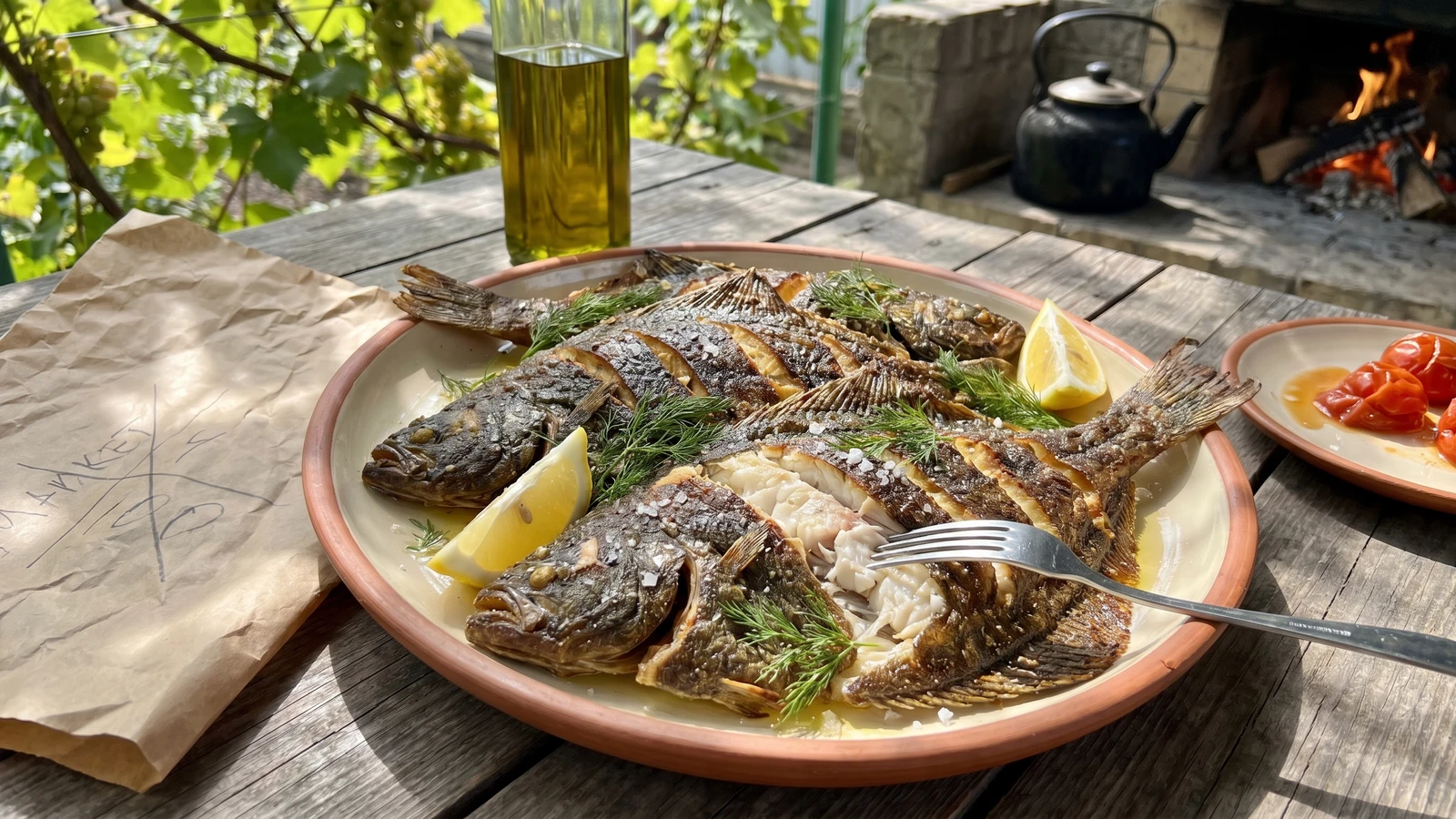
Black Sea flounder looks plain until the scored skin hits sunflower oil, turns gold at the cuts, and the sweet white flesh lifts from the bone in salty sheets.
Black Sea flounder looks plain until the scored skin hits sunflower oil. Then every cut opens gold, the flour goes nutty at the edges, and the little flat body begins to crackle in a way that tells you dinner is closer than any clock can. This is southern food, market fish carried home still smelling of salt and weed, fried fast because everyone is hungry and the tomatoes are already sweating on the plate.
The trick is not decoration. Score the dark skin down to the bone, salt it, then dust with flour so the thin edges don't overcook before the thicker middle has surrendered. A flat fish curls if you let it keep its secrets. Open it with the knife and it cooks honestly, skin crisp, flesh sweet, lifting away in sheets.
At my family's table this was not a grand fish course. It was a weeknight argument with the pan, my father saying "listen, listen, now it sounds right" when the fierce spitting softened into a steady crackle. Serve it with dill, lemon if you like that bright sting, and something sour from a jar. In August we'd be drowning in tomatoes; in January we open the fermented ones. That's not a substitute, that's the actual tradition.
Fried flatfish belongs to Ukraine's Black Sea coast, especially the Odesa, Mykolaiv and Kherson markets where small kambala and, when lucky, kalkan, the Black Sea turbot, are bought whole and cooked the same day. The Soviet canteen version of fish often meant anonymous fillets in batter, but coastal home kitchens kept the sharper habit: whole fish, scored to the bone, flour, sunflower oil, dill, and a sour or fermented thing beside it.
Quantity
4 small, about 300-400g each
cleaned, scaled, and fins trimmed
Quantity
1 1/2 teaspoons, plus more to finish
Quantity
1 teaspoon
Quantity
120g
Quantity
2 tablespoons
for a rougher crust
Quantity
150ml
for shallow frying
Quantity
1 tablespoon
for finishing
Quantity
1
cut into wedges
Quantity
1 small bunch
roughly chopped
Quantity
to serve
Quantity
to serve
| Ingredient | Quantity |
|---|---|
| whole Black Sea flounder or other small flatfishcleaned, scaled, and fins trimmed | 4 small, about 300-400g each |
| fine sea salt | 1 1/2 teaspoons, plus more to finish |
| freshly ground black pepper | 1 teaspoon |
| plain flour | 120g |
| fine cornmeal or semolina (optional)for a rougher crust | 2 tablespoons |
| sunflower oilfor shallow frying | 150ml |
| unrefined green sunflower oil (optional)for finishing | 1 tablespoon |
| lemon (optional)cut into wedges | 1 |
| dillroughly chopped | 1 small bunch |
| fermented tomatoes or cucumbers (optional) | to serve |
| boiled new potatoes or dark bread (optional) | to serve |
Pat the flounder very dry, especially along the fins and belly. Use kitchen scissors to neaten any sharp fins, then cut three or four diagonal slashes through the dark skin, down to the central bone. Salt the fish inside the cuts and over both sides, then leave it on a tray until the salt has pulled a light shine from the skin and the fish no longer feels fridge-cold.
Mix the flour with the black pepper and the cornmeal or semolina if you're using it. Press the fish into the flour so it catches inside the scored cuts, then shake it off properly. It should look dusty, not buried. Thick flour turns pasty in the pan and steals the sweetness from the skin.
Pour sunflower oil into a wide heavy pan to come about 5mm up the side and heat it over a lively medium-high flame. Drop in a pinch of flour; it should sizzle at once and turn pale gold without darkening too fast. The smell should be sunflower and toast. If it turns bitter, lower the heat and wait for the pan to calm down.
Lay the fish in dark side down, lowering it away from you. Do not prod it. At first the pan sounds fierce; wait until that hard spitting settles into an even dry crackle and the scored lines have gone golden. Small fish take only a few minutes a side, but your ears will tell you before the clock does.
Turn the fish with two wide spatulas so it does not break at the backbone. Fry the pale side until the cuts open, the edges are crisp, and the flesh at the thickest part turns opaque and lifts when nudged with a knife. If the bone releases cleanly, you're there.
Lift the fish onto a rack or brown paper and salt it while the oil still shines on the crust. Move it to a warm platter, drizzle with a little unrefined sunflower oil if you like, then throw dill over the top and tuck lemon wedges beside it. Serve with fermented tomatoes or cucumbers and boiled potatoes or dark bread. The top fillets lift away first, then the backbone comes up, then the sweet underside is yours.
1 serving (about 320g)
Culinary guides, cultural storytelling, and the editorial depth that makes cooking meaningful.
Discover Culinary ExplorerChef Lesia
A whole pork neck takes garlic into little knife pockets, roasts until the crust goes dark and fragrant, then rests overnight so every cold slice tastes better than shop ham.
Chef Lesia
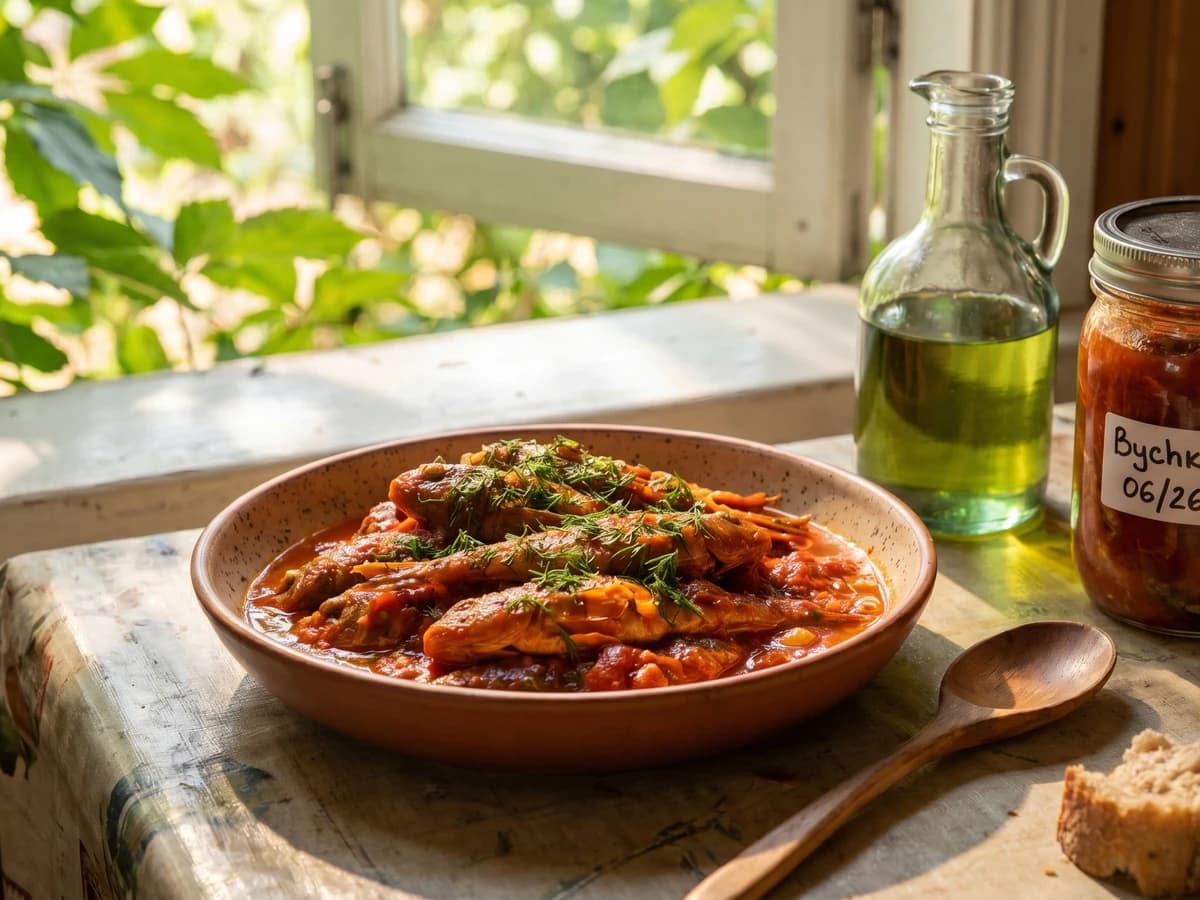
Small Azov gobies go into tomato bright as market cloth and come out soft enough that the bones give up. This is Mariupol food: cheap, red, generous, and better tomorrow.

Chef Lesia
The first sound is the meat against the board: flat, sharp, changing as the fibres loosen. Fry the cutlets fast, then let onion gravy do the soft finishing.

Chef Lesia
A heap of tiny silver fish becomes supper by the oldest Odesa trick: clean them, press them together, fry until the edges crackle, and let lemon and dill do the talking.