
Chef Freja
Butterdejs-Tarteletskaller
Danish puff pastry tartelet shells folded and chilled in patient layers, baked tall and golden until they shatter at the first bite. The architecture that holds a hundred different fillings.
A cooking platform built around craft, culture, and the stories behind what we eat.
Created by Chef Freja
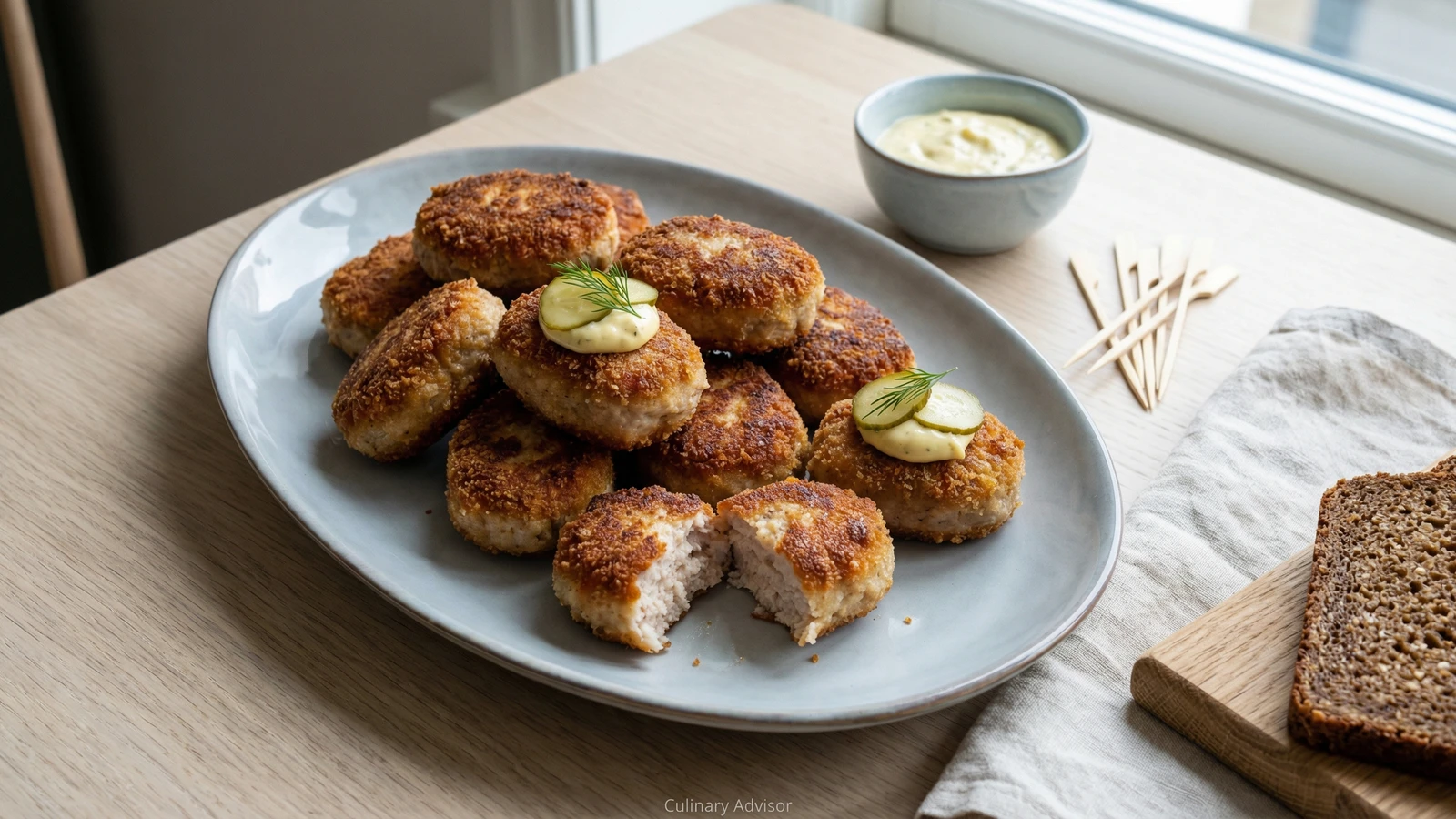
Mini Danish breaded pork patties pan-fried in butter with a crackling crust, served warm with cold remoulade and pickled cucumber. The party snack that built half the koldt bord traditions in Denmark.
Karbonader belong to the Danish weeknight kitchen, the kind of cooking that doesn't ask much of you and gives back a great deal. The full-size version is dinner, served with stewed white cabbage or peas and carrots and boiled potatoes. The small version, sma karbonader, is something else entirely. These are the patties that show up on the koldt bord at confirmations, birthdays, and the long Sunday lunches that hold a Danish family together.
If you've made frikadeller, you know the shape of the work. Karbonader are their close cousin, with one important difference: they wear a crust. The patties are dipped in egg and breadcrumbs before they hit the pan, and that crust is the whole point. It crackles when you bite through and gives way to a soft, savoury centre lifted by sparkling water and grated onion. The contrast is what makes them disappear from the platter faster than you can refill it.
What I want you to pay attention to is the moment the butter foams in the pan and starts to smell of toasted hazelnuts. That is the window. Earlier and the crumb won't crisp. Later and the butter burns and leaves bitter flecks on the meat. You'll know when it's right because the kitchen will tell you, and from that moment everything moves quickly. Have the patties shaped and breaded before the butter goes on the heat. Karbonader reward a cook who is ready.
Karbonader entered the Danish kitchen in the 19th century by way of the German Karbonade, a pan-fried meat patty that travelled north along trade routes through Schleswig-Holstein. Danish cooks took the idea, flattened the shape, and added the egg-and-breadcrumb shell that distinguishes karbonader from their German parent and from the unbreaded frikadeller they share a bowl with. By the 1950s, when home economists at Statens Husholdningsraad were standardising Danish weeknight cooking, karbonader had become one of the defining dishes of the modern Danish household, and the small party version appeared on every koldt bord from Skagen to Gedser.
Quantity
500g
12 to 15 percent fat
Quantity
1 small
very finely grated
Quantity
1 large
Quantity
1 large
beaten
Quantity
3 tablespoons
Quantity
100ml
Quantity
1 teaspoon
Quantity
freshly ground, to taste
Quantity
a grating
Quantity
150g
Quantity
75g
Quantity
2 tablespoons
Quantity
to serve
Quantity
to serve
Quantity
small bunch
fronds picked
| Ingredient | Quantity |
|---|---|
| minced pork12 to 15 percent fat | 500g |
| yellow onionvery finely grated | 1 small |
| egg (for the mixture) | 1 large |
| egg (for breading)beaten | 1 large |
| plain flour | 3 tablespoons |
| cold sparkling water | 100ml |
| fine sea salt | 1 teaspoon |
| white pepper | freshly ground, to taste |
| fresh nutmeg | a grating |
| fine dry breadcrumbs (rasp) | 150g |
| unsalted butter | 75g |
| neutral oil | 2 tablespoons |
| Danish remoulade | to serve |
| pickled cucumber slices | to serve |
| fresh dill (optional)fronds picked | small bunch |
Put the minced pork into a wide bowl with the finely grated onion, the single egg, the flour, salt, white pepper, and a small grating of nutmeg. Stir it all together with a wooden spoon until the meat starts to look sticky and pale, about two minutes. This is when the proteins begin to bind. If you stop too early, the patties fall apart in the pan.
Pour the cold sparkling water into the meat and stir it through until the mixture looks loose and almost airy. The bubbles create tiny pockets that survive the frying, and the result is a karbonade that stays tender inside the crust instead of going dense. This is something Danish cooks learn from watching, and now you've read it. Cover the bowl and rest the mixture in the fridge for fifteen minutes so it firms up enough to shape.
Beat the second egg in a shallow bowl. Tip the breadcrumbs into another shallow bowl beside it. Have a tray ready for the breaded patties. Karbonader move quickly once you start, so the order of things matters: meat, egg, crumb, tray. Set it up before your hands get sticky.
Wet your hands with cold water so the meat doesn't stick. Take a heaped tablespoon of the mixture and shape it into a small oval patty about a centimetre thick. Karbonader are flat, not round. The flatness gives you more crisp surface, and the crisp surface is the whole point. Dip each patty into the beaten egg, let the excess drip off, then press it gently into the breadcrumbs, turning so every side is coated. Lay them on the tray as you go.
Heat half the butter and half the oil together in a heavy frying pan over medium heat. Butter alone burns before the centres cook through. Oil alone tastes of nothing. Together they give you the deep gold crust and the nutty richness that makes karbonader taste right. When the butter foams and just starts to smell of hazelnuts, lay the patties in without crowding the pan. Cook them for three to four minutes on the first side without touching them. The crumb needs time to set into a shell.
Flip each karbonade with a thin spatula and cook for another three minutes on the second side, until both sides are deep gold and the meat feels firm to the touch. Work in batches and add fresh butter and oil between each round. Old butter burns and leaves dark flecks on the next patties. Drain them briefly on kitchen paper as they come out of the pan.
Arrange the sma karbonader on a serving platter while they are still warm. Spoon a small dab of cold remoulade onto each one or serve a bowl of it alongside for dipping. Top each patty with a thin slice of pickled cucumber and a frond of dill. Serve at once, with toothpicks if they are going onto a koldt bord, the cold table that anchors any Danish gathering. Tak for mad.
1 serving (about 180g)
Culinary guides, cultural storytelling, and the editorial depth that makes cooking meaningful.
Discover Culinary ExplorerChef Freja
Danish puff pastry tartelet shells folded and chilled in patient layers, baked tall and golden until they shatter at the first bite. The architecture that holds a hundred different fillings.

Chef Freja
Danish pork crackling, simmered tender, dried until parchment, then fried until it puffs and shatters. The beer snack of every Danish kro, salty and golden and made for cold pilsner and good company.

Chef Freja
Hard-boiled egg halves heaped with cold-water fjord shrimp, dill mayonnaise, and a single frond of dill standing upright. The piece that disappears first from any Danish julefrokost table.

Chef Freja
Egg halves crowned with creme fraiche and the season's first stenbiderrogn, Danish lumpfish roe. A late-winter ritual along the Danish coasts when the fish come in and the kitchen reorients around them.