
Chef Lesia
Berezovyi Sik (березовий сік, birch sap drink)
Birch sap looks like water until you taste it: cold, faintly sweet, mineral, and gone almost as soon as spring admits it has arrived.
A cooking platform built around craft, culture, and the stories behind what we eat.
Created by
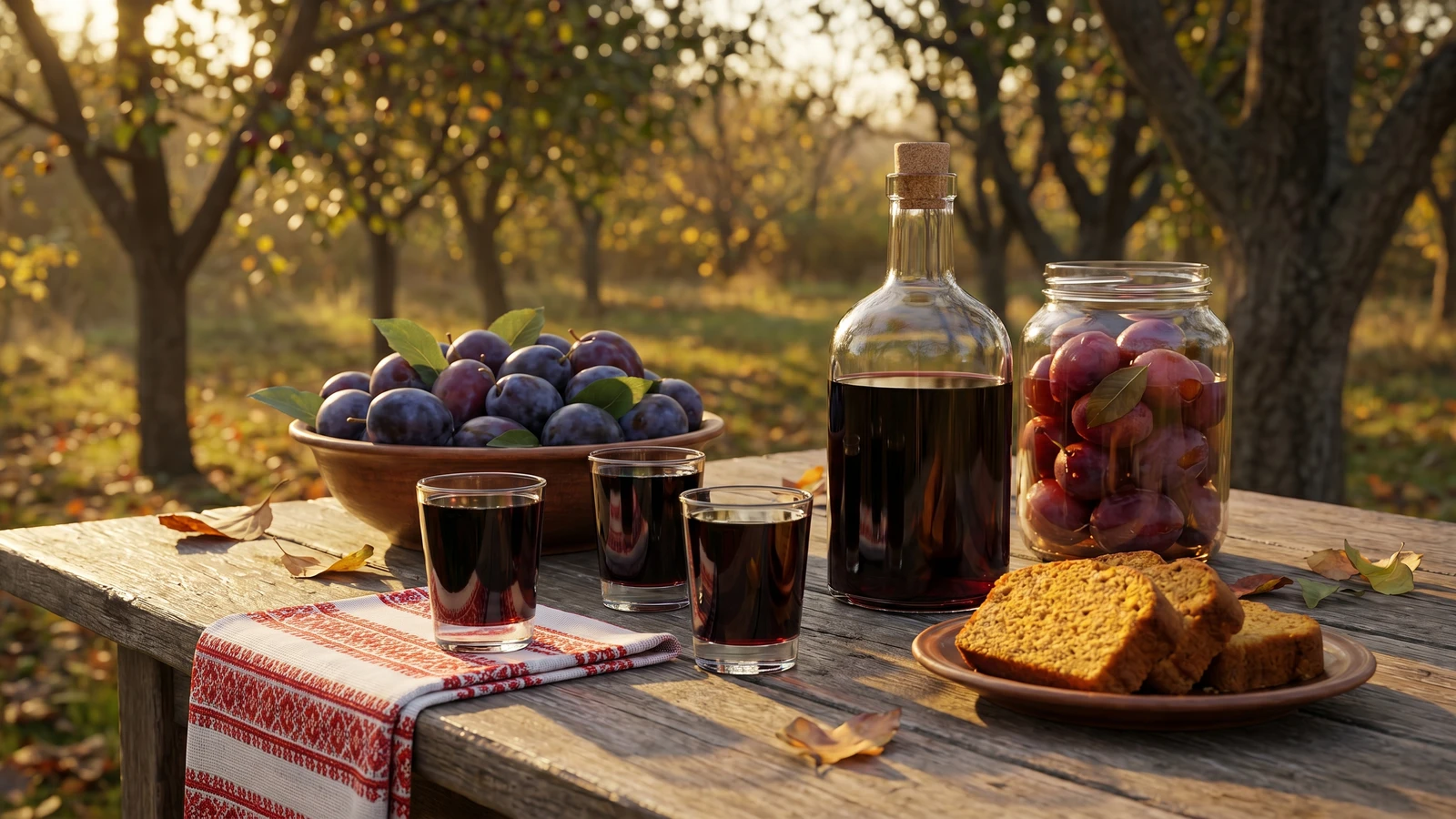
Dark plums give up their skins slowly, staining horilka garnet-black and honeyed, until the jar tastes like September decided to stay for the wedding.
The first thing slyvyanka gives you is color. Black-skinned plums split under your thumb, then sit in horilka until the whole jar turns garnet-dark, almost ink at the edges, like an orchard keeping one last secret after the leaves have gone.
This is nalyvka, a Ukrainian fruit liqueur made by waiting, not fussing. Cherries have vyshnivka, sharp and famous; plums answer lower, rounder, heavier, with honey softening the spirit and the stones lending a faint almond edge if you leave some fruit whole. Aunt Nadia wrote only, "when the fruit has given itself," which is very beautiful and very useless until you've watched the skins pale and the liquid darken for yourself.
The one thing that decides the drink is patience after straining. Freshly strained slyvyanka tastes separate: spirit here, plum there, honey wandering about. A month in the bottle pulls it together until the smell changes, from raw alcohol to orchard fruit, warm stone, and a little bitter-sweet depth. Then you pour tiny glasses, not because you're mean, but because it is strong and should arrive with dignity.
Nalyvky, fruit infusions on horilka or other strong spirit, have been part of Ukrainian household preserving since at least the early modern manor and monastery kitchens, where cherries, plums, raspberries, walnuts, and herbs were set down in season for winter and feast days. Plum versions are especially tied to orchard regions across Podillia, central Ukraine, and the south, where late summer fruit was too precious to waste and too abundant to eat fresh. Slyvyanka belongs on the same family branch as vyshnivka, but its mood is autumnal: darker, thicker, and often poured at weddings and anniversaries rather than drunk in a hurry.
Quantity
1.5 kg
washed, dried, half pitted and half left whole
Quantity
750 ml
Quantity
250 g
plus more to taste after straining
Quantity
100 g
Quantity
1 small strip
no white pith
Quantity
1 small
Quantity
2
| Ingredient | Quantity |
|---|---|
| ripe dark plumswashed, dried, half pitted and half left whole | 1.5 kg |
| horilka or good 40 percent vodka | 750 ml |
| mild honeyplus more to taste after straining | 250 g |
| sugar | 100 g |
| lemon zestno white pith | 1 small strip |
| cinnamon stick (optional) | 1 small |
| whole cloves (optional) | 2 |
Wash the plums and dry them properly; water clinging to the skins only dulls the drink. Halve and pit about half of them, then leave the rest whole for a gentle almond note from the stones. Any bruised fruit goes into compote, not into the jar.
Put the plums into a clean 2 litre glass jar with the honey, sugar, lemon zest, and the spices if you're using them. Pour over the horilka. The fruit should be covered; press it down gently with a clean spoon if it tries to sit proud.
Close the jar and set it somewhere cool and dark, not in hot sun. Turn it over gently every few days until the honey dissolves and the liquid begins to darken. Then leave it alone. The plums will slump, the skins will fade, and the horilka will turn the color of late autumn.
Strain the nalyvka through a sieve, then through muslin or a coffee filter if you want it clearer. Don't squeeze the fruit hard unless you like a cloudy bottle. Taste a spoonful: it should smell of plum before it smells of alcohol.
If it bites too sharply, warm a little extra honey just enough to loosen it, stir it in, and taste again. Bottle the slyvyanka and rest it for at least a month before serving. This is where it becomes itself: the raw edge softens, the plum comes forward, and the smell changes from spirit to orchard.
Serve chilled or cool in tiny glasses, alongside honey cake, poppyseed babka, or a wedding table crowded with cold plates and too many aunties giving advice. It should pour glossy and dark, sweet but not syrupy, strong enough that everyone respects it.
1 serving (about 55g)
Culinary guides, cultural storytelling, and the editorial depth that makes cooking meaningful.
Discover Culinary ExplorerChef Lesia
Birch sap looks like water until you taste it: cold, faintly sweet, mineral, and gone almost as soon as spring admits it has arrived.

Chef Lesia
Raw beets turn water into something dark, sour, and alive: a crimson drink for the glass, and the old quiet souring for borshch when vinegar has no business there.

Chef Lesia
Dried chebrets looks like a handful of dusty twigs until hot water wakes it, and suddenly the cup smells of bees, sun-baked grass, and rain on the steppe.

Chef Lesia
Dried pears turn water the color of late honey, then the jar begins to whisper. Serve it cold and tart, with fine bubbles, orchard smoke, and August still in the glass.