
Chef Ally
Artichokes Braised in Olive Oil
Tender baby artichokes surrendered to good olive oil, garlic, and lemon, cooked low and slow until the leaves soften and the hearts turn silky. A dish that asks you to slow down.
A cooking platform built around craft, culture, and the stories behind what we eat.
Created by
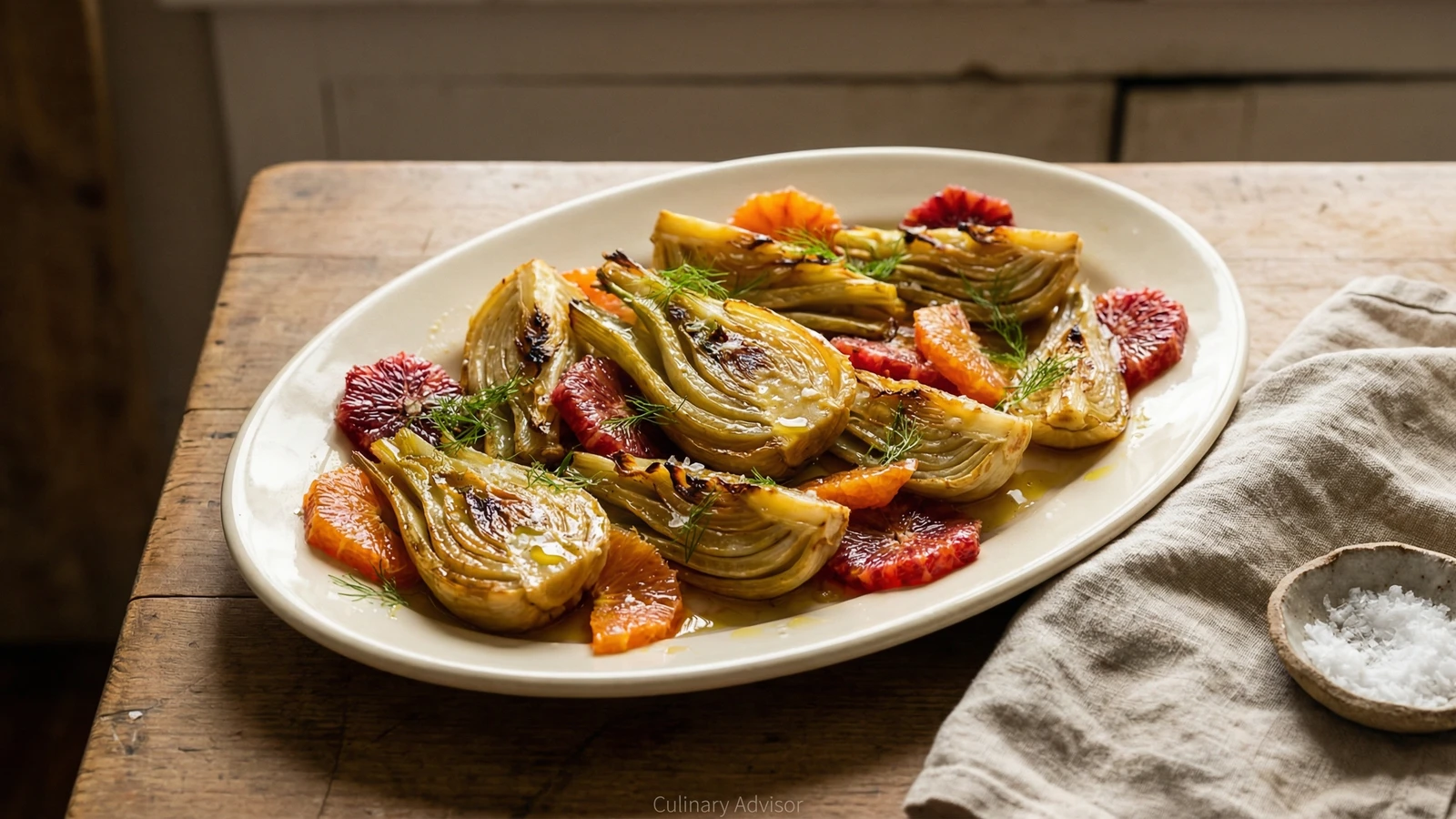
Fennel bulbs transformed by patient heat into something silky and deeply caramelized, brightened with blood orange segments and a drizzle of fruity olive oil. A winter dish that proves vegetables need almost nothing when they are grown well and cooked simply.
Fennel at the farmers market in January is a beautiful thing. The bulbs should feel heavy and tight, the outer layers glossy white without browning, the fronds still bright green and fragrant when you brush them. This is the moment to buy it, when the cold has concentrated its sugars and the anise flavor runs deep.
Slow roasting changes fennel completely. The raw crunch and sharp licorice notes mellow into something silky, sweet, almost buttery. The edges caramelize and turn amber while the interior becomes tender enough to cut with a spoon. You are not masking the vegetable. You are revealing what heat and time can draw out of it.
Citrus arrives at the same moment in winter. Blood oranges with their ruby flesh, navels heavy with juice, Meyer lemons that taste like sunshine. Pairing them with roasted fennel is not a technique so much as a recognition that these ingredients belong together in the season. The bright acidity cuts through the richness of the caramelized vegetable. The colors on the plate look like winter itself.
This is the kind of dish I would serve at Chez Panisse on a February evening. Simple enough that any home cook can make it, beautiful enough to set at the center of a holiday table. Your choices shape the food system. Find a farmer who grows fennel with care, and this dish will taste like the place it came from.
Quantity
3 (about 2 1/2 pounds total)
Quantity
1/4 cup, plus more for finishing
Quantity
1 teaspoon, plus more to taste
Quantity
1/2 teaspoon
freshly cracked
Quantity
2 medium
Quantity
1 small
Quantity
1 tablespoon
Quantity
1 small
minced fine
Quantity
reserved from bulbs
for garnish
| Ingredient | Quantity |
|---|---|
| large fennel bulbs with fronds | 3 (about 2 1/2 pounds total) |
| extra-virgin olive oil | 1/4 cup, plus more for finishing |
| flaky sea salt | 1 teaspoon, plus more to taste |
| black pepperfreshly cracked | 1/2 teaspoon |
| blood oranges or navel oranges | 2 medium |
| Meyer lemon or regular lemon | 1 small |
| white wine vinegar or champagne vinegar | 1 tablespoon |
| shallotminced fine | 1 small |
| fennel frondsfor garnish | reserved from bulbs |
Trim the stalks from each fennel bulb, setting aside the feathery fronds for later. Cut a thin slice from the root end, but leave enough core intact to hold the wedges together. Halve each bulb through the root, then cut each half into three wedges. You want pieces substantial enough to caramelize without falling apart.
Preheat your oven to 375F. Spread the fennel wedges on a large rimmed baking sheet in a single layer, cut sides facing up or down, alternating so they nestle together. Drizzle with olive oil and use your hands to coat each piece. Season with salt and pepper. The fennel should glisten but not swim in oil.
Slide the pan into the oven and roast for 45 minutes without disturbing. The edges will begin to turn golden. Flip each wedge carefully using a thin spatula, then continue roasting for another 25 to 30 minutes. The fennel is ready when it yields completely to a knife and the edges have turned deeply caramelized, almost amber in places. The anise sharpness will have mellowed into something sweeter.
While the fennel roasts, supreme your oranges. Cut away the peel and white pith with a sharp knife, following the curve of the fruit. Working over a bowl to catch the juices, slice between the membranes to release each segment. Squeeze the juice from what remains into the bowl. Repeat with the lemon, keeping those segments separate if you prefer their brightness as a final accent.
In a small bowl, combine the minced shallot with the vinegar. Let it sit for five minutes to soften the bite. Whisk in two tablespoons of the reserved citrus juice and three tablespoons of olive oil. Taste. It should be bright but not aggressive. Add a pinch of salt if needed.
Transfer the roasted fennel to a serving platter while still warm. Scatter the citrus segments over and around the wedges. Drizzle with the shallot dressing. Finish with a few torn fennel fronds, a final thread of your best olive oil, and a pinch of flaky salt. Serve warm or at room temperature. This dish improves as it sits, the flavors deepening as they mingle.
1 serving (about 165g)
Culinary guides, cultural storytelling, and the editorial depth that makes cooking meaningful.
Discover Culinary ExplorerChef Ally
Tender baby artichokes surrendered to good olive oil, garlic, and lemon, cooked low and slow until the leaves soften and the hearts turn silky. A dish that asks you to slow down.

Chef Ally
Tender chickpeas, still warm, tossed with bright lemon, your best olive oil, and handfuls of soft herbs picked that morning. The kind of simple dish that reminds you why cooking matters.

Chef Ally
Rough-cut potatoes roasted until golden and shattering, perfumed with woody rosemary and finished with flaky salt. The kind of honest side dish that disappears before the main course is served.
Chef Juliette
Boulettes au suif, poached beside salt beef, turn equal weights of flour and finely chopped suet into tender, rich dumplings. Keep the beef liquor at a bare tremble and the old garnish works beautifully at home.