
Chef Lesia
Makivnyk (маківник, poppy seed roll)
The black poppy filling is the point: dense, glossy, honeyed, almost mineral, rolled so tightly through soft dough that every slice looks like a winter night with a gold edge.
A cooking platform built around craft, culture, and the stories behind what we eat.
Created by
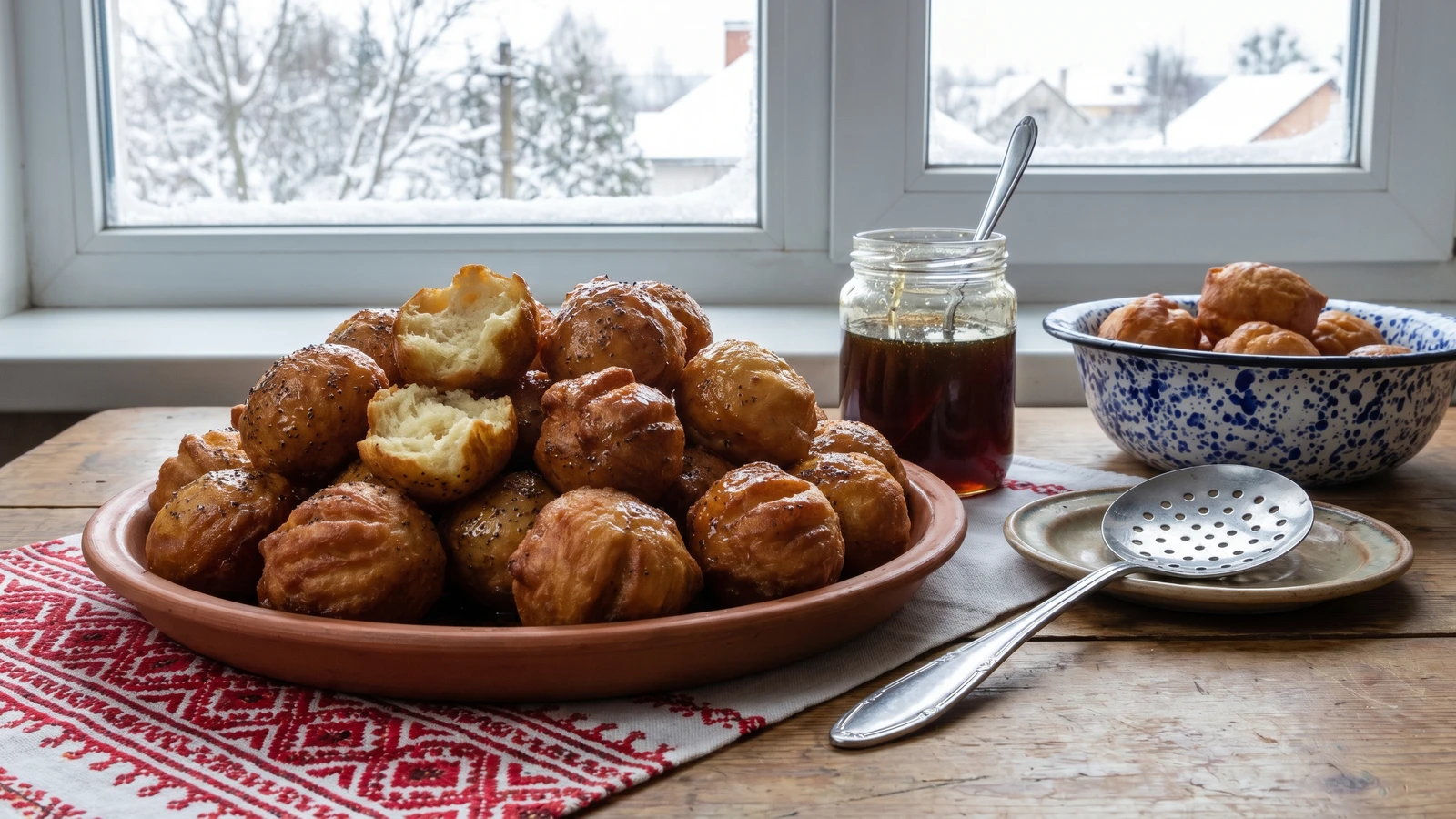
A spoonful of soft yeast batter drops into sunflower oil, the pan answers with a tidy hiss, and a little while later the bowl is gold, sticky, and impossible to ignore.
The oil tells you first. A spoonful of soft dough slides from the spoon, sinks for one heartbeat, then the fat answers with a neat little hiss and the round begins to swell, pale at first, then sunflower-gold, then bronze at the ridges. That sound is the recipe before the recipe: too quiet and the slastyony drink oil, too angry and the outside darkens while the middle sulks.
Slastyony are Poltava's pryazhene sweet, pryazhene meaning cooked in hot fat, the old family of fried festival foods that sits near verhuny, pampushky, and every sensible thing made for people who have come in cold. They are not tidy ring doughnuts. They are spoonfuls of live dough, soft with milk and smetana, fried until light, then rolled through warm honey so the crust glistens and the inside stays tender.
The batter should be looser than bread dough and thicker than pancake batter, thick enough to fall from the spoon in one heavy ribbon. Aunt Nadia once wrote "until it sounds right" in the margin of a frying recipe, and I used to laugh at that, but here she was exact. Listen to the hiss, smell when the crust turns nutty, then move quickly to the honey while the dough is still open enough to drink.
Make a big bowl. These are for holidays, grey afternoons, and the kind of comfort where someone keeps stealing one more with sticky fingers. Enough for eight guests or one hungry Ukrainian.
Slastyony are most closely tied to Poltava and the central Ukrainian family of pryazhene, from pryazhyty, to fry in hot fat: small sweets cooked quickly for fairs, name days, winter holidays, and tables where honey was the celebration sugar. The word belongs to old Ukrainian table vocabulary preserved around Poltava in the era of Ivan Kotliarevsky's Eneida, first published in 1798, before Soviet canteens narrowed regional sweets into a few approved pastries.
Quantity
250ml
warmed to blood temperature
Quantity
7g
Quantity
2 tablespoons
Quantity
1 tablespoon
for the dough
Quantity
2 large
Quantity
60g
Quantity
30g butter, melted and cooled, or 2 tablespoons oil
Quantity
1/2 teaspoon
Quantity
420g, plus 1 to 2 tablespoons more only if needed
Quantity
1 to 1.25 litres
for frying
Quantity
250g
for soaking
Quantity
60ml
Quantity
pinch
for the honey
Quantity
1 tablespoon
lightly crushed
| Ingredient | Quantity |
|---|---|
| whole milkwarmed to blood temperature | 250ml |
| dried yeast | 7g |
| sugar | 2 tablespoons |
| runny honeyfor the dough | 1 tablespoon |
| eggs | 2 large |
| smetana or full-fat sour cream | 60g |
| butter or refined sunflower oil | 30g butter, melted and cooled, or 2 tablespoons oil |
| fine sea salt | 1/2 teaspoon |
| plain flour | 420g, plus 1 to 2 tablespoons more only if needed |
| refined sunflower oilfor frying | 1 to 1.25 litres |
| runny honeyfor soaking | 250g |
| water | 60ml |
| fine sea saltfor the honey | pinch |
| poppy seeds (optional)lightly crushed | 1 tablespoon |
Pour the warm milk into a large bowl; it should feel warm to your finger, not hot. Stir in the yeast and sugar, then leave it until the surface looks creamy and smells faintly beery. If nothing wakes up, don't bully it with flour. Start again with fresher yeast.
Beat in the honey, eggs, smetana, melted butter, and salt. Add the flour in two goes and beat hard with a wooden spoon until you have a thick, elastic batter that stretches before it drops. It should be looser than bread dough, thicker than pancake batter, and stubborn in a friendly way.
Cover the bowl and leave the batter somewhere warm until it has doubled, domed, and gone pocked with small bubbles. A warm kitchen moves quickly; a cold flat takes its time. Watch the dough, not the clock. When you scoop it, it should sigh and stretch, not pour.
Warm the honey with the water and a pinch of salt just until it loosens and smells floral. Do not boil it. Stir in the poppy seeds if you're using them, then keep the honey nearby in a wide bowl, ready for the fried slastyony.
Pour 5 to 6cm of refined sunflower oil into a wide, heavy pot, never more than halfway up the sides. Heat to 175C if you have a thermometer. Without one, drop in a pea-sized bit of batter: it should rise, puff, and hiss neatly. If it roars and browns at once, pull the pot off the heat for a minute; if it sits heavy and quiet, wait.
Dip two teaspoons in oil, scoop walnut-sized pieces of batter, and slide them carefully into the hot fat. Fry in small batches, turning as needed, until swollen, bronzed, and light against the spoon. The hiss softens when the centers are cooked. Lift them out, let the oil drip away, then roll them through the warm honey while they're still open and tender. Pile high and serve sticky.
1 serving (about 125g)
Culinary guides, cultural storytelling, and the editorial depth that makes cooking meaningful.
Discover Culinary ExplorerChef Lesia
The black poppy filling is the point: dense, glossy, honeyed, almost mineral, rolled so tightly through soft dough that every slice looks like a winter night with a gold edge.

Chef Lesia
Poppy seeds are the sound of Makoviy: toasted, crushed, and whispering under your teeth in small honey cookies baked when the heads ripen in the August heat.

Chef Lesia
The cherries fight back: tart July fruit cuts through sweet, oily poppy seed filling, staining the soft yeast crumb violet at the seams.
Chef Lesia
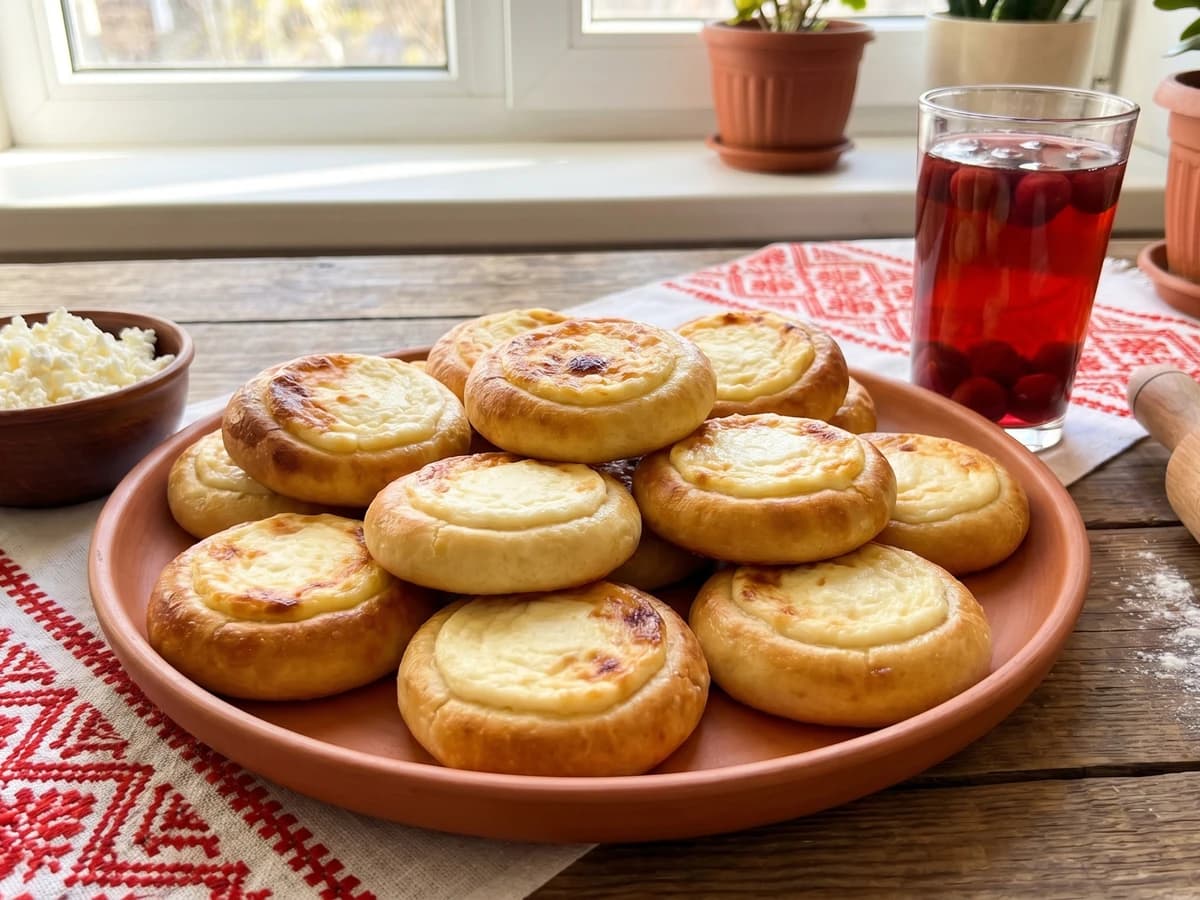
These little open cups carry their name like a road: mandryky, wanderers, with crumbly golden edges and sweet curd cheese sitting soft in the middle.