
Chef Dean
Buttermilk Bread
A soft, tangy sandwich loaf with a golden crust and remarkable staying power, this buttermilk bread turns out tender every time and keeps beautifully for days on your counter.
A cooking platform built around craft, culture, and the stories behind what we eat.

Created by
Stone-ground cornmeal and peak-season corn kernels baked in sizzling cast iron until golden on top and crackling crisp on the bottom. The corn tastes like summer because it is summer.
Start with the corn. It should be just-picked, the husks still damp with morning, the silk sticky between your fingers. When you peel back the husk, the kernels should be tight and glossy, and when you press one with your thumbnail, it should burst with milky sweetness. This is the corn you want. If you do not have it, wait.
Stone-ground cornmeal is the other half of the equation. Find a mill you trust, one that grinds the whole kernel, germ and all. The flavor is incomparable, nutty and alive in a way that shelf-stable meal cannot be. It will feel slightly coarse between your fingers. This texture matters.
The technique here is simple: a screaming hot cast iron skillet, butter sizzling in the pan, batter poured in to immediately start forming that crackling crust. Do not overthink this. Generations of Southern cooks have been making cornbread this way without recipes, adjusting by feel, listening to the sizzle. Your choices shape the food system. Buying corn from a farmer you know, cornmeal from a regional mill, keeps those growers and millers doing their work. The cornbread tastes better for the connection.
Quantity
1 cup (140g)
Quantity
1 cup (125g)
Quantity
2 tablespoons
Quantity
1 1/2 teaspoons
Quantity
1/2 teaspoon
Quantity
1 teaspoon
Quantity
1 1/4 cups
at room temperature
Quantity
2
at room temperature
Quantity
6 tablespoons
divided
Quantity
1 1/2 cups (from about 3 ears)
| Ingredient | Quantity |
|---|---|
| stone-ground yellow cornmeal | 1 cup (140g) |
| all-purpose flour | 1 cup (125g) |
| honey or sugar | 2 tablespoons |
| baking powder | 1 1/2 teaspoons |
| baking soda | 1/2 teaspoon |
| fine sea salt | 1 teaspoon |
| buttermilkat room temperature | 1 1/4 cups |
| large eggsat room temperature | 2 |
| unsalted butterdivided | 6 tablespoons |
| fresh corn kernels | 1 1/2 cups (from about 3 ears) |
Place a 10-inch cast iron skillet in the oven and preheat to 425F. The skillet needs to be screaming hot when the batter goes in. This is what creates that shatteringly crisp bottom crust, the whole point of skillet cornbread. Let it heat for at least twenty minutes while you prepare everything else.
Stand each ear of corn upright in a wide bowl and run your knife down the cob, staying close to the core. You want whole kernels, not mush. Let them fall into the bowl. Scrape the cob with the back of your knife to release the milky liquid. This corn milk is pure flavor. You should have about one and a half cups of kernels and their juices.
Whisk together the cornmeal, flour, honey or sugar, baking powder, baking soda, and salt in a large bowl. Stone-ground cornmeal has texture and flavor that degerminated supermarket meal cannot match. You should be able to feel the grit between your fingers. This is not a flaw. This is the whole corn, as it should be.
Melt 4 tablespoons of the butter and let it cool slightly. In a medium bowl, whisk together the buttermilk and eggs until smooth. Stream in the melted butter while whisking. The buttermilk's tang balances the sweetness of the corn and keeps the crumb tender.
Pour the wet ingredients into the dry and stir with a wooden spoon until just combined. Some small lumps are fine. Overworking the batter toughens the bread. Fold in the corn kernels and any liquid from the bowl. The batter will be thick but pourable, studded with whole kernels.
Carefully remove the hot skillet from the oven using thick oven mitts. Add the remaining 2 tablespoons of butter to the pan. It will sizzle and foam immediately. Swirl to coat the bottom and sides completely. The butter should smell nutty, not burnt.
Pour the batter into the center of the hot skillet. It will sizzle at the edges. Do not spread or fuss with it. The heat does the work. Return the skillet to the oven immediately. Bake for 22 to 25 minutes until the top is golden and a toothpick inserted in the center comes out with just a few moist crumbs. The edges will pull away from the pan slightly.
Let the cornbread rest in the skillet for five minutes. This firms the structure and makes cutting easier. Run a butter knife around the edge if needed, though a well-seasoned pan releases cleanly. Cut into wedges and serve warm from the skillet, or invert onto a wooden board if you want to show off that golden crust.
1 serving (about 120g)
Culinary guides, cultural storytelling, and the editorial depth that makes cooking meaningful.
Discover Culinary ExplorerChef Dean
A soft, tangy sandwich loaf with a golden crust and remarkable staying power, this buttermilk bread turns out tender every time and keeps beautifully for days on your counter.
Chef Dean
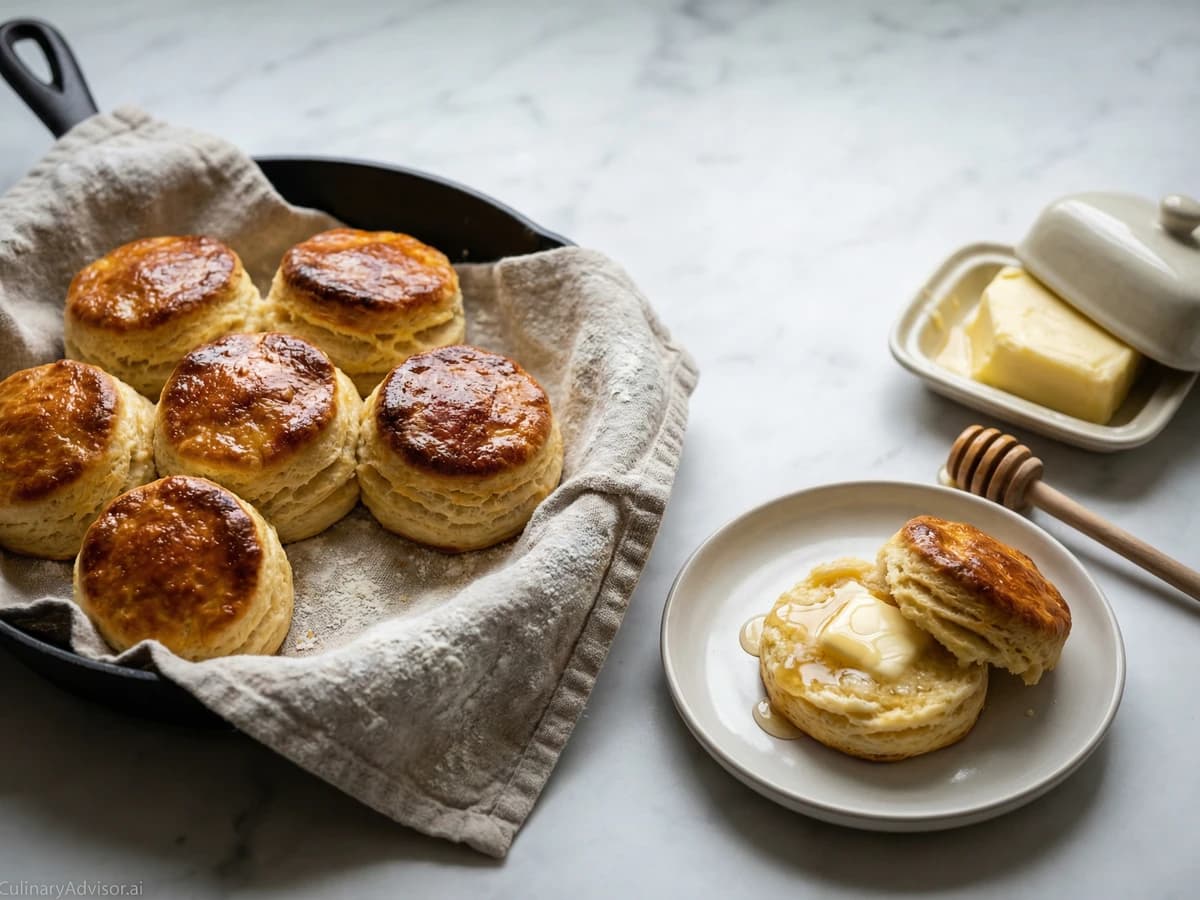
Towering golden biscuits with layers that shatter and pull apart in buttery sheets. The kind your grandmother made if she knew her way around a flour bin and a cold stick of butter.

Chef Dean
Golden-crusted cornbread baked in a screaming-hot cast iron skillet, ribboned with melting honey butter that pools into pockets of sweetness. The crust shatters. The crumb stays tender. This is the cornbread that makes people ask for seconds before finishing their first piece.
Chef Remy
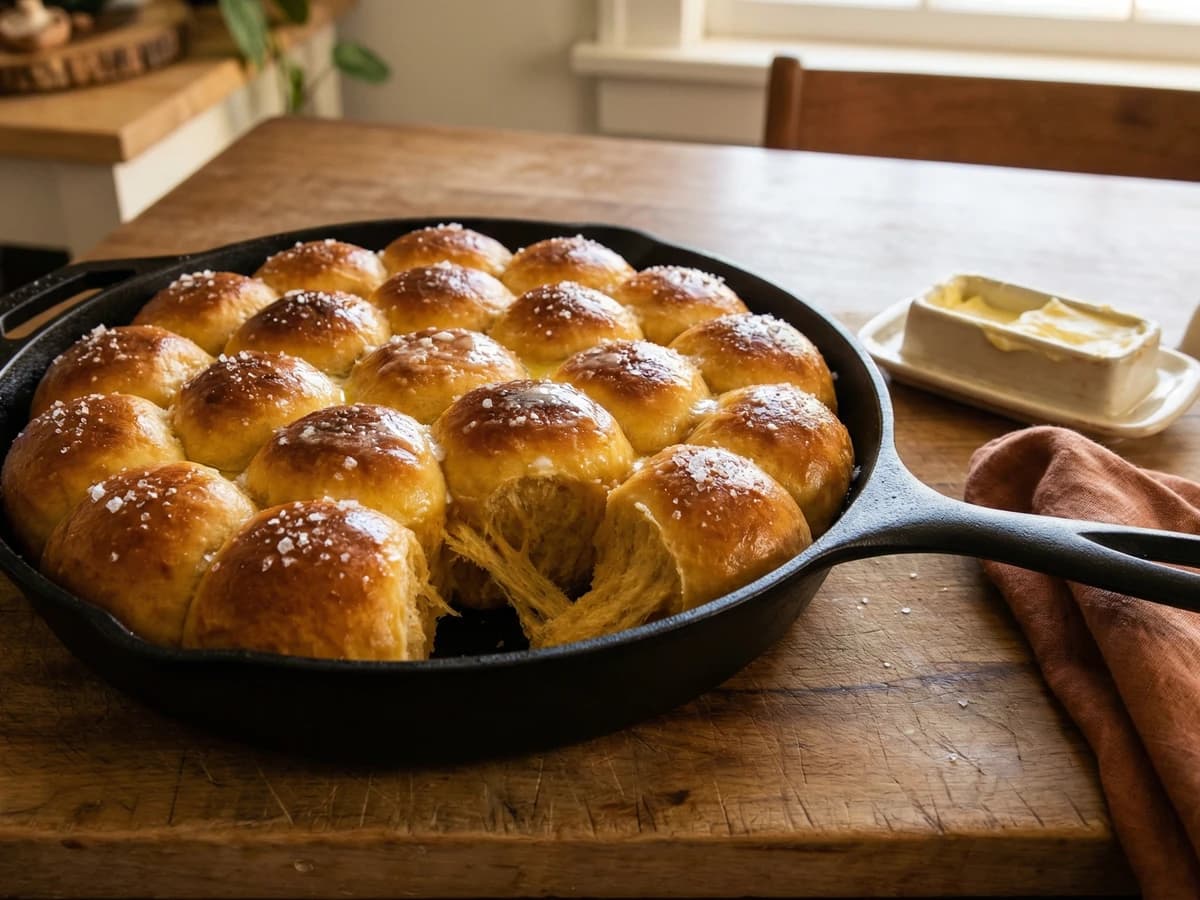
Pillowy, golden dinner rolls enriched with roasted Louisiana sweet potatoes and brushed with butter, the kind that disappear before the turkey gets carved and have guests asking for your grandmother's recipe.