
Chef Jeong-sun
Aehobak-guk (애호박국, Korean Zucchini Soup)
A clean summer soup of Korean zucchini and salted shrimp, built on quick anchovy-kelp broth and finished before the half-moons lose their shape on a weeknight table.
A cooking platform built around craft, culture, and the stories behind what we eat.
Created by
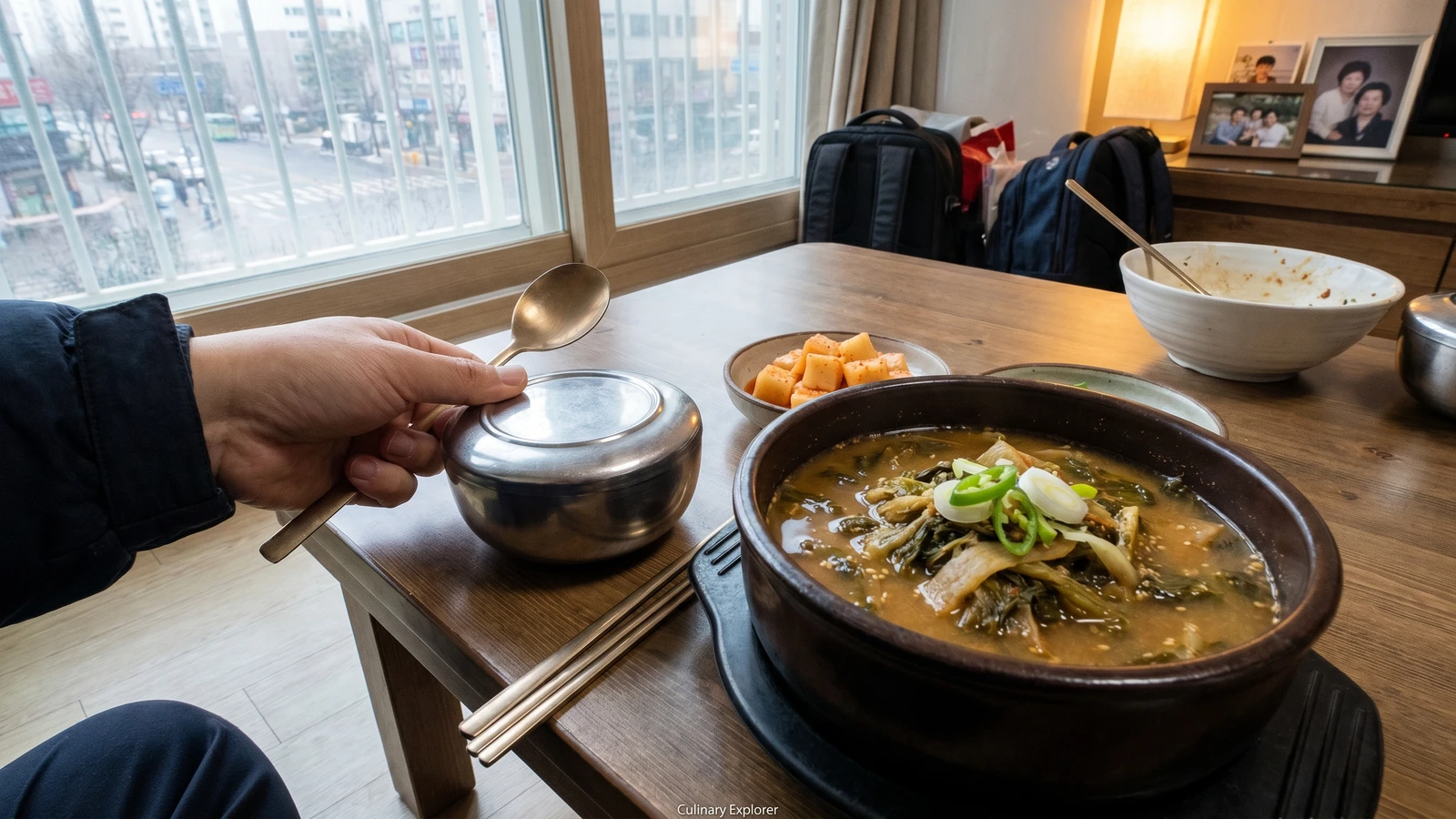
Dried radish greens made tender by patience, peeled clean by hand, then simmered in a restrained doenjang broth until thrift becomes a bowl of winter comfort.
Siraegi belongs to winter. In the market, you see it tied in dry bundles, dull and crackling, looking like something the impatient cook would pass by. Don't pass by. Those greens were radish tops once, hung and dried because a Korean kitchen knew how to keep food past its season.
The soup lives or dies before the pot of broth begins. You must boil the dried greens until the stems bend, soak them until they give up their stiffness, then peel away the tough outer skin from the thicker stems. Skip that work and the soup will chew back at you. Do it properly and the greens turn soft, earthy, and ready to take in doenjang (fermented soybean paste) without losing themselves.
This is not a loud soup. It is a weeknight bowl, budget food, winter food, rice-needing food. My teacher Master Seong-nyeo made us season the softened greens first in a bowl, before they touched the broth, because dried greens need help opening their flavor. 손맛 is real. I measure it anyway, so it can be handed on.
Tonight the dish asks for time more than skill. The safe corner to cut is the schedule: boil and peel the siraegi a day ahead. The corner you cannot cut is the peeling. Write it down. Memory is a borrowed bowl.
Siraegi, the dried leaves and stems of Korean radish, belongs to the old household practice of drying vegetables after the autumn radish harvest so greens could feed the table through winter. In rural kitchens it was used in guk (soup), jjigae (stew), and namul (seasoned vegetables), especially with doenjang, because fermented soybean paste gave depth to ingredients saved from scarcity. The dish carries no palace story; its history is the practical intelligence of home kitchens that wasted neither the radish root nor its leaves.
Quantity
70g
Quantity
10 cups
Quantity
5 cups
Quantity
1 piece, about 4 inches square
Quantity
10
heads and guts removed
Quantity
3 tablespoons
Quantity
1 tablespoon
Quantity
2 teaspoons
minced
Quantity
1 tablespoon
Quantity
1 tablespoon
Quantity
1/2 teaspoon
Quantity
1
thinly sliced
Quantity
2
sliced on the diagonal
Quantity
1/4 teaspoon, only if needed
| Ingredient | Quantity |
|---|---|
| dried siraegi (dried Korean radish greens) | 70g |
| water, for boiling and soaking | 10 cups |
| water, for broth | 5 cups |
| dried kelp (dasima) | 1 piece, about 4 inches square |
| large dried anchovies (myeolchi)heads and guts removed | 10 |
| doenjang (Korean fermented soybean paste) | 3 tablespoons |
| soup soy sauce (guk-ganjang) | 1 tablespoon |
| garlicminced | 2 teaspoons |
| toasted sesame oil | 1 tablespoon |
| perilla seed powder (deulkkae-garu) (optional) | 1 tablespoon |
| gochugaru (Korean chili flakes) (optional) | 1/2 teaspoon |
| green chili (optional)thinly sliced | 1 |
| scallionssliced on the diagonal | 2 |
| fine sea salt (optional) | 1/4 teaspoon, only if needed |
Rinse the dried siraegi under running water, rubbing gently to remove dust. Put it in a large pot with 10 cups water. The greens need room to loosen, so don't crowd them in a small pot.
Bring the pot to a boil, then lower to a steady simmer and cook 40 minutes. Turn off the heat, cover, and let the greens soak in the hot water for 1 hour 30 minutes, until the thickest stems bend without cracking. Old siraegi may need another 20 minutes of simmering. The clock helps, but the stem tells the truth.
Drain the greens and rinse in cool water. Working stem by stem, pinch the cut end and pull away the tough outer skin from the thicker stalks. It comes off in thin strings. This is the step that makes the soup tender instead of fibrous, and I won't tell you to skip it.
Squeeze the peeled greens gently, leaving them damp, not dry. Cut into 2-inch lengths. In a bowl, mix the greens with the doenjang, soup soy sauce, garlic, sesame oil, perilla powder if using, and gochugaru if using. Massage for 1 minute so the seasoning gets into the folds before the broth dilutes it.
Put 5 cups water, the kelp, and the prepared anchovies in a clean pot. Bring to a simmer over medium heat. Remove the kelp as soon as the water simmers, because kelp left too long can turn the broth slick and bitter. Simmer the anchovies 10 minutes more, then lift them out.
Add the seasoned siraegi to the broth and stir well to dissolve the doenjang. Simmer uncovered for 25 to 30 minutes, until the broth turns deep beige-brown and the greens are fully tender. Keep the heat gentle. A hard boil makes the broth muddy and rough.
Taste the broth before adding salt. Doenjang and soup soy sauce vary, so add only up to 1/4 teaspoon salt if the soup tastes flat. Add the green chili if using and the scallions, simmer 2 minutes, then turn off the heat. Serve with rice and one clean banchan, like radish kimchi or seasoned bean sprouts.
1 serving (about 400g)
Culinary guides, cultural storytelling, and the editorial depth that makes cooking meaningful.
Discover Culinary ExplorerChef Jeong-sun
A clean summer soup of Korean zucchini and salted shrimp, built on quick anchovy-kelp broth and finished before the half-moons lose their shape on a weeknight table.
Chef Jeong-sun
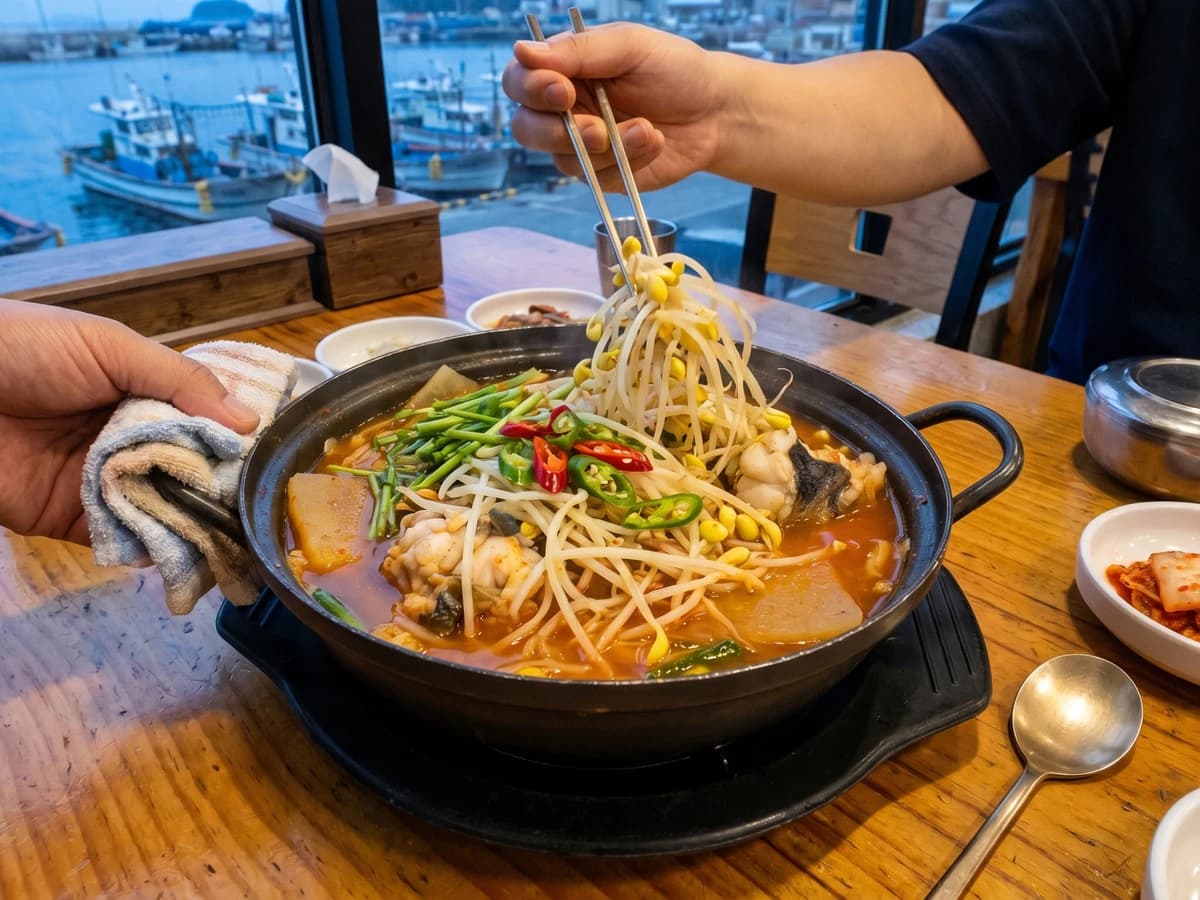
A Masan coast monkfish stew with firm white meat, gelatin at the bones, soybean sprouts for crunch, and a red broth seasoned to carry the fish, not bury it.

Chef Jeong-sun
A weeknight fish roe stew with radish and crown daisy in a clean spicy broth, where the whole success depends on adding the roe late enough that it sets tender, not chalky.

Chef Jeong-sun
Late-summer mallow leaves rubbed with salt until the bitter green water runs off, then simmered in a clean doenjang broth with dried shrimp, the quiet soup a Korean weeknight deserves.