
Chef Ally
Buttermilk Panna Cotta with Strawberry Consommé
A quivering, tangy panna cotta made with real buttermilk, crowned with a crystal-clear consommé that captures the essence of peak-season strawberries in every ruby spoonful.
A cooking platform built around craft, culture, and the stories behind what we eat.
Created by
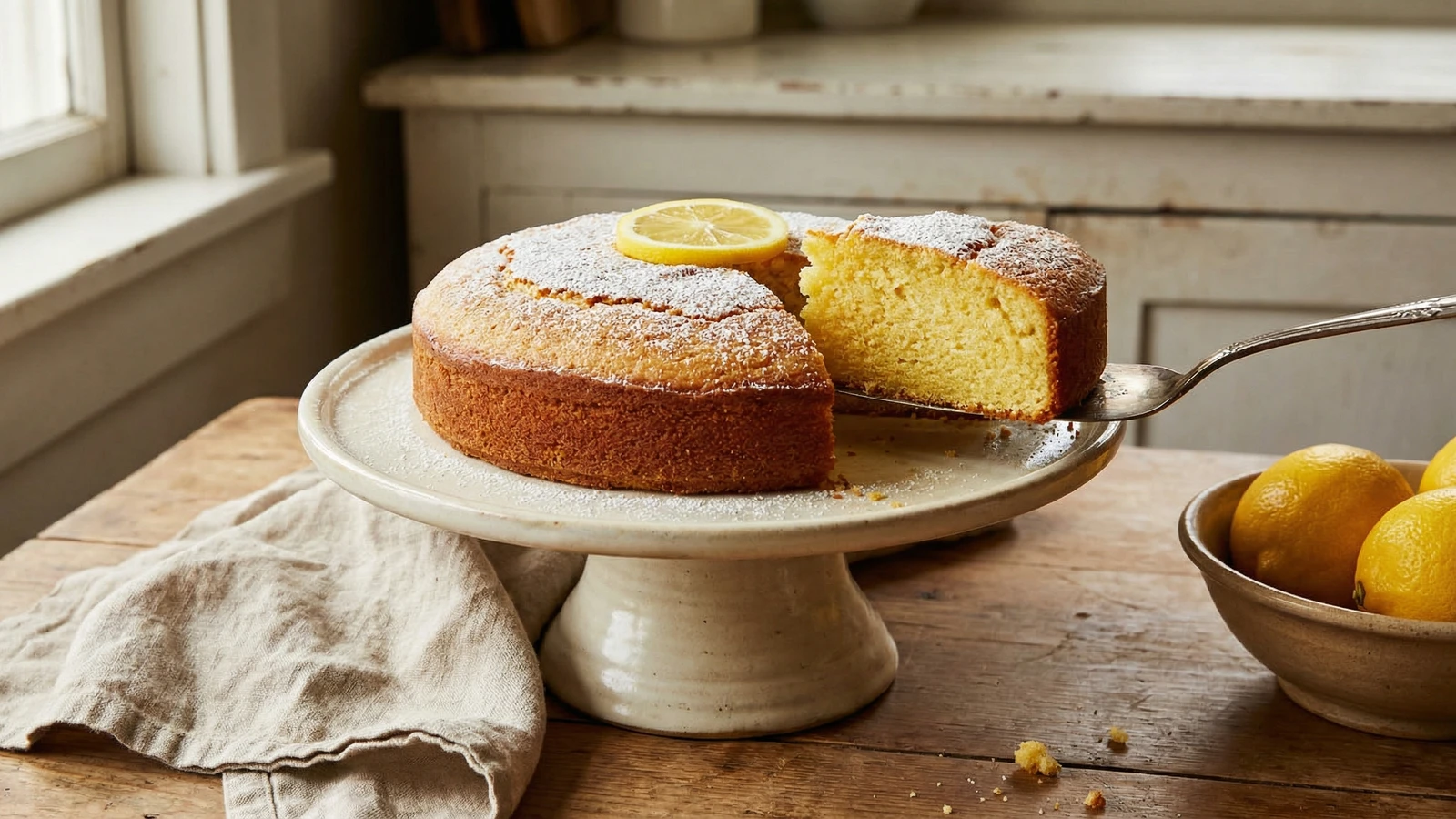
A golden, impossibly tender cake where California olive oil and Meyer lemons meet in perfect balance. The crumb is moist for days, the fragrance fills your kitchen, and the technique could not be simpler.
Meyer lemons arrive in California markets just when we need them most. December through March, their thin golden skin and floral perfume remind us that citrus season is its own kind of abundance. This cake exists because of them.
The olive oil matters as much as the lemons. Find one that tastes good on bread, fruity and slightly peppery, from a producer you trust. California makes exceptional olive oil now, and using it here honors both the ingredient and the place. The oil keeps this cake moist for days in a way butter never could.
There is almost no technique required. You whisk, you fold, you pour. The batter comes together in one bowl. What makes the cake extraordinary is not what you do to it, but what you put in it. Perfect ripeness, honest ingredients, and the restraint to let them shine.
I have served this cake at dinner parties where guests asked for the recipe before they finished their slice. I have made it on Tuesday afternoons with no occasion at all. It belongs in both places.
Quantity
3 large
Quantity
1 1/2 cups (190g)
Quantity
1 1/2 teaspoons
Quantity
1/2 teaspoon
Quantity
1 cup (200g)
Quantity
3
at room temperature
Quantity
3/4 cup (180ml)
Quantity
3/4 cup (180ml)
at room temperature
Quantity
for dusting
| Ingredient | Quantity |
|---|---|
| Meyer lemons | 3 large |
| all-purpose flour | 1 1/2 cups (190g) |
| baking powder | 1 1/2 teaspoons |
| fine sea salt | 1/2 teaspoon |
| granulated sugar | 1 cup (200g) |
| large eggsat room temperature | 3 |
| extra-virgin olive oil | 3/4 cup (180ml) |
| whole milkat room temperature | 3/4 cup (180ml) |
| powdered sugar (optional) | for dusting |
Position a rack in the center of your oven and heat to 350F. Brush a 9-inch round cake pan with olive oil, then line the bottom with parchment. Brush the parchment too. This cake wants to release cleanly, and olive oil does the job better than butter here.
Zest all three lemons using a microplane, capturing every bit of fragrant oil from the skin. You want about two tablespoons of zest. Then juice the lemons until you have one-third cup of juice. Meyer lemons give more juice than you expect, so taste as you go. The juice should be floral and sweet, not sharply acidic.
Whisk the flour, baking powder, and salt together in a medium bowl. Set this aside. The baking powder needs even distribution throughout the flour to give the cake its tender rise.
In a large bowl, combine the sugar and lemon zest. Use your fingertips to rub them together until the sugar is fragrant and slightly damp, about one minute. This releases the oils from the zest and perfumes the entire cake. Add the eggs and whisk vigorously until the mixture is pale and slightly thickened, about two minutes.
While whisking constantly, pour the olive oil in a slow, steady stream. The batter will emulsify and turn glossy, like a thick vinaigrette. This is the moment when the cake's character forms. You should smell the olive oil mingling with the lemon, two California ingredients finding each other.
Whisk in the milk and lemon juice. The batter will loosen and become pourable. It may look slightly curdled from the acid meeting the milk. This is fine and expected. The structure comes together in the oven.
Add the flour mixture in three additions, folding gently with a spatula after each. Stop the moment the flour disappears. Overmixing develops gluten and toughens the crumb. The batter should be smooth, pourable, and fragrant.
Pour the batter into your prepared pan and smooth the top. Bake for 38 to 45 minutes, until the cake is golden, the edges have pulled slightly from the pan, and a toothpick inserted in the center comes out with just a few moist crumbs. The top should spring back when pressed gently.
Let the cake rest in the pan for fifteen minutes. Run a thin knife around the edge, then invert onto a wire rack. Peel away the parchment and flip the cake right-side up. The top should be beautifully domed and golden brown. Cool completely before serving, or serve slightly warm if you cannot wait.
Dust with powdered sugar through a fine sieve just before serving, if you like. A light snowfall is enough. The cake needs nothing more, though a spoonful of crème fraîche or softly whipped cream alongside never hurts.
1 serving (about 110g)
Culinary guides, cultural storytelling, and the editorial depth that makes cooking meaningful.
Discover Culinary ExplorerChef Ally
A quivering, tangy panna cotta made with real buttermilk, crowned with a crystal-clear consommé that captures the essence of peak-season strawberries in every ruby spoonful.

Chef Ally
A lighter, tangier cheesecake built on fresh chèvre from a farm you trust, crowned with roasted figs that split and caramelize, finished with honey that tastes of the flowers it came from.

Chef Ally
A billowy, tangy mousse that lets the season speak for itself, piled high with whatever berries looked most alive at the market this morning.

Chef Ally
A tender, golden cake fragrant with almonds and local honey, crowned with slices of perfectly ripe stone fruit that sink into the batter and emerge jammy, caramelized, and impossibly sweet.