
Chef Ally
Beurre Blanc
The Loire Valley's gift to home cooks: cold butter whisked into wine and shallots until it transforms into something silky, bright, and impossibly rich. Perfect simplicity.
A cooking platform built around craft, culture, and the stories behind what we eat.
Created by
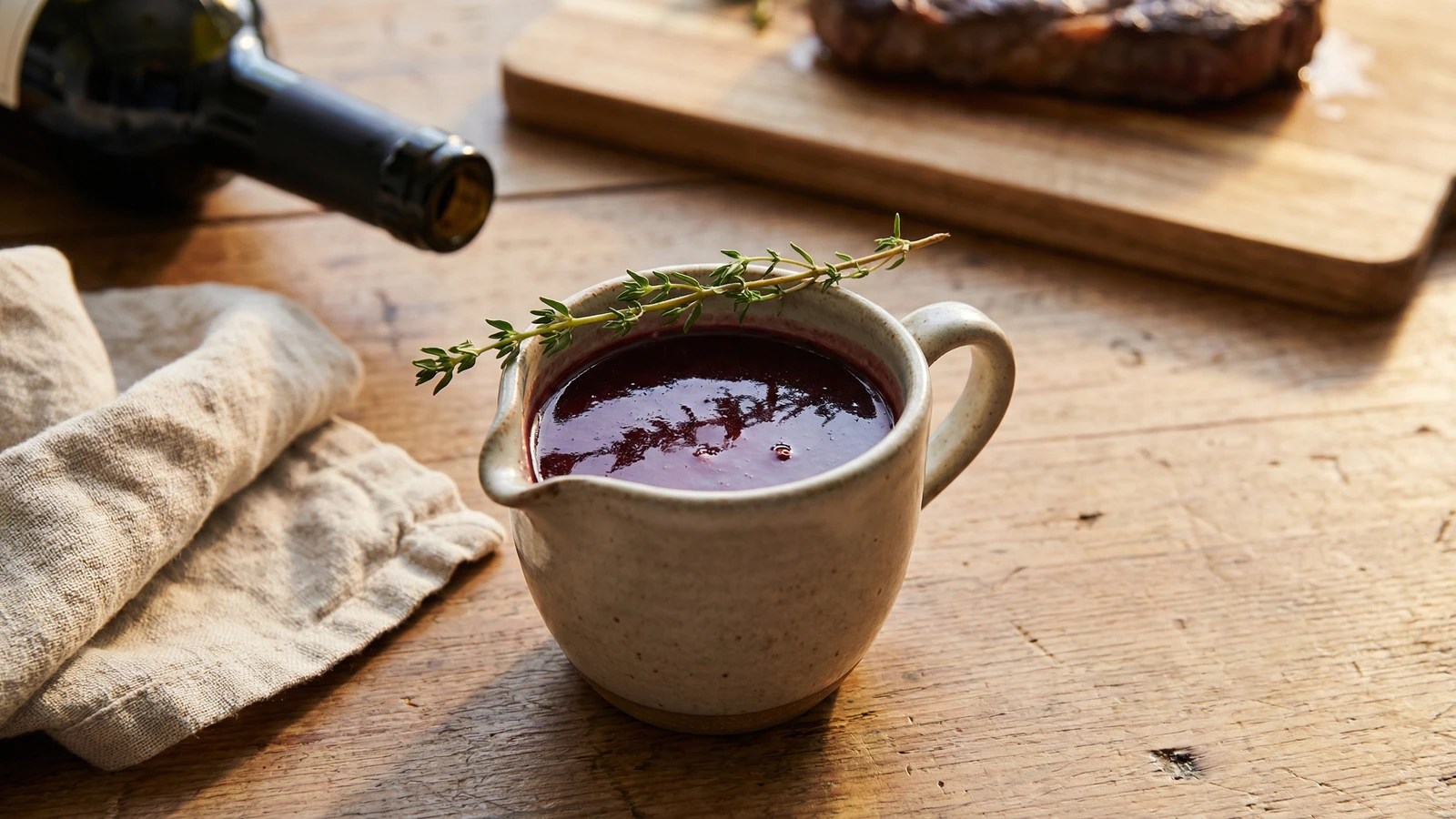
An honest reduction that asks only for good wine and patience, simmered with shallots and thyme until it becomes something dark, glossy, and deeply satisfying to drizzle over a perfectly seared steak.
Start with a wine you would drink. This is the rule that governs everything. When liquid reduces by three-quarters, it concentrates whatever character it held at the beginning. A good wine becomes something lush and complex. A bad wine becomes a warning.
The technique here is almost nothing. You simmer. You wait. You watch the sides of the pan as the dark ring creeps lower and the kitchen fills with that particular fragrance of wine turning into something more. Shallots add sweetness, thyme adds depth, but the wine does the talking.
This is the kind of sauce that reminds you why French cooking endures. Not because it is complicated, but because it respects the ingredient. A twenty-dollar bottle of Côtes du Rhône, reduced with attention, becomes a sauce that tastes like care. Every meal is a meaningful choice. The wine you choose, the patience you bring to the pan, the moment you pull it from the heat: these small decisions add up to something worth eating.
Quantity
2 cups
something you would drink
Quantity
2 medium
minced
Quantity
4 sprigs
Quantity
1
Quantity
1 tablespoon
cold
Quantity
1/2 teaspoon
Quantity
to taste
freshly cracked
| Ingredient | Quantity |
|---|---|
| dry red winesomething you would drink | 2 cups |
| shallotsminced | 2 medium |
| fresh thyme | 4 sprigs |
| bay leaf | 1 |
| unsalted buttercold | 1 tablespoon |
| fine sea salt | 1/2 teaspoon |
| black pepperfreshly cracked | to taste |
Open the bottle you plan to serve with dinner, or one you would happily pour for yourself. This is the whole point. Cooking concentrates flavor, so a thin, bitter wine becomes a thin, bitter sauce. You do not need an expensive bottle, but you do need an honest one.
Set a small heavy-bottomed saucepan over medium heat. Add the minced shallots and a splash of the wine, about two tablespoons. Cook gently, stirring occasionally, until the shallots turn translucent and the wine evaporates, three to four minutes. You are not browning them. You are coaxing out their sweetness.
Pour in the remaining wine. Add the thyme sprigs and bay leaf. Bring to a gentle simmer. You will see small bubbles rising steadily around the edges. This is the pace you want. A rolling boil cooks off alcohol too quickly and leaves the sauce harsh.
Let the wine simmer undisturbed for eighteen to twenty-two minutes. Watch the sides of the pan. As the liquid reduces, a dark ring will form at the original level and slowly creep downward. The sauce is ready when it has reduced by about three-quarters and coats a spoon in a thin, glossy layer. It will thicken slightly more as it cools.
Remove the pan from heat. Fish out the thyme sprigs and bay leaf. Add the cold butter and swirl the pan until it melts into the sauce, creating a glossy sheen. The butter rounds the edges and gives the reduction body. Season with salt and a few grinds of black pepper. Taste. Adjust.
Spoon the warm reduction over seared steak, roasted duck breast, or winter root vegetables. It wants to be used right away. If it sits too long, the butter separates and the sauce loses its shine. This is not a make-ahead preparation. It is a finishing gesture.
1 serving (about 30g)
Culinary guides, cultural storytelling, and the editorial depth that makes cooking meaningful.
Discover Culinary ExplorerChef Ally
The Loire Valley's gift to home cooks: cold butter whisked into wine and shallots until it transforms into something silky, bright, and impossibly rich. Perfect simplicity.

Chef Ally
A quiet, refined vinaigrette built on the delicate acidity of champagne vinegar, soft enough for butter lettuces and elegant enough for your best dinner party, yet simple enough for any Tuesday.

Chef Ally
A silky white sauce of butter, flour, and milk, perfumed with nutmeg and made honest by the quality of your dairy. This is the foundation upon which a hundred dishes rest.

Chef Dean
A glossy, deeply savory pan sauce built from caramelized mushrooms and shallots, finished with cream and fresh thyme. This is the sauce that transforms a Tuesday pork chop into something worth remembering.