Culinary Explorer

A cooking platform built around craft, culture, and the stories behind what we eat.
Discover Culinary Explorer
Simple Baked Salmon with Butter and Dill

Simple Baked Salmon with Butter and Dill

Created by Chef Thomas

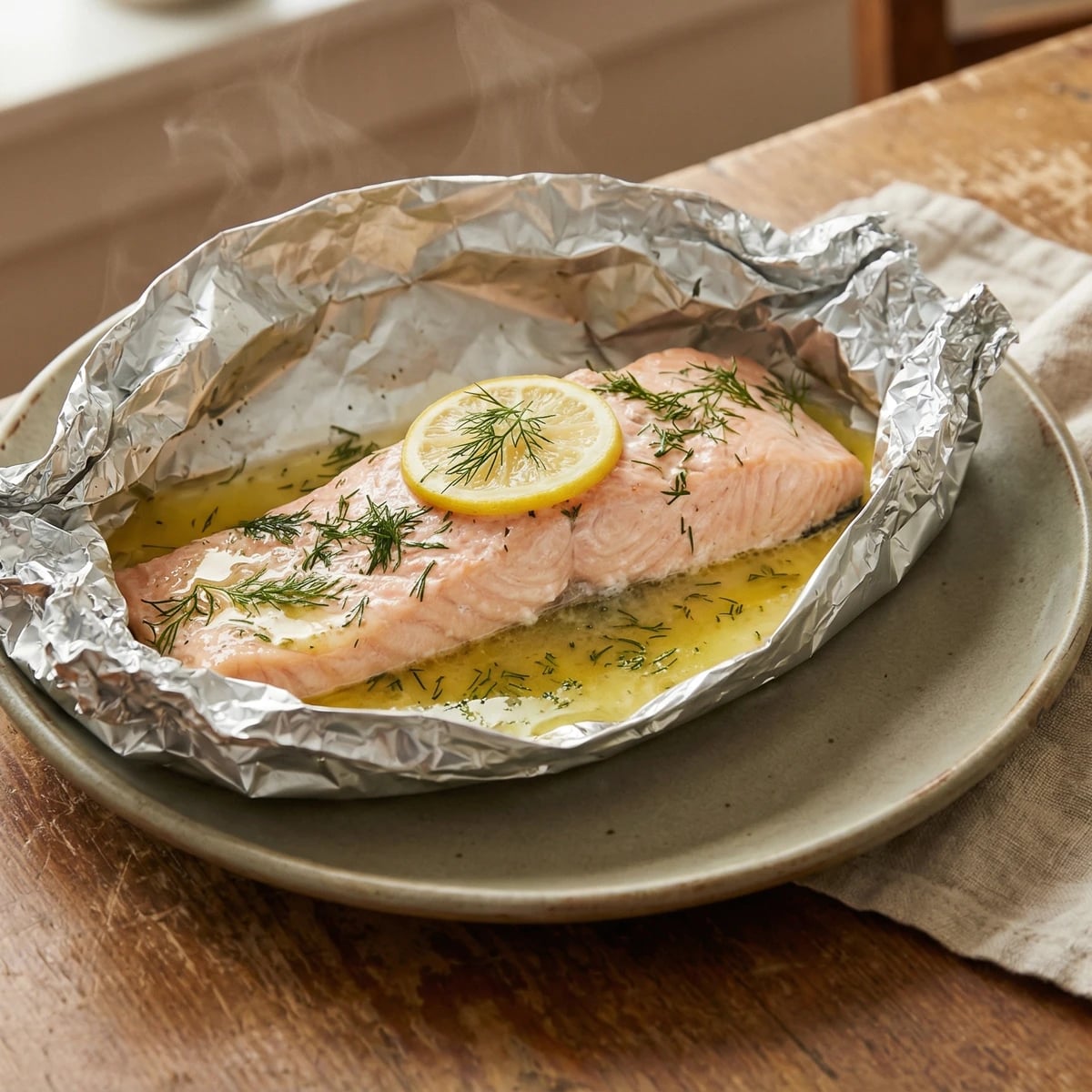
Salmon wrapped in foil with butter, dill, and a squeeze of lemon, baked until the flesh turns pale and yielding. A midweek supper that asks almost nothing and gives back everything.

Main Dishes
British
Weeknight
Quick Meal
10 min
Active Time
20 min cook30 min total
Yield4 servings

There's a smell that comes from a foil parcel when you open it at the table. Butter, dill, lemon, and the clean sweetness of good fish, all released in one warm breath. It fills the kitchen in a way that feels disproportionate to the effort involved. Ten minutes of preparation. Twenty minutes in the oven. A midweek supper that asks almost nothing of you and gives back more than it should.

This is the meal I cook when I want to eat well but can't face thinking about it. A piece of salmon, a generous knob of butter, some dill from the garden if it's there, a squeeze of lemon. Wrap it in foil. Put it in the oven. Set the table while it cooks. The parcel does the work, trapping the butter and the steam together so the fish poaches gently in its own small envelope of flavour. You don't need to watch it. You don't need to turn it. You barely need to think about it.

I wrote it down in the notebook years ago: salmon, butter, dill, Tuesday. It's been Tuesday's answer more times than I can count. The fish should be good, properly fresh, the kind that smells of the sea rather than the fridge. If the dill is from the garden, so much the better. If it's from a bunch at the supermarket, that works too. We're only making dinner.

The technique, the tradition, and the story behind every dish.

Discover Culinary Explorer

Ingredients

salmon fillets

Quantity

4, about 150g each

skin on

unsalted butter

Quantity

40g

softened

lemon

Quantity

1

fresh dill

Quantity

small bunch

fine sea salt

Quantity

to taste

black pepper

Quantity

to taste

freshly ground

dry white wine (optional)

Quantity

a splash

Equipment Needed

  • Large baking tray
  • Aluminium foil
  • Kitchen paper

Instructions

  1. 1

    Prepare the fish

    Heat the oven to 200C (180C fan). Tear off four generous squares of foil, large enough to wrap each fillet with room to spare. Lay the salmon in the centre of each square, skin side down. Dry the surface with kitchen paper first. Wet fish won't take seasoning properly. Season with salt and a few grinds of black pepper.

    Take the salmon out of the fridge twenty minutes before you start. Fish that goes into the oven cold cooks unevenly: overdone at the edges, raw in the middle. Room temperature is the quiet difference between good and right.
  2. 2

    Dress with butter and dill

    Put a good knob of butter on top of each fillet. Not a modest sliver. A proper piece that will melt down and around the fish as it cooks. Tear the dill and scatter it over, the soft fronds and the finer stems. Squeeze half the lemon over the four fillets, then slice the other half thinly and tuck a round or two alongside each piece. If you have a bottle of white wine open, a splash into each parcel does no harm. If you don't, leave it. The butter and lemon are enough.

    The butter isn't optional and it isn't a health compromise. It melts into the lemon juice and the dill to make a sauce that forms itself. This is the whole point of the parcel.
  3. 3

    Seal and bake

    Bring the edges of the foil up and over, folding them together to make loose but sealed parcels. You want them closed, not tight. The fish needs space to steam inside. Set the parcels on a baking tray and put them in the oven for eighteen to twenty minutes. Walk away. Set the table. Make a salad. The parcels will look after themselves.

  4. 4

    Open and serve

    Take the tray from the oven and let the parcels sit for a minute or two. Open one carefully (the steam is real and it's hot) and press the thickest part of the fish gently with your finger. It should yield, soft and giving, the flesh pale pink and just starting to flake at the edges. If it's still glassy and translucent in the centre, close it up and give it another two minutes. Slide each fillet onto a warm plate, spooning the buttery, dill-scented juices over the top. A scattering of fresh dill if you have more. That's dinner.

    Salmon carries on cooking after it leaves the oven. If it looks perfect when you open the foil, it will be overdone by the time it reaches the table. Take it out when it's a shade underdone and trust the residual heat to finish the job.

Chef Tips

  • Buy the best salmon you can afford. Wild if you can get it, but a good piece of responsibly farmed salmon is honest fish. What matters is freshness. It should smell clean, of the sea, not of the fridge. Press the flesh with your finger at the counter. It should spring back. If it doesn't, walk on.
  • The most common mistake is overcooking, and almost everyone makes it. Salmon goes from yielding and silky to dry and chalky in a matter of minutes. A recipe is a conversation, not a contract. Check early. Press gently. Better to undershoot and give it another minute than to overshoot and lose the texture that makes the whole thing worth eating.
  • Serve this with something green and simple. New potatoes if you have them, still warm and dressed with butter. A green salad with lemon and good olive oil. Steamed asparagus in season. Nothing that competes. The salmon and the butter and the dill are doing all the talking. Let them.
  • If you can't get fresh dill, don't substitute dried. It's a different thing entirely. Use flat-leaf parsley instead, or a few tarragon leaves, or nothing at all. Butter and lemon on good fish needs no apology.

Advance Preparation

  • The parcels can be assembled up to four hours ahead and kept in the fridge until you're ready to bake. Add two minutes to the cooking time if they go into the oven cold.
  • This is not a dish that reheats well. Salmon overcooked is salmon ruined. Cook it fresh. Leftovers, if there are any, are better eaten cold the next day, flaked into a salad or over buttered new potatoes.

Frequently Asked Questions

Nutrition Information

1 serving (about 170g)

Calories
390 calories
Total Fat
28 g
Saturated Fat
10 g
Trans Fat
0 g
Unsaturated Fat
17 g
Cholesterol
105 mg
Sodium
380 mg
Total Carbohydrates
1 g
Dietary Fiber
0 g
Sugars
1 g
Protein
31 g

Note: Chef personas and recipes are created with AI assistance. Cook with care: follow safe food-handling practices, check doneness with a thermometer when needed, and adapt for allergies and your kitchen.

Where cooking meets culture.

Culinary guides, cultural storytelling, and the editorial depth that makes cooking meaningful.

Discover Culinary Explorer

More from Weeknight Suppers & Simple Fish

Browse the full collection