
Chef Takumi
Aji Fry (アジフライ, panko-fried horse mackerel)
Aji fry is weeknight fish with no mystery: fresh horse mackerel opened cleanly, breaded lightly, and fried until the panko crackles while the flesh stays sweet.
A cooking platform built around craft, culture, and the stories behind what we eat.
Created by
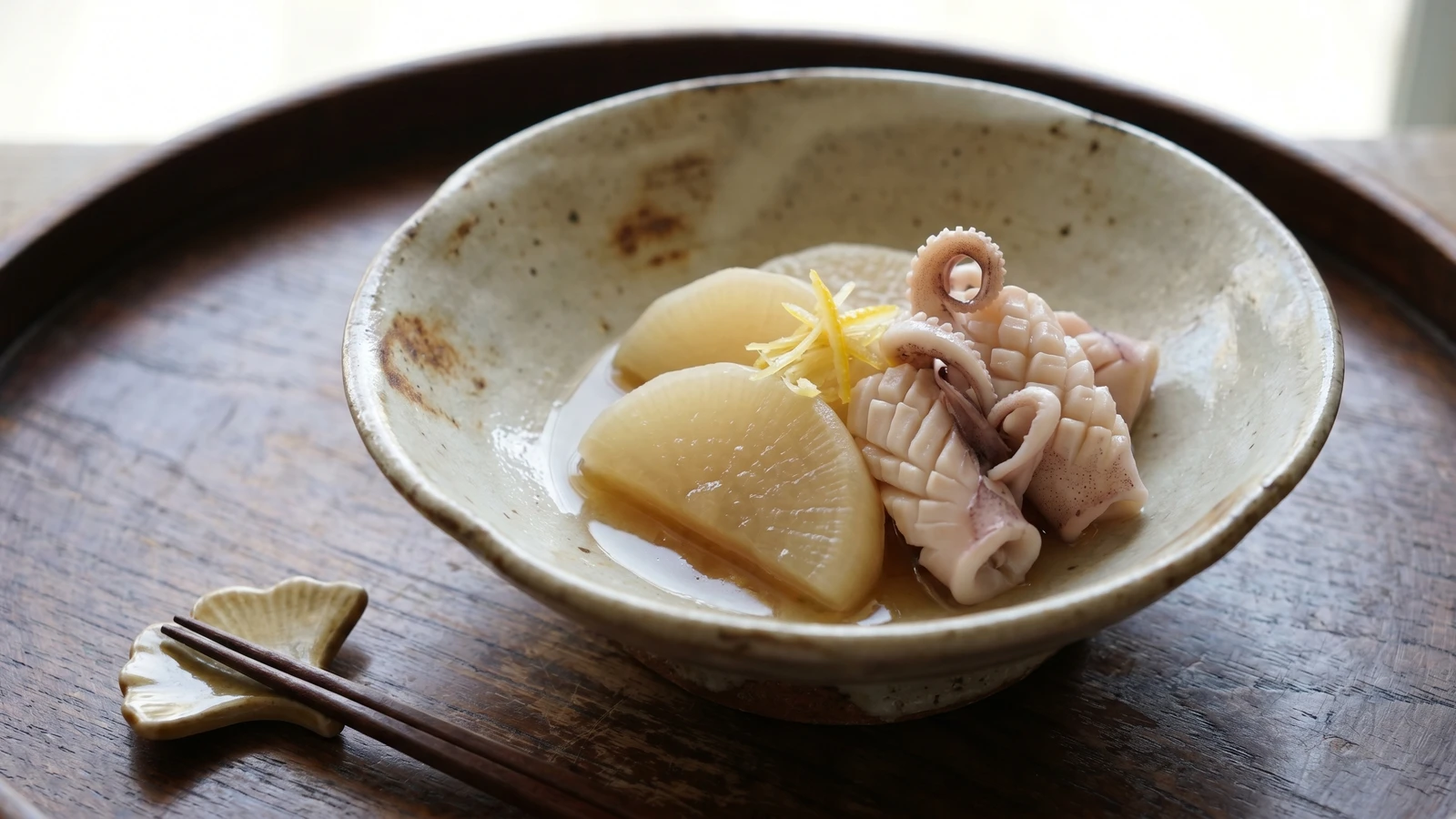
Two plain ingredients do the work here: daikon simmered until translucent, squid added late so it stays tender, and a soy-dashi broth that turns sweet from both.
Ika daikon looks like one of those old kitchen dishes that must know secrets you don't. It doesn't. The first secret is timing: daikon wants time, squid wants almost none. Cook them as if they are the same ingredient and one of them will complain, usually the squid, by turning rubbery with great discipline.
Start with daikon at its prime, firm and heavy, the cut face wet and fine-grained. In winter it is sweeter, and this dish shows that plainly. We simmer it first in dashi, sake, soy, mirin, and a little sugar until the edges turn translucent and the center gives to a skewer. The radish is not just softening. It is drinking the broth, taking on the squid's sweetness before the squid ever enters the pot.
Then the squid goes in late and briefly. Fresh ika should smell clean, never sour or tired, with flesh that looks glossy and taut. Score it lightly so it curls neatly and takes the seasoning, then simmer only until it turns opaque and tender. This is honmono weeknight cooking: two ingredients, one pot, nothing hidden, and the patience to give each ingredient the time it actually needs.
Ika daikon belongs to nimono, the family of simmered dishes that became central to the everyday Japanese table in the Edo period as soy sauce, mirin, and sake-based seasonings spread more widely. The pairing is especially associated with cold-weather home cooking, when daikon is sweet and abundant and coastal squid is common in markets. In many households the squid is added only near the end, a practical lesson preserved in the recipe itself: daikon improves with long simmering, while squid toughens if treated the same way.
Quantity
1 medium (about 700g)
peeled and cut into 1-inch thick half-moons
Quantity
2 whole (about 500g total)
cleaned, bodies scored and cut into rings or rectangles, tentacles cut into clusters
Quantity
3 cups
Quantity
1/2 cup
Quantity
3 tablespoons
Quantity
2 tablespoons
Quantity
1 tablespoon
Quantity
4 thin slices
Quantity
1 teaspoon
for finishing
Quantity
1 small strip
cut into fine threads
| Ingredient | Quantity |
|---|---|
| daikonpeeled and cut into 1-inch thick half-moons | 1 medium (about 700g) |
| fresh squidcleaned, bodies scored and cut into rings or rectangles, tentacles cut into clusters | 2 whole (about 500g total) |
| dashi | 3 cups |
| sake | 1/2 cup |
| soy sauce | 3 tablespoons |
| mirin | 2 tablespoons |
| sugar | 1 tablespoon |
| fresh ginger | 4 thin slices |
| grated fresh ginger (optional)for finishing | 1 teaspoon |
| yuzu peel (optional)cut into fine threads | 1 small strip |
Peel the daikon thickly, because the fibrous outer layer stays stringy no matter how politely you simmer it. Cut it into 1-inch thick rounds, then into half-moons. If the pieces have sharp edges, shave the corners lightly with the knife. This small trimming keeps them from breaking as they move in the pot.
Pull the head and innards from each squid body, remove the clear quill, and rinse quickly under cold water. Trim away the beak from the tentacles. Pat everything dry. Score the inside of the bodies in a shallow crosshatch, then cut into rings or rectangles. The cuts help the squid curl neatly and catch the broth without needing a heavy sauce.
In a wide pot, combine the dashi, sake, soy sauce, mirin, sugar, and sliced ginger. Bring it just to a simmer and taste it. It should be a little stronger than you want the finished broth, because the daikon will take in the seasoning and soften its edge.
Lay the daikon in a single layer if you can. Set a wooden drop-lid, otoshibuta, directly on the surface, or use a circle of parchment with a small hole in the center. Simmer gently for 30 to 35 minutes, turning the pieces once, until the daikon looks slightly translucent at the edges and a skewer slides in without force. The drop-lid keeps the seasoning moving over the top without stirring, and stirring is how good daikon turns ragged.
Add the squid to the pot and tuck it between the daikon pieces. Simmer gently for 3 to 5 minutes, just until the flesh turns opaque and the scored pieces curl. Do not wander away here. Squid is tender when cooked briefly or very long, but the middle ground is where it tightens.
Turn off the heat and let the pot stand for 10 minutes. This rest lets the daikon finish drinking the broth while the squid relaxes instead of being driven harder by the flame. Skim away any froth or loose bits so the broth stays clear enough to show what you did.
Lift the daikon and squid into a shallow bowl and spoon over enough broth to gloss the pieces, not drown them. Finish with a little grated ginger or fine threads of yuzu peel if you have them. Serve with rice and miso soup, and leave the bowl some empty space. The quiet part of the plate is doing its work too.
1 serving (about 465g)
Culinary guides, cultural storytelling, and the editorial depth that makes cooking meaningful.
Discover Culinary ExplorerChef Takumi
Aji fry is weeknight fish with no mystery: fresh horse mackerel opened cleanly, breaded lightly, and fried until the panko crackles while the flesh stays sweet.
Chef Takumi
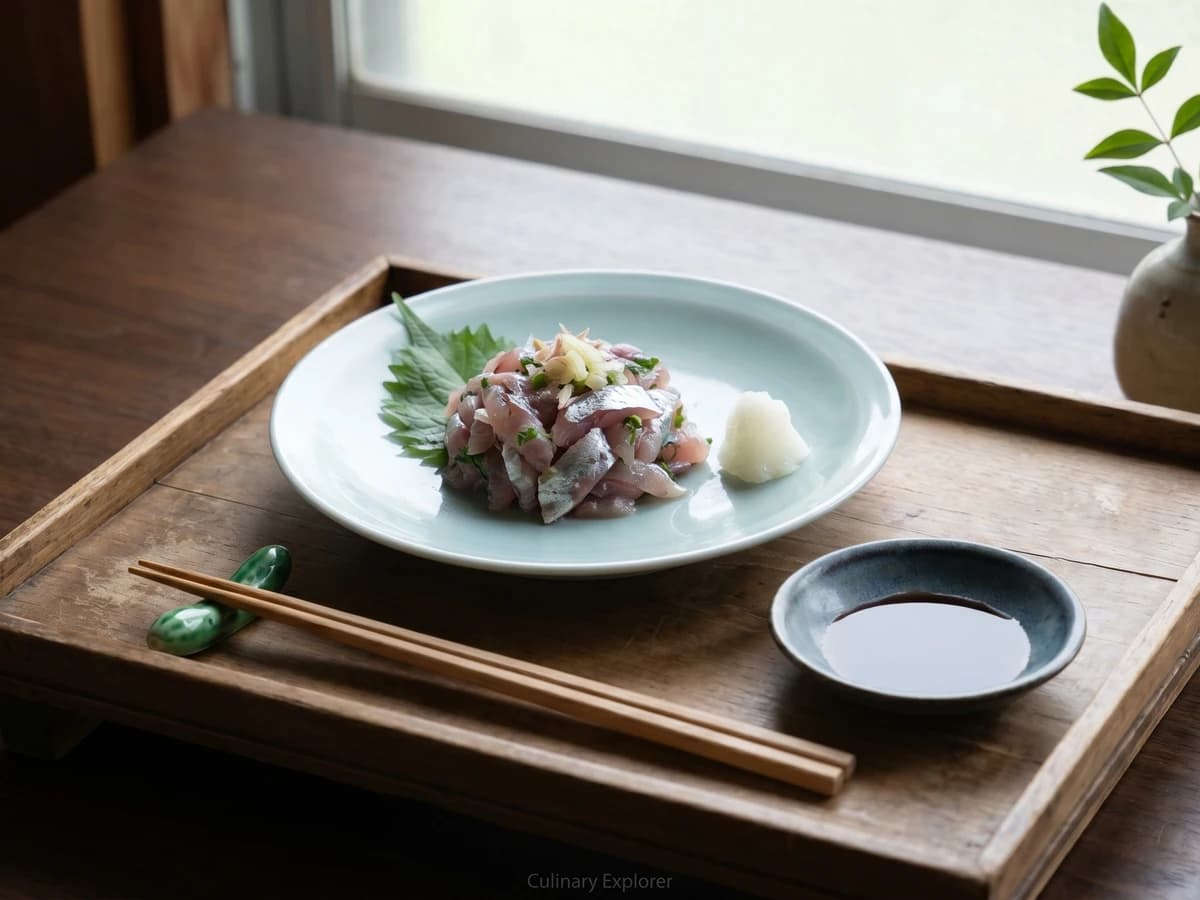
Summer horse mackerel, chopped just enough to catch ginger and scallion, becomes a cool, clean main dish with rice. The secret is fresh fish and a knife that does not bruise it.
Chef Takumi
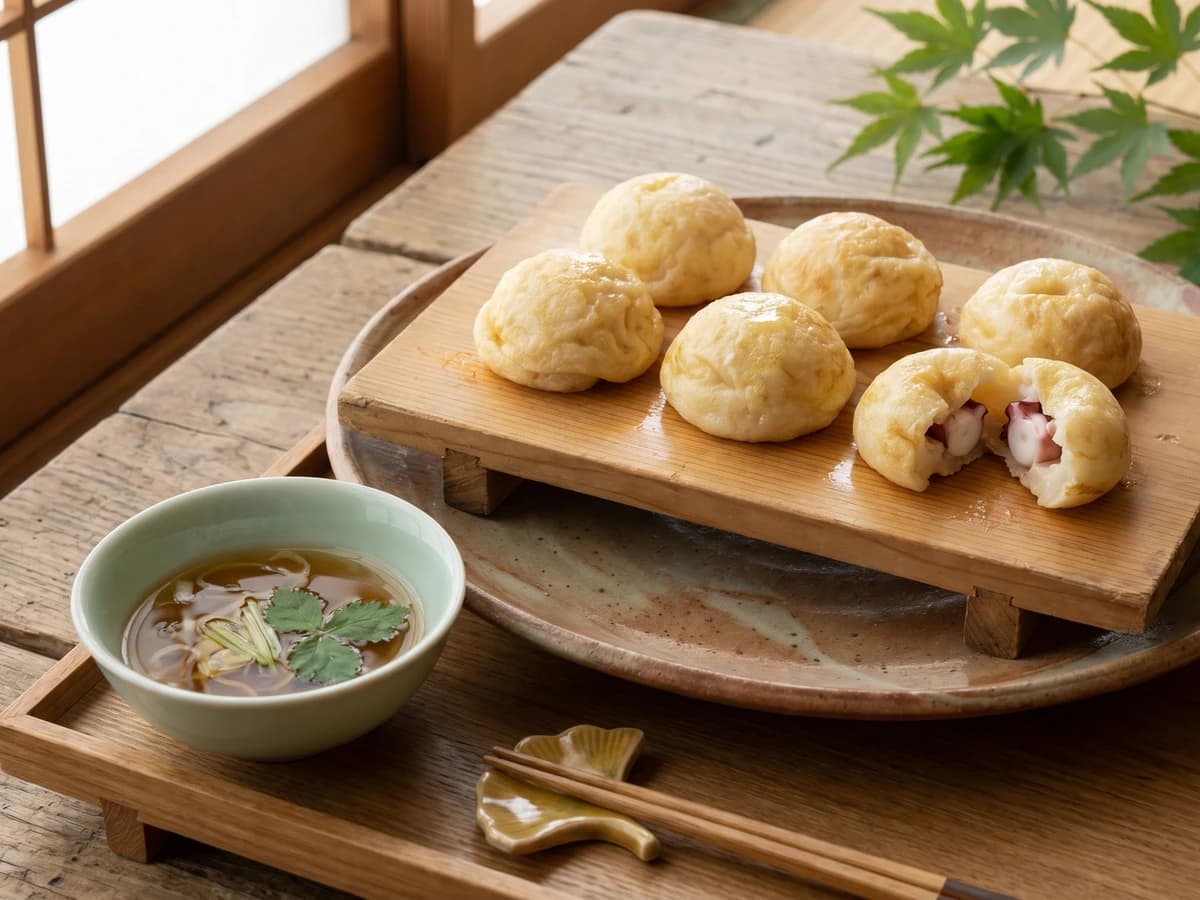
Akashi-yaki is not sauced takoyaki. It is egg-rich batter, tender octopus, and clear dashi, cooked pale and soft so each ball can be dipped like a small custard dumpling.

Chef Takumi
A whole anago looks like a test of nerve. It is mostly good sourcing, a dry skin, cold batter, and oil hot enough to leave the eel sweet under its lace.