
Chef Takumi
Autumn Mushroom Rice (きのこの炊き込みご飯, Kinoko Takikomi Gohan)
Autumn mushrooms do most of the work here. Rinse the rice well, season the liquid before cooking, and let the pot rest so every grain comes out separate and fragrant.
A cooking platform built around craft, culture, and the stories behind what we eat.
Created by
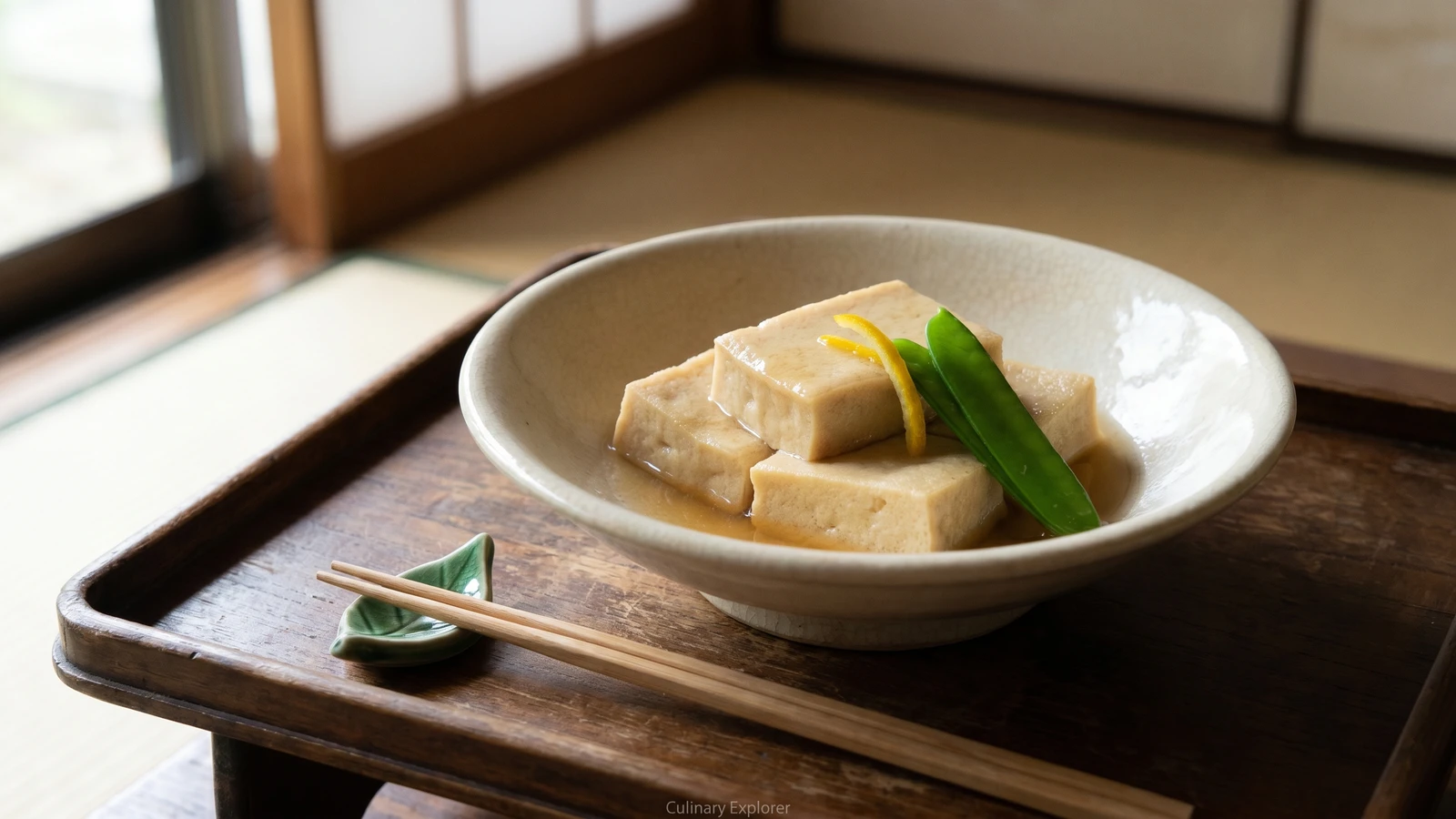
Koya tofu looks like a dry little block of nothing. Give it water, then a pale seasoned dashi, and it becomes soft, springy, and quietly full of broth.
Koya tofu is one of those ingredients that makes a new cook suspicious. It looks too dry to become tender, too plain to become delicious, and far too square to have much poetry in it. Good. This dish is here to prove otherwise.
Fukumeni means simmering so the ingredient takes seasoning into itself. That is the whole point. You don't coat koya tofu with sauce; you let it drink a pale dashi seasoned with mirin, sugar, and just enough usukuchi, light soy sauce, to keep the color gentle. Press it with chopsticks at the table and the broth should bead at the cut surface. That small glisten is the standard.
The one detail that decides it is the first soak. Rehydrate the blocks in warm water until the hard center is gone, then rinse and squeeze them gently between your palms. Too rough, and the sponge tears. Too little, and the old dried flavor stays where the dashi should go. Nothing hidden, nothing forced, only a quiet simmer and a patient ingredient doing what it was made to do.
This belongs beside rice, soup, and one sharper dish, often with greens or a vinegared thing nearby. It is make-ahead food by nature, better after it rests in its broth. Leave it room in the bowl, three pale pieces with a little green beside them, and the dish tells you exactly how much care went into it.
Kōya-dōfu takes its name from Mount Kōya in Wakayama, the center of Shingon Buddhist temple life founded by Kūkai in the early ninth century. The freeze-dried tofu is associated with shōjin ryōri, temple cooking, where preserving soybean protein through winter made practical sense as well as religious sense. Nagano also developed a major koya tofu industry after cold mountain weather made natural freezing and drying reliable before modern production.
Quantity
4 blocks (about 65g total)
Quantity
as needed
for soaking and rinsing
Quantity
2 cups
Quantity
2 tablespoons
Quantity
1 tablespoon
Quantity
1 tablespoon
Quantity
1/4 teaspoon
Quantity
4 small snow peas or a small handful
briefly blanched
| Ingredient | Quantity |
|---|---|
| koya tofu (freeze-dried tofu) | 4 blocks (about 65g total) |
| warm waterfor soaking and rinsing | as needed |
| ichiban dashi | 2 cups |
| mirin | 2 tablespoons |
| sugar | 1 tablespoon |
| usukuchi (light soy sauce) | 1 tablespoon |
| sea salt | 1/4 teaspoon |
| snow peas or blanched spinach (optional)briefly blanched | 4 small snow peas or a small handful |
Put the koya tofu in a bowl and cover it with warm water, about 120 F to 140 F, for 10 minutes, or until each block feels soft all the way through. Warm water wakes the dried tofu evenly without toughening the outside. Press the center with your finger; if it still feels firm or chalky, give it a few more minutes.
Change the water once or twice, rinsing the tofu gently until the water runs clear. Then place each block between your palms and press out the water without twisting. You're clearing away the stale dried taste and making room for dashi, but the tofu is tender now, so treat it like something that can bruise.
Cut each block in half crosswise, or into triangles if you want a more formal bowl. Keep the pieces even so they season at the same pace. This is quiet knife work, but it matters: even pieces reach tenderness together, and the bowl looks calm before anyone tastes it.
In a wide pot, combine the dashi, mirin, sugar, usukuchi, and salt. Bring it just to a simmer and taste it. It should be slightly sweeter and saltier than you would drink, because the tofu will take the seasoning inside and soften the edge.
Lay the tofu pieces in a single layer in the seasoned dashi. Set a wooden drop-lid, otoshibuta, directly on the surface, or use a circle of parchment with a small hole in the center. Simmer quietly for 15 to 18 minutes. The drop-lid keeps the pieces bathed in broth without stirring, and stirring is how soft tofu corners become rubble.
Turn off the heat and let the tofu rest in the broth for at least 20 minutes. This is when it truly finishes. As it cools a little, the texture settles and the seasoning moves inward. Serve warm or at room temperature with a spoonful of the broth and a small green vegetable beside it.
1 serving (about 165g)
Culinary guides, cultural storytelling, and the editorial depth that makes cooking meaningful.
Discover Culinary ExplorerChef Takumi
Autumn mushrooms do most of the work here. Rinse the rice well, season the liquid before cooking, and let the pot rest so every grain comes out separate and fragrant.

Chef Takumi
A whole salmon fillet laid on seasoned rice does nearly all the work. Cook it gently, flake it back through, and autumn has found its bowl.

Chef Takumi
Daigakuimo is simple student comfort: sweet potato cut stout, fried until the corners take color, then turned in a soy-sugar syrup that sets shiny instead of sticky.

Chef Takumi
Chawanmushi looks delicate, but the secret is plain: good dashi, strained egg, and quiet heat. Keep the steam soft and the custard sets smooth, tender, and calm.