
Chef Takumi
Ago Dashi (あごだし, grilled flying fish stock)
Ago dashi is quiet luxury: roasted flying fish, konbu, and patient water. Steep it slowly and you get a clear stock that tastes sweet, clean, and full without heaviness.
A cooking platform built around craft, culture, and the stories behind what we eat.
Created by
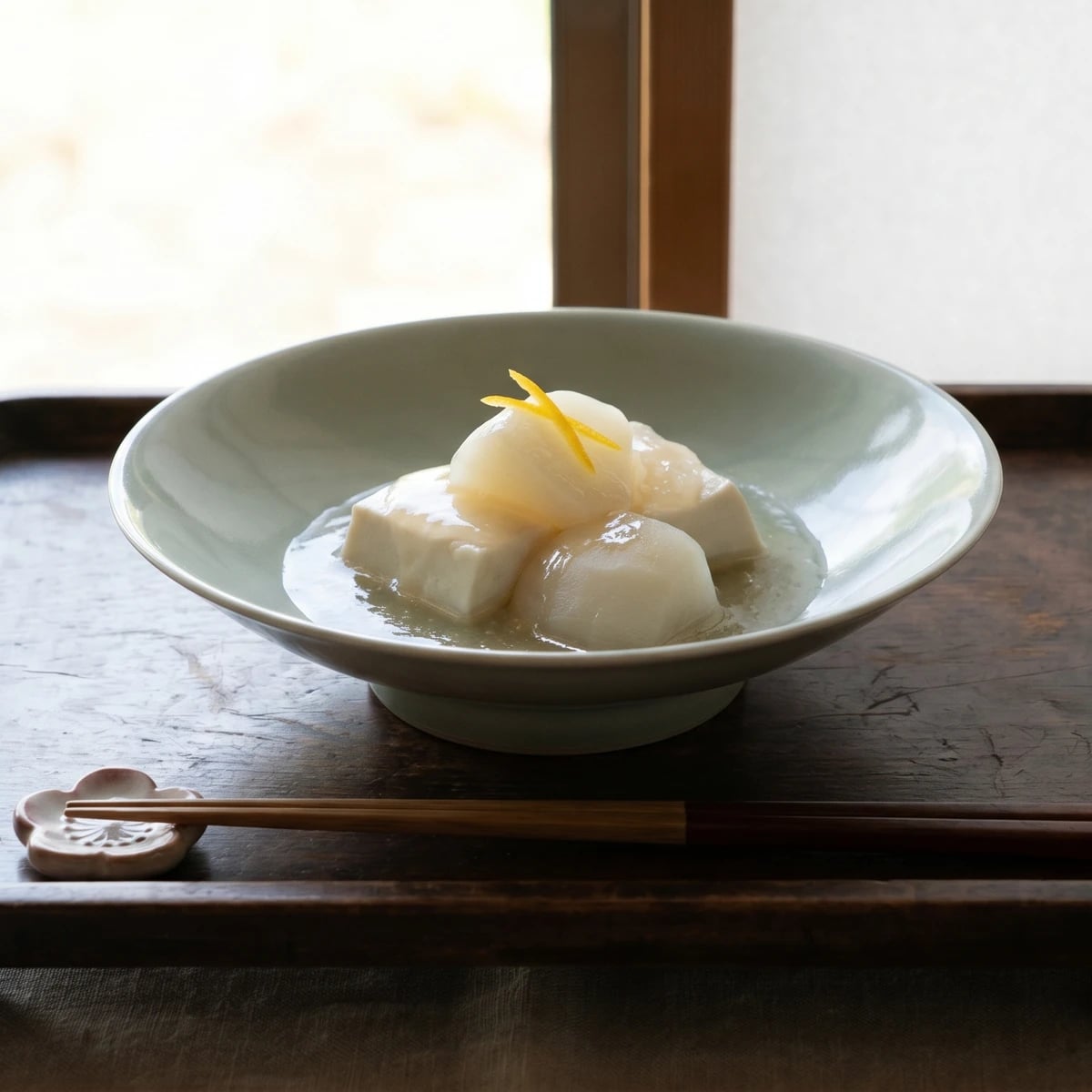
Gin-an is a quiet sauce: clear dashi, pale seasoning, and kuzu thickened just enough to cling while the color of the food still shows through.
Gin-an looks more delicate than it is. That is its small trick. The sauce should fall over steamed custard, tofu, or simmered vegetables like a clear veil, glossy enough to catch the light but not so thick that it buries what you made underneath.
The one detail that decides it is clarity. Start with good dashi, season it pale with usukuchi shōyu, mirin, and salt, then thicken it with kuzu dissolved in cold water. Kuzu must be stirred in while the sauce is moving, because starch sets the moment heat takes it. Stop stirring and you get lumps, which are very democratic: they ruin everyone's portion equally.
This is not a sauce for hiding anything. Gin-an belongs to the quieter side of washoku, where the broth shows, the vegetable keeps its color, and the cook's restraint is visible. Pour it warm at the last moment over chawanmushi, steamed turnip, tofu, yuba, or tender greens. Leave it room. The shine is enough.
Gin-an belongs to the family of ankake, dishes finished with a lightly thickened sauce called an, a word that can mean either a sweet bean paste or a savory glaze depending on the context. In Kyoto cooking, pale sauces such as gin-an are used especially to protect the color of tofu, yuba, turnip, and seasonal vegetables, while darker soy-thickened sauces are used where color is less precious. Kuzu starch, made from the root of the kudzu vine, has long been prized in Japan for sauces and sweets because it thickens cleanly and gives a clear, smooth finish when handled gently.
Quantity
1 cup
Quantity
1 tablespoon
Quantity
1 teaspoon
Quantity
1/4 teaspoon
plus more as needed
Quantity
1 tablespoon
Quantity
2 tablespoons
Quantity
a few thin strips
for finishing
| Ingredient | Quantity |
|---|---|
| first-pressing dashi | 1 cup |
| mirin | 1 tablespoon |
| usukuchi shōyu (light soy sauce) | 1 teaspoon |
| sea saltplus more as needed | 1/4 teaspoon |
| kuzu starch | 1 tablespoon |
| cold water | 2 tablespoons |
| yuzu peel (optional)for finishing | a few thin strips |
Begin with clear first-pressing dashi made from konbu and katsuobushi. Wipe the konbu, steep it slowly in cold water, and lift it out before the water boils. Add the katsuobushi off the heat and strain without squeezing. Boiled konbu turns the stock faintly bitter, and squeezed flakes cloud it with stronger, oily flavors. Gin-an has nowhere to hide those mistakes.
Put 1 cup dashi, mirin, usukuchi shōyu, and salt in a small saucepan. Warm it gently until it trembles at the edge of a simmer, then taste. It should be clean, lightly savory, and a little brighter than you expect, because the foods under gin-an are often mild.
Crush the kuzu starch if it is in hard pebbles, then stir it with the cold water until smooth. Cold water matters. Add starch straight to hot liquid and the outside sets before the center loosens, giving you lumps instead of gloss.
Lower the heat so the seasoned dashi is barely simmering. Stir with chopsticks or a small whisk while you pour in the kuzu slurry in a thin stream. Keep stirring for 1 to 2 minutes, until the sauce turns glossy and lightly translucent and coats the back of a spoon.
Taste once more and correct with a few grains of salt if the sauce feels flat. Pour it warm over chawanmushi, steamed tofu, simmered turnip, yuba, or greens just before serving. Add one thin strip of yuzu peel if the season gives it to you. The sauce should cling, not sit like paste.
1 serving (about 70g)
Culinary guides, cultural storytelling, and the editorial depth that makes cooking meaningful.
Discover Culinary Explorer
Chef Takumi
Ago dashi is quiet luxury: roasted flying fish, konbu, and patient water. Steep it slowly and you get a clear stock that tastes sweet, clean, and full without heaviness.

Chef Takumi
A white daikon, a red chili, and a grater. Momiji oroshi looks like a small flourish, but it brings clean heat, fresh bite, and autumn color to the table.

Chef Takumi
Daikon oroshi is only grated radish, which is why it matters. Choose a firm daikon, grate it fresh, drain it lightly, and let its cool bite brighten the meal.

Chef Takumi
Rich where ponzu is sharp, goma dare is sesame made calm and useful: toasted paste, clear dashi, soy, vinegar, and enough sugar to round the edge.