Chef Dimitra
Aegean Island Kalamarakia Tiganita (Καλαμαράκια Τηγανητά)
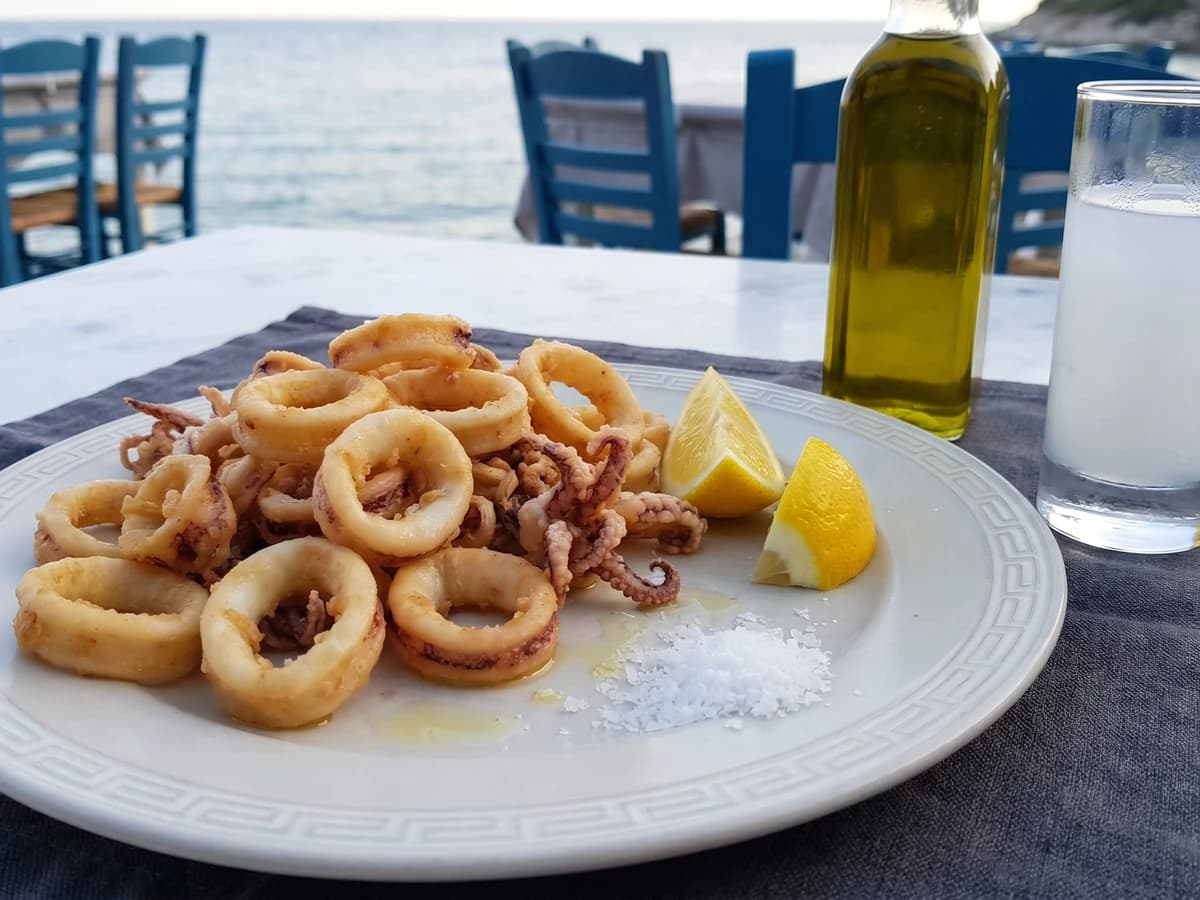
Aegean island fried squid is flour, hot oil, lemon, and nerve. Fry it for a minute or two, no longer, and it stays tender under its crisp coat.
A cooking platform built around craft, culture, and the stories behind what we eat.

Created by
On Sifnos, dried capers are stewed with onion, wine, vinegar, and olive oil until sharp, sweet, and spoonable, a Cycladic meze with no need for decoration.
Sifnos kaparosalata is not the pale caper dip you may meet on other islands. This one is darker, sharper, almost a little stifado: dried capers stewed with onion, vinegar, wine, tomato, and olive oil until they become a rough, sweet-sour spread for bread. The region is the dish's surname, and here the caper is not a garnish. It is the whole point.
The soaking decides everything. Dried salted capers are precious, but they are also fierce. You soak and change the water until the salt loosens its grip, then let the onion carry them into softness. Do that, and the finished kaparosalata tastes briny, bright, and deep. Skip it, and no amount of good oil will save the pot.
I don't invent it. I find it, I test it, I write it down. This is the sort of Sifnos meze that makes sense beside chickpea stew from the wood oven, grilled bread, or boiled potatoes during the fasting weeks. Nistisimo, sturdy, and better after a few hours, which is how picnic food should behave.
Kaparosalata belongs to the dry Cycladic islands where caper bushes grow from stone walls and terraces, especially Sifnos, Santorini, Tinos, and Syros. On Sifnos, the older preserved capers were dried and salted, then rescued by soaking and slow cooking with onion, a method closer to a small vegetable stifado than to a raw salad. The dish also fits the Orthodox fasting table, where oil, vinegar, wild plants, and stored island foods supplied flavor when meat and dairy were absent.
Quantity
120g
soaked and rinsed
Quantity
2 large, about 350g
thinly sliced
Quantity
90ml
Quantity
1 tablespoon
Quantity
120ml
Quantity
60ml
Quantity
1 teaspoon
Quantity
1
Quantity
1
Quantity
120ml
plus more for soaking
Quantity
to taste
Quantity
2 tablespoons
chopped
| Ingredient | Quantity |
|---|---|
| dried salted caperssoaked and rinsed | 120g |
| yellow onionsthinly sliced | 2 large, about 350g |
| extra virgin Greek olive oil | 90ml |
| tomato paste | 1 tablespoon |
| dry white wine | 120ml |
| red wine vinegar | 60ml |
| honey or petimezi (grape molasses) | 1 teaspoon |
| bay leaf | 1 |
| small dried chilli (optional) | 1 |
| waterplus more for soaking | 120ml |
| freshly ground black pepper | to taste |
| flat-leaf parsley (optional)chopped | 2 tablespoons |
Put the dried salted capers in a bowl and cover them with plenty of cold water. Soak for 12 to 24 hours, changing the water 3 or 4 times, until they taste salty but no longer harsh. Drain them well. This is the step that decides the dish: if the salt isn't pulled out first, the onion can turn sweet and soft and the pot will still taste like the bottom of a brine barrel.
Warm the olive oil in a small heavy pan over medium-low heat. Add the sliced onions and cook for 15 minutes, stirring now and then, until they collapse and turn glossy but not brown. Keep the heat patient. Browned onion pulls the dish toward sweetness before the capers have had their say.
Stir in the tomato paste and cook for 1 minute, just until it darkens a little in the oil. Add the drained capers, wine, vinegar, honey or petimezi, bay leaf, chilli if using, and 120ml water. Grind in black pepper, but don't add salt yet. The capers carry enough.
Lower the heat and simmer uncovered for 25 to 30 minutes, stirring often near the end, until the onions are jammy and the liquid has reduced to a spoonable, glossy sauce. It should sit on bread like a rough relish, not run off it. If it dries before the capers soften, add a splash of water and keep going.
Pull out the bay leaf and let the kaparosalata cool to room temperature. Taste only after it rests for 20 minutes, because vinegar speaks too loudly when hot. Finish with parsley if you like and a thin thread of olive oil. Serve with barley rusks, country bread, boiled potatoes, or a glass of ouzo.
1 serving (about 100g)
Culinary guides, cultural storytelling, and the editorial depth that makes cooking meaningful.
Discover Culinary ExplorerChef Dimitra
Aegean island fried squid is flour, hot oil, lemon, and nerve. Fry it for a minute or two, no longer, and it stays tender under its crisp coat.

Chef Dimitra
Pale Aegean taramosalata is cured roe, soaked bread, lemon, and olive oil worked slowly until it turns thick and clean, made for lagana on Clean Monday.

Chef Dimitra
Athenian March 25 salt cod, crisp in a puffed beer batter and served with garlic skordalia, the Lenten fish dish Greece keeps for Annunciation day.

Chef Dimitra
Crete names this dish by the pan motion: snails set mouth-down in salted flour, fried in good olive oil, then hit with rosemary and vinegar.