
Chef Lupita
Aceite de Chiltepin Bajacaliforniano
Baja California's wild chiltepin steeped in olive oil with garlic, orejon, and lime peel, until the oil turns ruby-amber and carries the slow, sneaky burn of the desert coast.
A cooking platform built around craft, culture, and the stories behind what we eat.

Created by
Veracruz's Sotavento fish escabeche, sierra fried until firm, then rested overnight in cane vinegar with jalapeño, onion, laurel, thyme, olives, and capers until the Gulf speaks clearly.
Veracruz, the Sotavento coast, Alvarado where the Papaloapan opens into the Gulf. That is where this escabeche lives. Sierra is not a delicate white fish. It is oily, strong, silver-skinned mackerel, the kind of fish that stands up to vinegar instead of disappearing under it.
The women in Alvarado did not perfect escabeche for decoration. They did it because fish arrives by the boat, vinegar keeps it honest, and tomorrow's meal matters as much as today's. You fry the sierra first, then cover it with vinagre de caña, white onion, chile jalapeño, laurel, tomillo, mejorana, oregano mexicano, pimienta gorda, olives, and capers. The jalapeño belongs here by geography as much as flavor; its name points back to Xalapa, in the same state. Cada estado, su propia cocina.
Serve it in lead-free glazed barro from Coatepec or Veracruz talavera, never in raw clay. Vinegar bites what it touches. The fish needs a night in the refrigerator, not because we are being fancy, because the flesh has to drink the escabeche and firm up. If you eat it the minute it is made, you have fried fish with vinegar. Wait until tomorrow and you have sierra en escabeche. Así se hace y punto.
Escabeche entered Mexico through Spanish colonial kitchens; the word comes through Spanish from Andalusi Arabic al-sikbaj, originally a vinegar-cooked dish from the Persian sikbaj. Veracruz, whose port was the main Atlantic gateway to New Spain from the 16th century, absorbed olive oil, olives, capers, and vinegar sauces into Gulf seafood cooking. In Alvarado, a fishing town on the Papaloapan lagoon system, sierra en escabeche became a practical make-ahead dish because vinegar helped keep fried oily fish in good condition for the next day's table before household refrigeration.
Quantity
2 pounds
skin on, 1-inch thick
Quantity
1 1/2 teaspoons, plus more to taste
Quantity
1/2 cup
Quantity
1 to 1 1/4 cups
for shallow-frying and escabeche
Quantity
2 large
sliced into 1/4-inch half-moons
Quantity
2 medium
peeled and sliced into thin coins
Quantity
8
smashed
Quantity
6
slit lengthwise
Quantity
1 1/2 cups
Quantity
1 cup
Quantity
1 teaspoon
Quantity
3
Quantity
1 teaspoon
Quantity
1/2 teaspoon
Quantity
1/2 teaspoon
Quantity
10
Quantity
4
Quantity
2
Quantity
1/2 cup
Quantity
2 tablespoons
rinsed
Quantity
for serving
Quantity
for serving
| Ingredient | Quantity |
|---|---|
| sierra (Spanish mackerel) steaksskin on, 1-inch thick | 2 pounds |
| fine sea salt | 1 1/2 teaspoons, plus more to taste |
| all-purpose flour | 1/2 cup |
| mild olive oilfor shallow-frying and escabeche | 1 to 1 1/4 cups |
| white onionssliced into 1/4-inch half-moons | 2 large |
| carrotspeeled and sliced into thin coins | 2 medium |
| garlic clovessmashed | 8 |
| fresh chile jalapeño or chile cuaresmeñoslit lengthwise | 6 |
| cane vinegar (vinagre de caña) | 1 1/2 cups |
| water | 1 cup |
| grated piloncillo | 1 teaspoon |
| bay leaves (laurel) | 3 |
| dried Mexican oregano | 1 teaspoon |
| dried thyme (tomillo) | 1/2 teaspoon |
| dried marjoram (mejorana) | 1/2 teaspoon |
| black peppercorns | 10 |
| whole allspice berries (pimienta gorda) | 4 |
| whole cloves | 2 |
| pitted green Manzanilla olives | 1/2 cup |
| capersrinsed | 2 tablespoons |
| warm corn tortillas or arroz blanco (optional) | for serving |
| salsa bruja veracruzana (optional) | for serving |
Pat the sierra dry and season both sides with the salt. Set it on a rack for 20 minutes while you slice the vegetables. This short salting firms the flesh and seasons the thick mackerel properly. Do not soak it in lime. This is escabeche, not ceviche.
Spread the flour on a plate. Dredge each piece of fish lightly and shake off the excess. You should still see the silver skin through the flour. Heat 1/4 inch of olive oil in a wide stainless steel or enameled skillet over medium-high heat until a pinch of flour sizzles immediately.
Fry the fish in batches, 2 to 3 minutes per side, until the outside is golden and the flesh is firm around the center bone. Do not crowd the pan or the fish will sweat instead of fry. Transfer the pieces to a shallow glass or lead-free glazed ceramic dish large enough to hold them in one layer.
Pour off the oil, leaving about 1/3 cup in the skillet. Lower the heat to medium. Add the onions, carrots, garlic, and slit jalapeños. Cook for 5 to 6 minutes, stirring often, until the onion turns glossy at the edges and the carrots still have a little snap. Escabeche vegetables should not collapse.
Add the bay leaves, Mexican oregano, thyme, marjoram, black peppercorns, allspice, and cloves. Stir for 30 seconds so the oil carries the herbs. Add the cane vinegar, water, piloncillo, and a good pinch of salt. Simmer for 6 minutes. The smell should be sharp, herbal, and rounded by the sweet spice. If it tastes flat, it needs salt.
Stir in the olives and capers and simmer for 1 minute more. Taste a spoonful of the liquid. It should be too assertive to eat on its own. The fish will pull it down overnight. Weak escabeche gives you weak fish, and nobody in Alvarado asked for that.
Pour the hot escabeche over the fried sierra. Tuck onions, carrots, chiles, olives, and herbs between the pieces. The liquid should come at least halfway up the fish; spoon it over any exposed surfaces. Cool uncovered for 30 minutes, then cover and refrigerate for at least 12 hours, preferably 24. Recetas probadas y garantizadas.
Take the escabeche out of the refrigerator 30 minutes before serving. Spoon the vegetables and vinegar-oil sauce over the fish and serve it family-style in glazed barro from Coatepec or Veracruz talavera. Put warm corn tortillas or arroz blanco on the table, and salsa bruja if your table knows Veracruz. Keep leftovers chilled.
1 serving (about 240g)
Culinary guides, cultural storytelling, and the editorial depth that makes cooking meaningful.
Discover Culinary ExplorerChef Lupita
Baja California's wild chiltepin steeped in olive oil with garlic, orejon, and lime peel, until the oil turns ruby-amber and carries the slow, sneaky burn of the desert coast.

Chef Lupita
Puebla's Lenten convent adobo, a brick-red vinegar chile paste of ancho, guajillo, garlic, oregano, and comino made to dress fish for the meatless calendar.
Chef Lupita
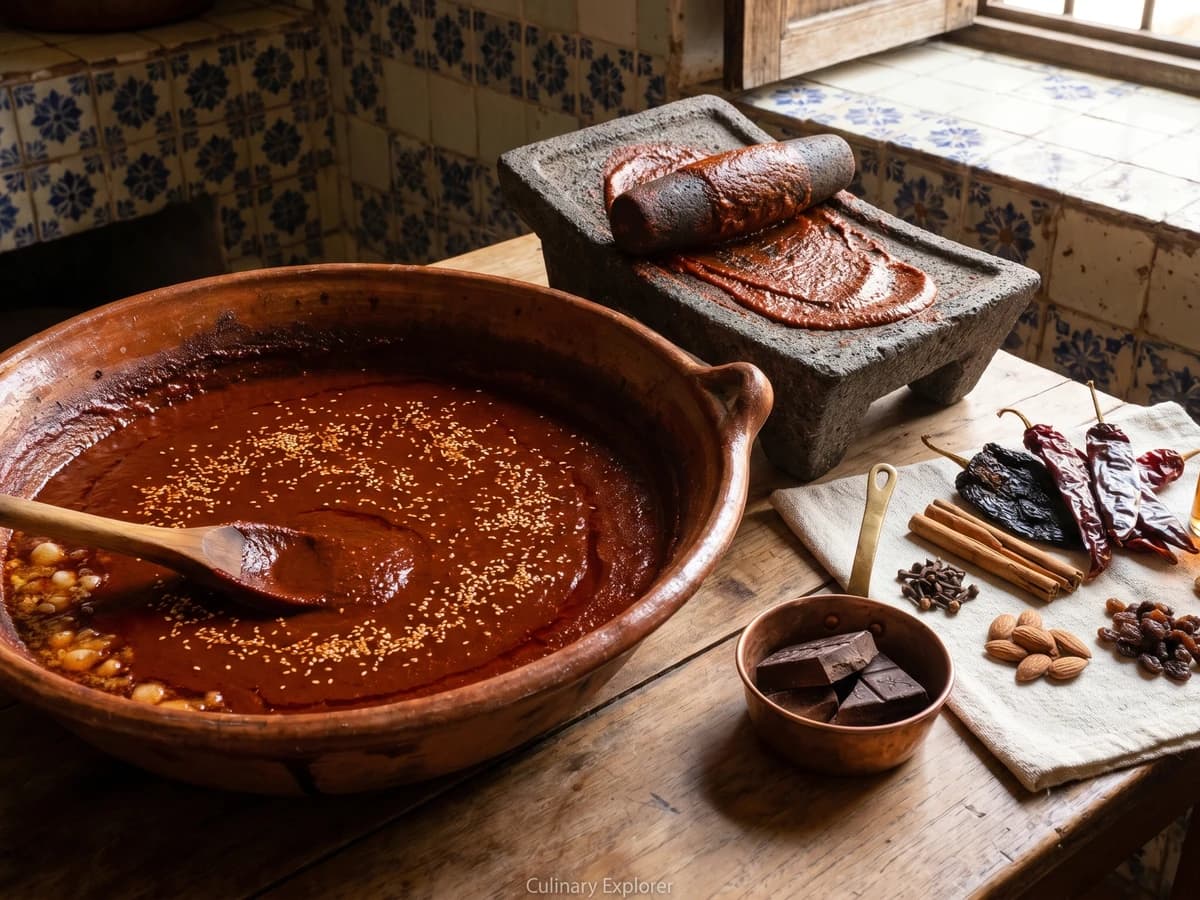
Zacatecas' wedding-table adobo, built from toasted guajillo and ancho, piloncillo, sour orange, chocolate, canela, clavo, almonds, sesame, and lard.

Chef Lupita
Puebla's convent kitchens built this adobo with ancho, guajillo, jerez, almonds, raisins, clove, and lard, a baroque marinade that stains pork loin and finishes as the sauce.