
Chef Joost
Aspergesoep (Dutch White Asparagus Soup)
White asparagus is Limburg's spring clock, and this soup uses every pale stem and peeling to make wit goud, white gold, taste like the season it refuses to outlive.
A cooking platform built around craft, culture, and the stories behind what we eat.
Created by
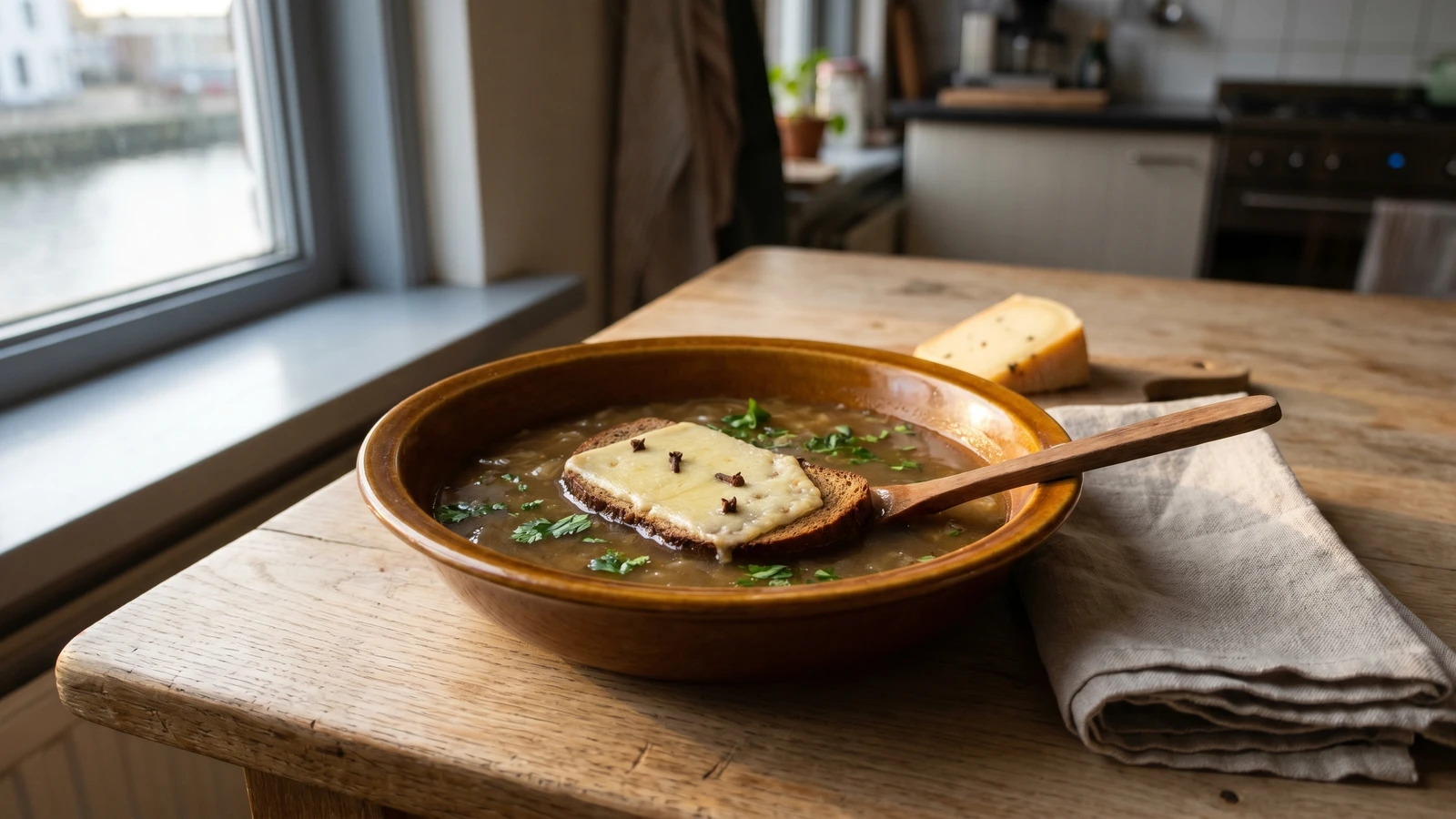
The name means onion soup in the Frisian mouth, and the bowl tells a northern story: winter onions, clear broth, rye bread, and clove cheese shaved over the top.
The north has a way of making humility look deliberate. In Friesland, where the wind comes over the fields with no interest in your plans, a sack of onions in the pantry is not poverty, it is strategy. In my grandmother's second notebook there are several soups like this, not grand, not decorative, just the sort of thing a household makes when the day has been wet and the table needs to steady everyone.
The name already tells you. Sipel is Frisian for onion, so Fryske sipelsop is exactly what it says: Frisian onion soup. No disguise. But let me tell you a secret: the little brilliance here is not the onion, it is the cheese. Friese Nagelkaas, clove cheese, carries the warm bite of kruidnagel, literally spice nail, into a bowl that would otherwise be only brown sweetness and broth.
History and cookery, they cannot be separated. The onions must go slowly, not to blackness and drama, but to softness and amber sweetness. The broth stays clear, the rye bread gives substance, and the grated clove cheese sharpens everything at the table. Hou het altijd simpel, always keep it simple. A patient pan, a modest onion, a northern cheese, and suddenly the plain thing has teeth.
Fryske sipelsop belongs to Friesland's winter pantry cooking, built from storage onions, bread, broth, and dairy rather than expensive fresh produce. Friese Nagelkaas developed in the northern dairy provinces as a skimmed-milk cheese, often flavoured with cumin and cloves after butter-making left households with milk to preserve. The cloves in the cheese show how VOC-era spices entered ordinary Dutch cookery, not only festive baking, but also sober farm food.
Quantity
60g
Quantity
750g
thinly sliced
Quantity
1 teaspoon, plus more to taste
Quantity
2 teaspoons
Quantity
1.25 liters
Quantity
1
Quantity
1/2 teaspoon
Quantity
4 thick slices
Quantity
120g
grated
Quantity
1 tablespoon
chopped
| Ingredient | Quantity |
|---|---|
| butter | 60g |
| yellow onionsthinly sliced | 750g |
| fine sea salt | 1 teaspoon, plus more to taste |
| plain flour | 2 teaspoons |
| beef broth or vegetable broth | 1.25 liters |
| bay leaf | 1 |
| freshly ground black pepper | 1/2 teaspoon |
| Frisian rye bread or dark rye bread | 4 thick slices |
| Friese Nagelkaasgrated | 120g |
| flat-leaf parsley (optional)chopped | 1 tablespoon |
Melt the butter in a heavy pot over medium-low heat, then add the sliced onions and the teaspoon of salt. Cook them slowly for about 30 minutes, stirring often, until they are soft, golden, and sweet but not dark. This is where the soup is made; rush it and you get sharp onion water with good intentions.
Sprinkle the flour over the onions and stir for two minutes, until it disappears into the butter and onion juices. You are not making a thick sauce here. The flour only gives the broth a little body, enough to cling to the bread and cheese.
Pour in the broth a little at a time, stirring as you go, then add the bay leaf and black pepper. Bring to a gentle simmer and cook uncovered for 20 minutes. Taste before salting again, especially if your broth is strong; the Nagelkaas will bring its own salt and spice at the end.
Toast the rye bread until firm at the edges and dry enough to hold its shape. Ladle the soup into ovenproof bowls, lay a slice of rye on each bowl, and cover generously with grated Friese Nagelkaas.
Set the bowls under a hot grill for 2 to 4 minutes, just until the cheese melts, freckles, and settles into the bread. Serve at once, with a little parsley if you like. I prefer the cheese to remain the point, not to be buried under greenery.
1 serving (about 540g)
Culinary guides, cultural storytelling, and the editorial depth that makes cooking meaningful.
Discover Culinary ExplorerChef Joost
White asparagus is Limburg's spring clock, and this soup uses every pale stem and peeling to make wit goud, white gold, taste like the season it refuses to outlive.
Chef Joost
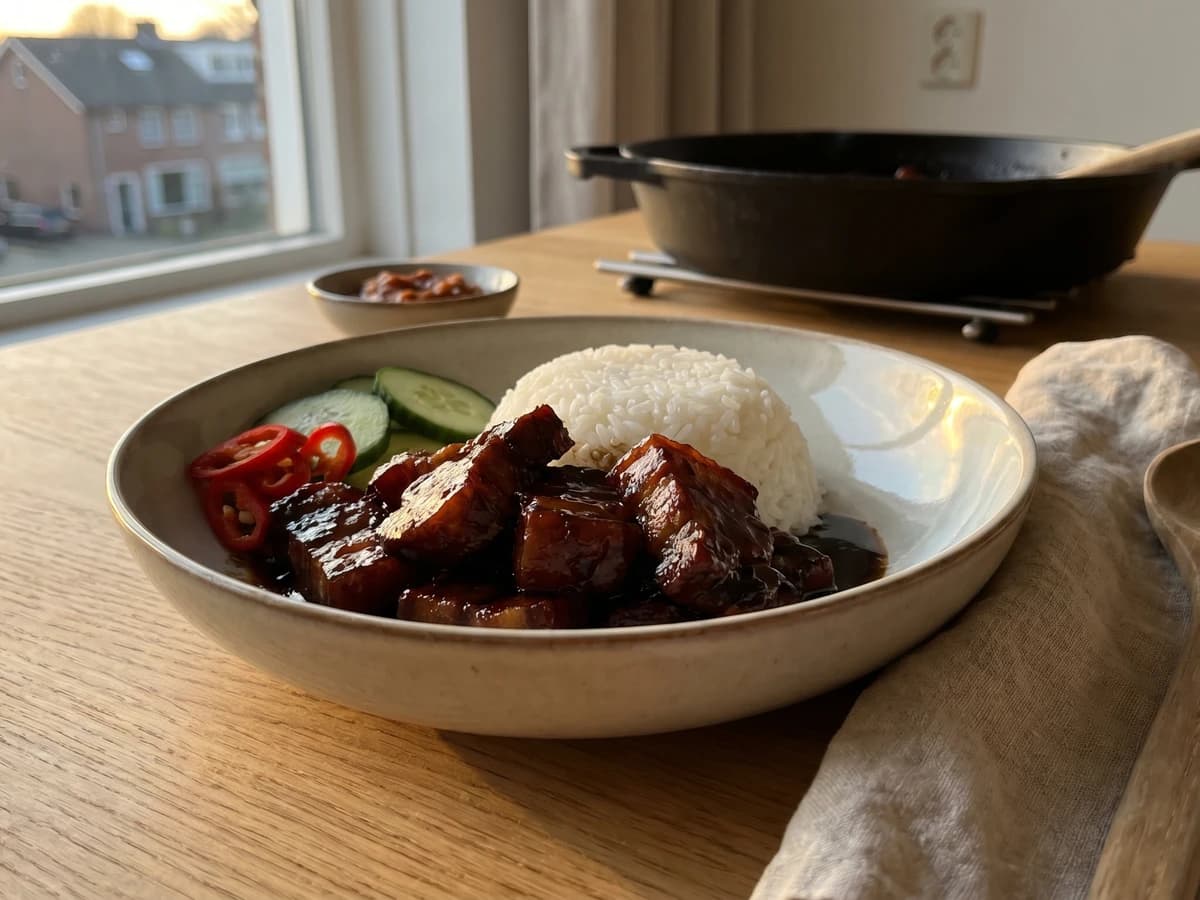
Pork, sweet soy, ginger, and patience: the Indo-Dutch braise that carried the colonial table into Dutch kitchens and made rice feel like Sunday dinner.
Chef Joost
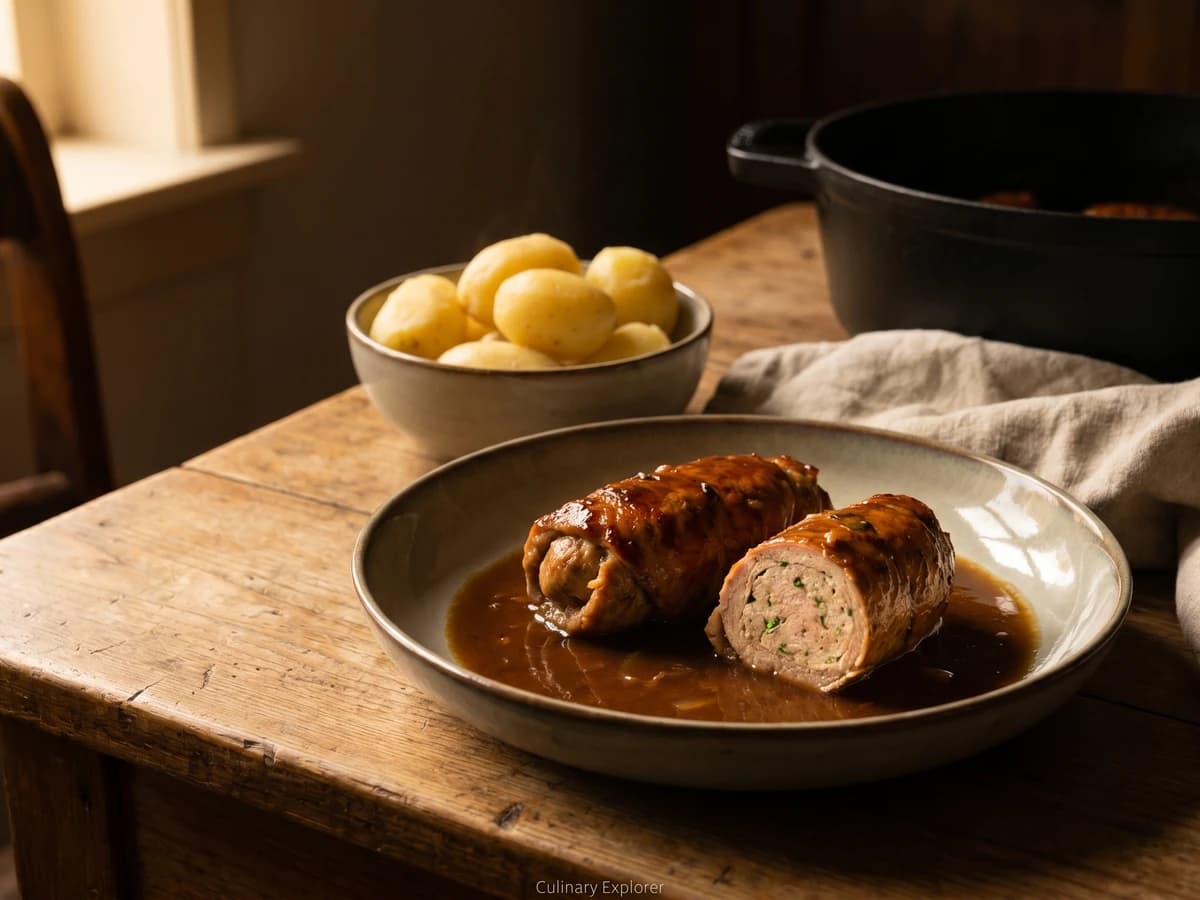
Blinde vinken are not birds but a butcher's little joke: seasoned mince tucked into thin veal or beef, browned dark in butter, then braised until the jus tastes of onion, mace, and patience.

Chef Joost
Bruine bonensoep is the quieter winter cousin of snert: brown beans, rookworst, bacon and roots in a broth that stays spoonable, frugal, and deeply Dutch.