
Chef Lesia
Buzhenyna (буженина, garlic-studded roast pork)
A whole pork neck takes garlic into little knife pockets, roasts until the crust goes dark and fragrant, then rests overnight so every cold slice tastes better than shop ham.
A cooking platform built around craft, culture, and the stories behind what we eat.
Created by
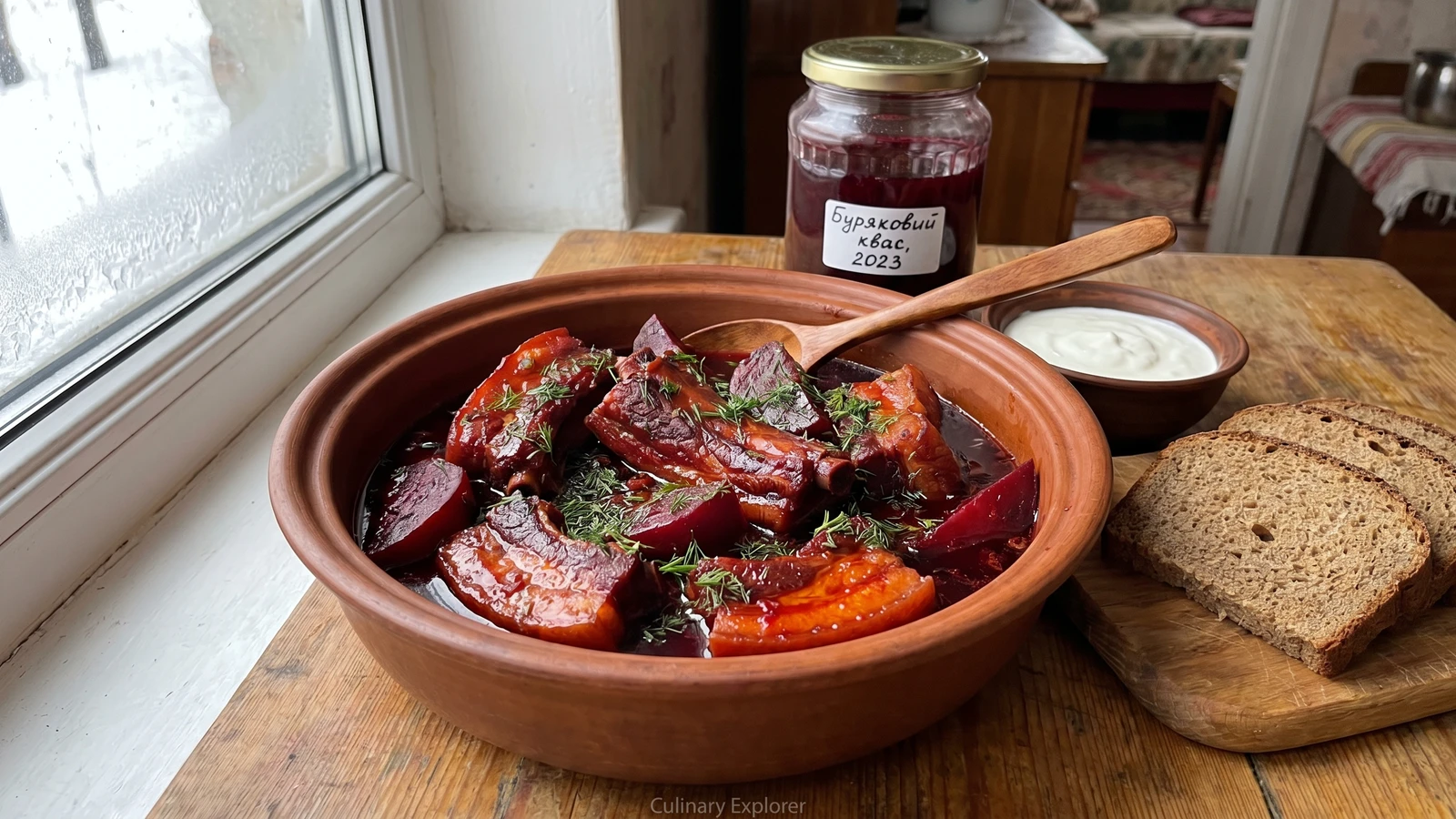
Pork goes into the pot pale and stubborn, then beet kvas takes hold and turns it dark crimson, sour-sweet, glossy, and old enough to make the table go quiet.
The most arresting thing is the color. Pork belly and ribs begin as ordinary meat, pale and fatty, then beet kvas floods the pot and everything turns crimson: the onions, the fat, the edges of the pork, even the wooden spoon if you leave it resting too long. It looks like borshch decided to become supper.
Shpundra belongs to Poltava and the older Cossack table, where souring was not decoration but structure. The beet kvas cuts through the pork fat, the fat carries the beet sweetness, and the pot lands in that old Ukrainian place between feast and preservation. Not vinegar. Not wine. A living sourness from beet ferment, mellow and earthy, with enough bite to wake the whole dish up.
The one thing that decides it is the end. Sweat the onion and carrot slowly as a zasmazhka, the Ukrainian flavour base, then stir it in late so its sweetness sits brightly on the sauce instead of flattening into the stew. Aunt Nadia would have written, "until the smell changes," and of course she would have left out the amount of kvas, just to torment me from the graph paper. Taste as you go. When the pork gives under the spoon and the sauce is glossy enough to stain bread, you're there.
Make a big pot. There is no tradition of a small one, and this is better tomorrow, when the beet sourness and pork fat have stopped shouting and learned each other's names.
Shpundra is most strongly tied to central Ukraine, especially Poltava, and appears in Ivan Kotliarevsky's 1798 Ukrainian burlesque Eneida among the foods of a noisy, recognizably local table. The dish preserves an older souring logic: meat braised with beet kvas, buriachany kvas, before factory vinegar became the easy shortcut. Its near disappearance from everyday cooking says plenty about how regional Ukrainian dishes were narrowed by standardized Soviet-era cookbooks.
Quantity
800g
cut into individual ribs
Quantity
600g
skin removed, cut into 4cm pieces
Quantity
2 teaspoons, plus more to taste
Quantity
1 teaspoon
freshly ground
Quantity
2 tablespoons
Quantity
2 large
thinly sliced
Quantity
2 medium
coarsely grated
Quantity
3 medium
peeled and cut into thick wedges
Quantity
500ml
preferably homemade or unsweetened fermented beet drink
Quantity
250ml
Quantity
2
Quantity
6
Quantity
3 cloves
smashed
Quantity
1 tablespoon
Quantity
1 tablespoon
for a thicker sauce
Quantity
small bunch
chopped, to serve
Quantity
to serve
Quantity
to serve
| Ingredient | Quantity |
|---|---|
| pork ribscut into individual ribs | 800g |
| pork bellyskin removed, cut into 4cm pieces | 600g |
| sea salt | 2 teaspoons, plus more to taste |
| black pepperfreshly ground | 1 teaspoon |
| unrefined sunflower oil or rendered pork fat | 2 tablespoons |
| onionsthinly sliced | 2 large |
| carrotscoarsely grated | 2 medium |
| beetspeeled and cut into thick wedges | 3 medium |
| beet kvaspreferably homemade or unsweetened fermented beet drink | 500ml |
| pork stock or water | 250ml |
| bay leaves | 2 |
| black peppercorns | 6 |
| garlicsmashed | 3 cloves |
| honey or dark buckwheat honey (optional) | 1 tablespoon |
| rye flour or wheat flour (optional)for a thicker sauce | 1 tablespoon |
| dillchopped, to serve | small bunch |
| smetana (sour cream) (optional) | to serve |
| rye bread or boiled potatoes (optional) | to serve |
Salt and pepper the ribs and belly pieces, then leave them on the counter while you slice the vegetables. Even twenty minutes helps the salt settle in. The pork should lose its fridge chill before it hits the pan, so it browns instead of sulking in its own juices.
Warm the sunflower oil or pork fat in a heavy pot and brown the pork in batches, letting each piece take on deep golden edges before you turn it. Don't crowd the pot. You want the smell of roasted fat and browned bone, not boiled pork. Lift the meat to a plate as it colors.
Add the beet wedges to the same pot and turn them through the pork fat until their edges darken and the fat goes red-orange. Scrape the bottom with a wooden spoon. Those browned bits are not mess; they're the beginning of the sauce.
Return the pork to the pot with the bay leaves, peppercorns, garlic, beet kvas, and stock or water. The liquid should come about halfway up the meat, not drown it. Bring it to the gentlest bubble, cover loosely, and cook until the pork gives when pressed with a spoon and the kitchen smells sweet-sour rather than sharp. If the kvas tastes very fierce, add the honey; it should round the sourness, not make the stew sweet.
While the pork softens, set a wide pan over low heat with a spoonful of fat skimmed from the stew. Add the sliced onions and cook until they slump, shine, and smell sweet. Add the grated carrot and keep it moving until the carrot softens and the fat turns orange. You're not frying hard. You're coaxing.
If you want a thicker, older-style sauce, sprinkle the flour over the zasmazhka and stir until it smells nutty and no dry flour shows. Loosen it with a ladle of the crimson braising liquid, then scrape the whole pan into the pot. If you prefer the sauce lighter and glossy, skip the flour. Both tables will eat well.
Simmer uncovered until the sauce clings to the pork and the beets are tender but not collapsed. Taste for salt, pepper, and sourness. A splash more kvas can wake it up; a spoon of honey can soften a very young ferment. Let the pot rest off the heat before serving, because pork fat and beet sourness need a little time to settle.
Spoon the pork, beets, and crimson sauce into a deep bowl. Scatter with dill and serve smetana on the side, cold against the hot stew, with rye bread or boiled potatoes for dragging through the sauce. The plate should look fed, not arranged.
1 serving (about 325g)
Culinary guides, cultural storytelling, and the editorial depth that makes cooking meaningful.
Discover Culinary ExplorerChef Lesia
A whole pork neck takes garlic into little knife pockets, roasts until the crust goes dark and fragrant, then rests overnight so every cold slice tastes better than shop ham.
Chef Lesia
Small Azov gobies go into tomato bright as market cloth and come out soft enough that the bones give up. This is Mariupol food: cheap, red, generous, and better tomorrow.

Chef Lesia
The first sound is the meat against the board: flat, sharp, changing as the fibres loosen. Fry the cutlets fast, then let onion gravy do the soft finishing.

Chef Lesia
A heap of tiny silver fish becomes supper by the oldest Odesa trick: clean them, press them together, fry until the edges crackle, and let lemon and dill do the talking.