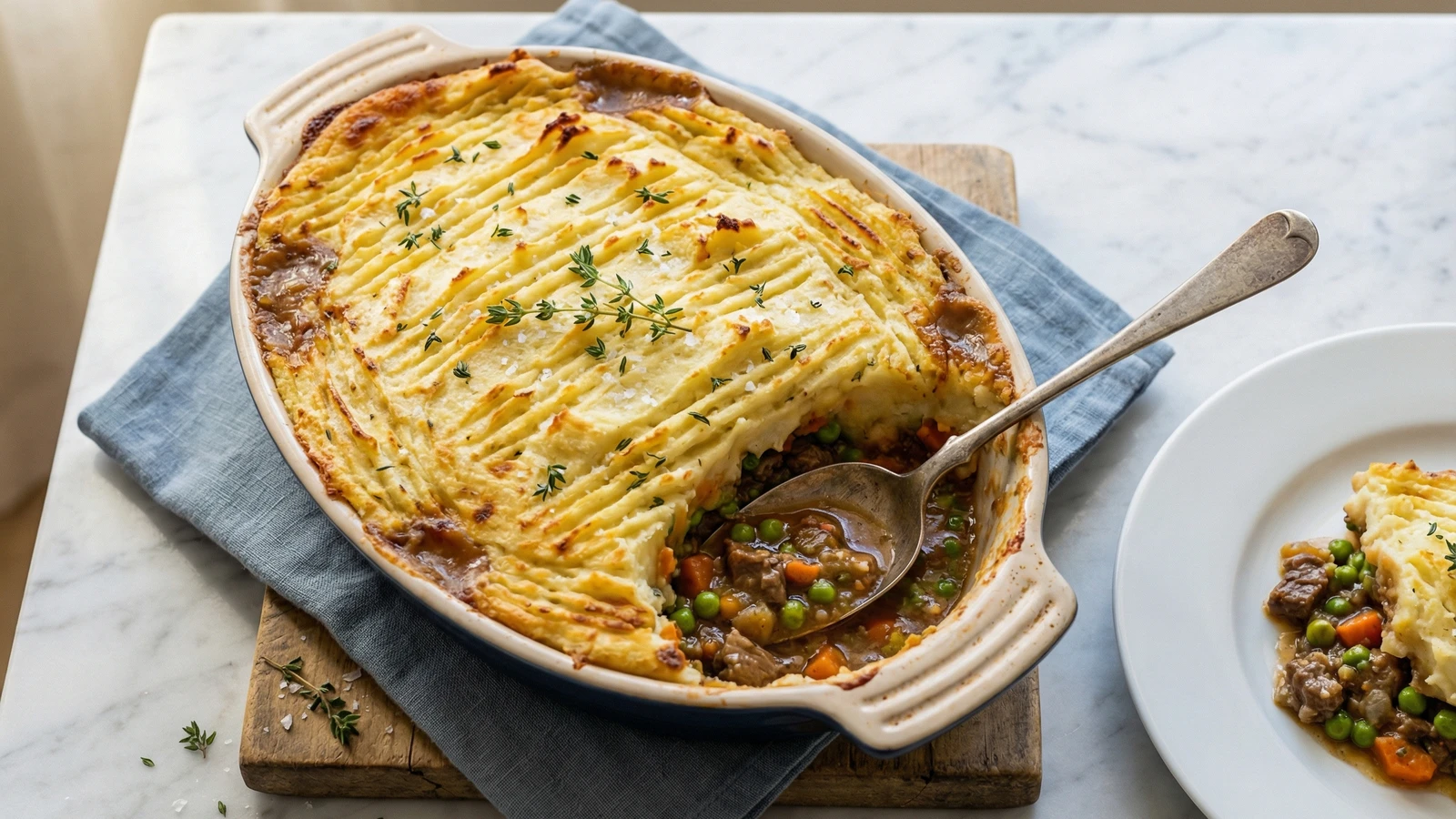
A bubbling casserole of seasoned beef and vegetables buried under clouds of buttery mashed potatoes, baked until the peaks turn golden and the edges crisp. This is the dish that makes cold weather worth enduring.
Main Dishes
British
Weeknight
Comfort Food
Make Ahead
45 min
Active Time
45 min cook•1 hr 30 min total
Yield6 to 8 servings
Let's address the elephant in the room. Traditionalists will tell you shepherd's pie requires lamb. The shepherd tends sheep, after all. Ground beef makes it cottage pie. Fine. I've made both versions hundreds of times, and I can tell you that American home cooks stopped caring about that distinction sometime around 1952. Use what you have. Use what your family prefers. The technique matters more than the terminology.
This dish crossed the Atlantic with British immigrants and found a permanent home in American farmhouse kitchens. It's thrifty cooking at its finest. Leftover roast beef, Sunday's mashed potatoes, whatever vegetables needed using up. Nothing wasted. Everything transformed into something greater than its parts. That philosophy sits at the heart of good American home cooking.
The secret to a proper shepherd's pie lives in two places: the gravy and the crust. Your filling needs enough liquid to stay moist during baking, but not so much that it turns soupy. And those mashed potatoes must be rich enough to hold their shape when you drag fork tines across the top. Those ridges and peaks catch the oven's heat, turning golden while the valleys stay creamy. It's honest engineering disguised as comfort food.
I've taught this recipe to new cooks and seasoned home cooks alike. The former appreciate how forgiving it is. The latter appreciate how much better it tastes when you take the time to build proper flavor in the filling. Both groups appreciate that it reheats beautifully, often tasting better the second day when the flavors have had time to marry.
The technique, the tradition, and the story behind every dish.
•9x13-inch baking dish or 12-inch cast iron skillet
•Potato masher or ricer
•Rimmed sheet pan
•Offset spatula
Instructions
1
Brown the beef
Heat the vegetable oil in a large Dutch oven or deep skillet over medium-high heat until shimmering. Add the ground beef in a single layer and let it sit undisturbed for 2 minutes. You want color, not gray steamed meat. Break it into large chunks and continue cooking, stirring occasionally, until deeply browned throughout, about 8 minutes total. The fond building on the bottom of the pot is flavor. Don't scrub it away. Transfer the beef to a bowl using a slotted spoon, leaving the rendered fat behind.
Resist the urge to stir constantly. The meat needs contact time with the hot pan to develop that Maillard crust.
2
Build the aromatics
Reduce heat to medium. Add the onion, carrots, and celery to the pot with the beef fat. Cook, stirring occasionally and scraping up the fond, until the vegetables soften and the onions turn translucent, about 6 minutes. Add the garlic and cook until fragrant, no more than 30 seconds. Push the vegetables to the edges and add the tomato paste to the center of the pot. Let it cook in the hot spot for 1 minute, stirring it constantly, until it darkens slightly and smells less raw. This caramelization deepens the entire dish.
3
Create the gravy base
Sprinkle the flour over the vegetables and stir to coat everything evenly. Cook for 1 minute to eliminate the raw flour taste. Pour in the beef broth and Worcestershire sauce, scraping the bottom vigorously to release every bit of fond. The liquid will thicken as it comes to a simmer. Return the browned beef to the pot along with the thyme and bay leaves. Season with salt and pepper. Reduce heat to medium-low and simmer uncovered for 20 minutes, stirring occasionally. The gravy should coat a spoon but still have movement. If it thickens too much, add a splash of broth.
Taste the filling before assembling. Worcestershire and beef broth vary in saltiness. Adjust now while you still can.
4
Prepare the potatoes
While the filling simmers, peel the potatoes and cut them into 2-inch chunks. Place in a large pot and cover with cold water by 2 inches. Add a generous tablespoon of salt. Bring to a boil over high heat, then reduce to a steady simmer. Cook until a knife slides through without resistance, about 18 to 22 minutes. Drain thoroughly in a colander and let them steam dry for 2 minutes. Return the empty pot to the stove.
5
Mash the potatoes
Add the butter pieces to the warm pot and let them melt. Return the drained potatoes and mash until smooth using a potato masher or ricer. A ricer produces the fluffiest results, but a masher works fine for rustic texture. Pour in the warm milk gradually, stirring after each addition until absorbed. Season with salt. Beat in the egg yolk vigorously. The yolk enriches the potatoes and helps them brown beautifully under the broiler. The consistency should be thick enough to hold peaks when you lift the masher, not runny.
Never use a food processor or blender for mashed potatoes. The blades rupture starch cells and create wallpaper paste.
6
Finish the filling
Preheat your oven to 400°F. Remove the bay leaves from the filling and discard. Stir in the frozen peas. They'll thaw in the residual heat. Transfer the filling to a 9x13-inch baking dish or a large cast iron skillet. Spread it into an even layer, pressing gently to eliminate air pockets. The filling should come about two-thirds up the sides, leaving room for the potato topping.
7
Top with potatoes
Dollop the mashed potatoes over the filling in large spoonfuls, distributing them evenly. Using an offset spatula or the back of a spoon, spread the potatoes to the edges of the dish, sealing the filling completely. This seal prevents the gravy from bubbling over the sides. Now drag a fork across the entire surface in parallel lines, creating ridges and peaks. These textured areas catch the oven heat and turn golden while the valleys stay creamy. Brush the top generously with the melted butter.
8
Bake until golden
Place the baking dish on a rimmed sheet pan to catch any drips. Bake in the center of the oven for 25 to 30 minutes, until the potato peaks turn golden brown and the filling bubbles visibly around the edges. If you want deeper color on top, switch to the broiler for the final 2 minutes, watching constantly. The surface can go from golden to burned in seconds under a broiler.
You'll hear the filling before you see it. Listen for the gentle bubbling sound that means everything is heated through.
9
Rest and serve
Remove from the oven and let the pie rest for 10 minutes. This isn't optional. The filling needs time to settle and thicken slightly. Cut into it immediately and you'll have a soupy mess on your plate. After resting, the gravy will have body and the portions will hold their shape when you scoop them out. Serve in generous portions, making sure each serving includes plenty of the crispy potato edges.
Chef Tips
•Substitute ground lamb for a traditional British shepherd's pie. The flavor pairs beautifully with the same vegetables and seasonings, though lamb fat can be more assertive. Drain more thoroughly after browning if you prefer a milder taste.
•For extra richness, fold 4 ounces of sharp cheddar into the mashed potatoes before spreading. The cheese adds tang and helps the crust brown more dramatically.
•Leftover roast beef or lamb works beautifully here. Dice it into small pieces instead of using ground meat. Reduce the initial browning step since the meat is already cooked.
•A layer of caramelized onions between the filling and potatoes transforms this from excellent to extraordinary. Cook two sliced onions slowly in butter for 30 minutes until deep golden.
•Freeze individual portions in foil-lined ramekins. Once frozen solid, pop them out, wrap tightly, and store for up to 3 months. Reheat directly from frozen at 375°F for 45 minutes.
Advance Preparation
•The complete assembled pie can be refrigerated unbaked for up to 24 hours. Add 10 to 15 minutes to the baking time when cooking from cold.
•The filling alone keeps refrigerated for 3 days. Reheat gently and add a splash of broth if it has thickened too much before assembling.
•Mashed potatoes can be made 2 days ahead and refrigerated. Let them come to room temperature and stir in a splash of warm milk to restore their spreadable consistency.
•Baked shepherd's pie refrigerates beautifully for 4 days. Reheat portions in a 350°F oven for 20 minutes or microwave until heated through. The crust won't re-crisp in the microwave, but the flavor only improves with time.
Frequently Asked Questions
Nutrition Information
1 serving (about 290g)
Calories
760 calories
Total Fat
46 g
Saturated Fat
16 g
Trans Fat
1 g
Unsaturated Fat
28 g
Cholesterol
175 mg
Sodium
554 mg
Total Carbohydrates
49 g
Dietary Fiber
4 g
Sugars
2 g
Protein
38 g
Where cooking meets culture.
Culinary guides, cultural storytelling, and the editorial depth that makes cooking meaningful.