
Chef Lesia
Gombovtsi (ґомбовці, plum-stuffed steamed dumplings)
The first cut is the whole argument: pale potato dough, toasted butter crumbs, then a hot purple plum collapsing into syrup at the center.
A cooking platform built around craft, culture, and the stories behind what we eat.
Created by
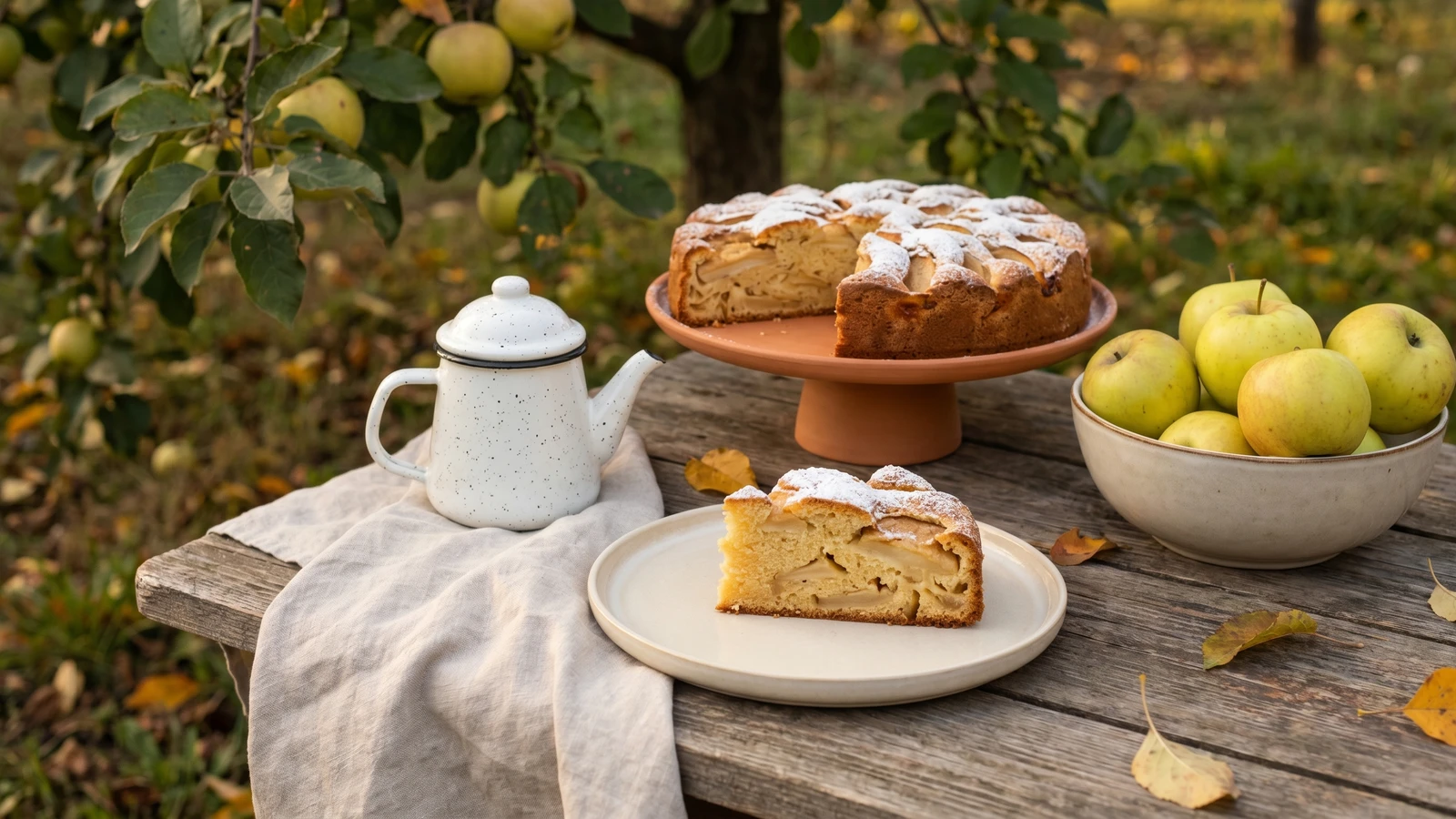
The batter is almost an excuse. A heap of sharp apples goes into the tin, barely held by eggs, sugar, and flour, then bakes until the kitchen smells like toffee.
The best sharlotka looks as if someone made a mistake with the apples and refused to apologize. Too many slices, surely. Too little batter. Then it bakes, the edges catch gold, the fruit sinks and softens, and the whole cake holds together by some quiet kitchen agreement.
This is the cake you make when there are apples going soft in the bowl and people coming in from the cold. Antonivka, if you can find them, are the old sour, fragrant ones, green-yellow and bossy; any sharp baking apple will do the work. The fruit, not the sponge, is the dish.
The one thing that decides it is the eggs. Beat them with sugar until the mixture grows pale, thick, and lazy, falling from the whisk in ribbons. Aunt Nadia wrote only, "until it sounds right," which was maddening until I heard it myself: the whisk changes from splashy to soft and padded. Fold in the flour gently, or you knock out the lift and make a sweet omelette with apples, which is still edible but not what we're doing.
Bake it until the smell changes. First raw egg and apple, then warm flour, then that deep toffee edge where the sugar and fruit have found each other. Let it cool before cutting, if your household has this kind of discipline. Mine usually doesn't.
Sharlotka takes its name from the wider European charlotte family of apple desserts that moved through 19th-century cookbooks, but in Ukrainian home kitchens it became something leaner: eggs, sugar, flour, and autumn apples. The Soviet-era version spread because it needed no butter, cream, or special tin, yet Ukrainian cooks made it their own through local apples, especially sour Antonivka, and the habit of baking big, practical cakes for tea.
Quantity
1 kg
peeled if the skins are tough, cored and sliced thin
Quantity
4
at room temperature
Quantity
200g, plus 1 tablespoon
extra sugar for the tin
Quantity
150g
Quantity
1 teaspoon
Quantity
1/4 teaspoon
Quantity
1 teaspoon
Quantity
1 teaspoon
Quantity
1 tablespoon
for the tin
Quantity
as needed
for greasing
Quantity
to dust
| Ingredient | Quantity |
|---|---|
| tart apples, preferably Antonivka or another sharp baking applepeeled if the skins are tough, cored and sliced thin | 1 kg |
| large eggsat room temperature | 4 |
| caster sugarextra sugar for the tin | 200g, plus 1 tablespoon |
| plain flour | 150g |
| baking powder | 1 teaspoon |
| fine sea salt | 1/4 teaspoon |
| vanilla sugar or vanilla extract | 1 teaspoon |
| ground cinnamon (optional) | 1 teaspoon |
| fine dry breadcrumbs or semolinafor the tin | 1 tablespoon |
| butter or neutral oilfor greasing | as needed |
| icing sugar (optional) | to dust |
Heat the oven to 180C. Grease a 23cm springform tin or a deep round cake tin, then dust it with the extra sugar and breadcrumbs or semolina. That little sandy layer helps the edges catch and gives the apple juices somewhere to go instead of gluing themselves to the metal.
Core the apples and slice them thin, about the thickness of a coin. Peel them if the skins are leathery; leave them if they are tender and fragrant. Pile them straight into the tin. It should look like too much fruit. Good.
Beat the eggs, sugar, vanilla, and salt until pale, thick, and swollen, about three times their original volume. Lift the whisk: the mixture should fall back in a ribbon and sit on the surface for a breath before disappearing. Listen too. It starts splashy and ends soft, padded, almost creamy.
Sift the flour and baking powder over the eggs in two additions, folding with a wide spatula from the bottom of the bowl. Stop as soon as you can no longer see dry flour. This batter gets its lift from air, so don't beat it brave and flat.
Pour the batter over the apples and nudge it down between the slices with the spatula. Tap the tin once on the counter, not to knock the life out of it, just to help the batter find the gaps. If a few apple edges stick up, leave them. They will bronze nicely.
Bake until the top is deep golden, the centre springs back lightly, and a skewer comes out without wet batter clinging to it. More important, wait for the smell to change: raw apple and egg first, then warm cake, then a darker toffee note at the edges. If the top colors too quickly, lay a loose sheet of foil over it.
Let the cake rest in the tin until it stops sighing and pulls slightly from the edge. Run a knife around the side, release it, and dust with icing sugar if you like. Cut generous wedges. It is good warm, better at room temperature, and excellent the next morning with strong tea.
1 serving (about 165g)
Culinary guides, cultural storytelling, and the editorial depth that makes cooking meaningful.
Discover Culinary ExplorerChef Lesia
The first cut is the whole argument: pale potato dough, toasted butter crumbs, then a hot purple plum collapsing into syrup at the center.

Chef Lesia
The first spoonful of Christmas Eve is dark wheat, white poppy milk, honey, nuts, and memory. Kutia comes before everything else because grain must speak first.

Chef Lesia
Two dry, crackling hazelnut meringues hold a whole city's pride between them, with cocoa buttercream, pale cream flowers, and the sound of a knife breaking through sugar.

Chef Lesia
A cake made from white curd goes to the table wearing black: dense, lemon-scented syr under dark chocolate glaze, sliced cold and proud from the west.