
Chef Takumi
Agedashi Tofu (揚げ出し豆腐)
Agedashi tofu looks like a fryer test. It is only drained tofu, potato starch, clean oil, and a hot dashi broth waiting nearby.
A cooking platform built around craft, culture, and the stories behind what we eat.
Created by
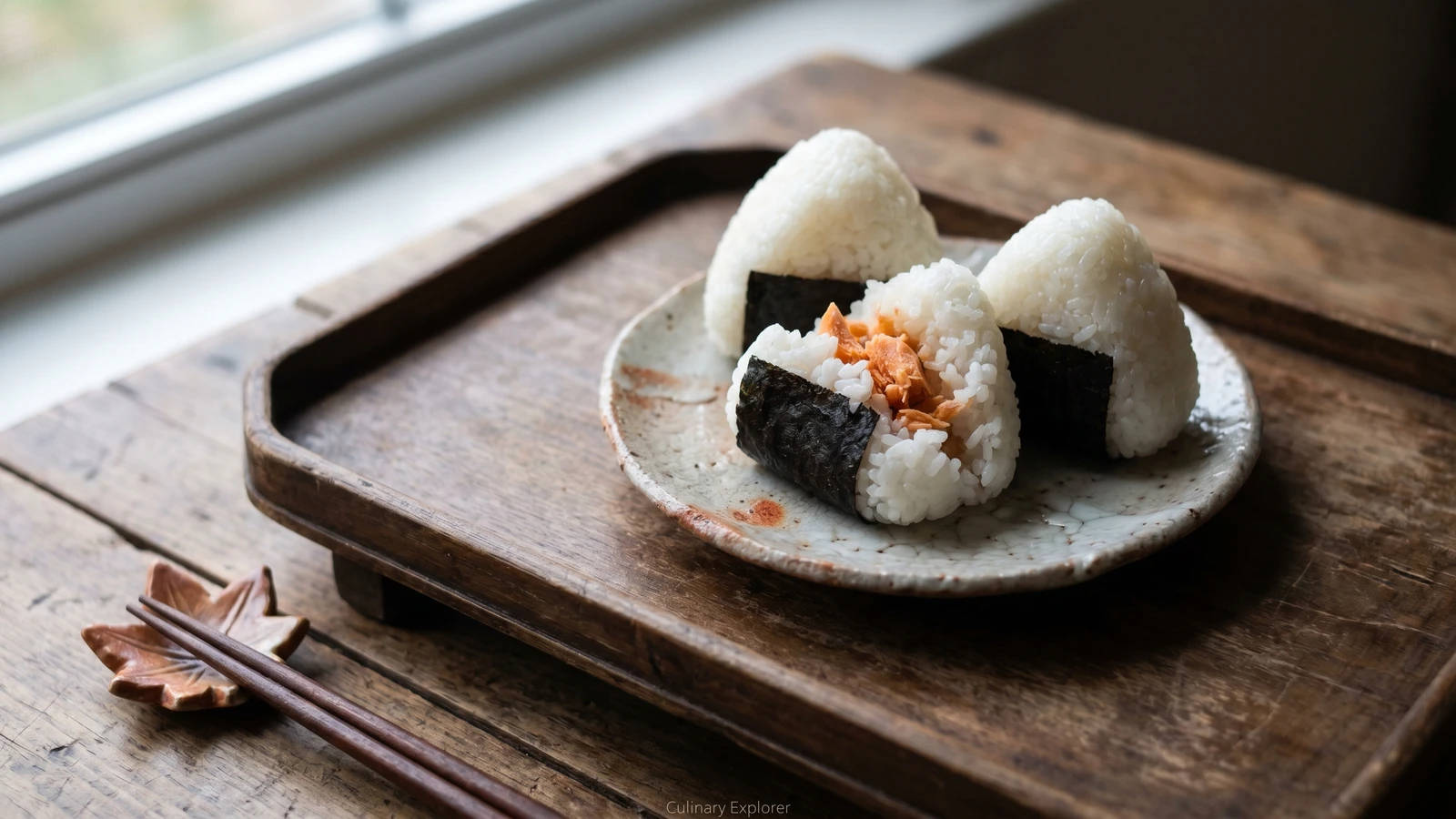
Salted salmon, hot short-grain rice, and damp hands: that is enough. Shape firmly without crushing the rice, and the onigiri holds together while staying tender.
Onigiri is rice made portable, which sounds too plain until you hold one warm in your palm. Shake onigiri is even plainer: salted salmon, fresh rice, a little salt on the hands. Nothing hidden. The fish seasons the center, the rice carries it, and the whole thing is ready for a picnic, a desk lunch, or the small emergency called hunger.
The one detail that decides it is temperature. Shape the rice while it's hot enough to cling to itself, but not so hot that your hands lose their courage. Cold rice won't bind cleanly, and overworked rice turns heavy. We press just enough to make the triangle hold, then stop. The grains should still look like grains, not paste.
Salted salmon matters here because it brings flavor without wetness. Grill it until the edges color and the flesh flakes dry and clean, then tuck it inside the rice while both are still honest about what they are. This is honmono in the everyday sense: not grand, not dressed up, only correct. If you want nori, wrap it just before eating so it keeps its dry bite. If you're packing it, let the rice balls cool before closing the box. Even rice likes a little room.
Portable rice balls appear in Japanese records as tonjiki in the Heian period, when compact portions of rice were used for travel and ceremonial meals. Sheet nori wrapping became more common in the Edo period as nori cultivation and processing around Edo Bay made flat, paper-like seaweed widely available. In the late twentieth century, convenience stores helped standardize triangular onigiri with separate crisp nori wrappers, and shake became one of the enduring fillings.
Quantity
2 rice-cooker cups (about 300g)
rinsed
Quantity
360ml, or to the 2-cup rice-cooker line
Quantity
1 large fillet (about 150 to 180g)
Quantity
1 to 1 1/2 teaspoons
for shaping
Quantity
6 small pieces
| Ingredient | Quantity |
|---|---|
| Japanese short-grain ricerinsed | 2 rice-cooker cups (about 300g) |
| water | 360ml, or to the 2-cup rice-cooker line |
| shiozake (salted salmon) | 1 large fillet (about 150 to 180g) |
| fine sea saltfor shaping | 1 to 1 1/2 teaspoons |
| nori sheets or strips (optional) | 6 small pieces |
Rinse the rice in several changes of water, stirring gently with your fingers, until the water runs almost clear. Drain for ten minutes, then cook with the measured water in a rice cooker or a heavy pot. Washing removes loose surface starch, so the cooked grains cling without turning gummy.
Grill or broil the salted salmon until the surface is lightly browned and the flesh flakes cleanly, about 8 to 12 minutes depending on thickness. Let it cool just enough to handle, then remove skin and bones and flake the fish into small pieces. The filling should be savory and fairly dry, because wet fish makes the rice break apart.
When the rice is done, let it rest covered for ten minutes, then turn it gently with a shamoji, a rice paddle, or a broad spatula. Lift and fold rather than mash. You are letting extra moisture escape while keeping the grains whole, which gives the onigiri its clean bite.
Set a small bowl of water and the salt beside you. Wet your hands lightly, rub a small pinch of salt across your palms, and take about 100 to 110g hot rice. The water keeps the rice from sticking to you, and the salt seasons the outside where the filling cannot reach.
Flatten the rice slightly in one palm, make a shallow hollow, and add a spoonful of flaked salmon. Cover with a little more rice if needed, then shape it into a triangle by cupping one hand as the roof and turning the rice with the other. Press, turn, press, and stop. The onigiri should hold together, but the grains should still be visible.
Wrap each onigiri with nori just before eating if you want the seaweed crisp. For a picnic or bento, cool the shaped onigiri on a clean tray before closing the box, because trapped warmth makes the rice damp. Eat the same day, and keep it chilled in hot weather.
1 serving (about 135g)
Culinary guides, cultural storytelling, and the editorial depth that makes cooking meaningful.
Discover Culinary ExplorerChef Takumi
Agedashi tofu looks like a fryer test. It is only drained tofu, potato starch, clean oil, and a hot dashi broth waiting nearby.

Chef Takumi
Aspara-bacon is late-spring asparagus treated with common sense: thin bacon, hot grill, and a last brush of shōyu and mirin so the spear stays sweet while the wrap crisps.

Chef Takumi
This is Osaka street food at its plainest and best: good beef cut small, a thin batter, fine panko, hot beef tallow, and one clean dip in sauce.

Chef Takumi
Buta-bara is not a trick of the grill. Good pork belly, even cutting, steady heat, and the patience to let the fat turn glossy do most of the work.