Chef Graziella
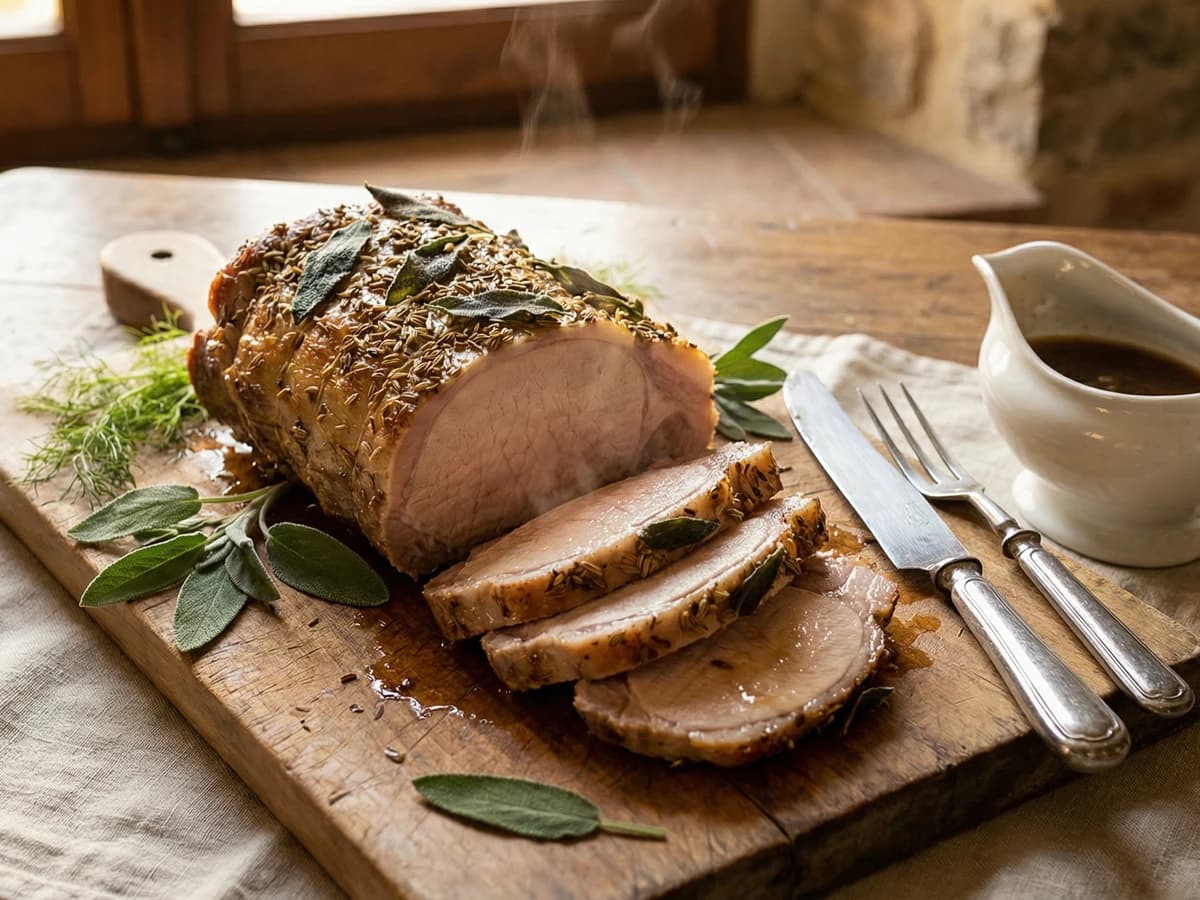
Arrosto di Maiale alle Erbe Aromatiche
Bone-in pork loin rubbed with fennel, rosemary, and sage, roasted until the herbs form a crackling crust and the meat stays pink and succulent. This is the roast that brings Sunday to life.
A cooking platform built around craft, culture, and the stories behind what we eat.
Created by
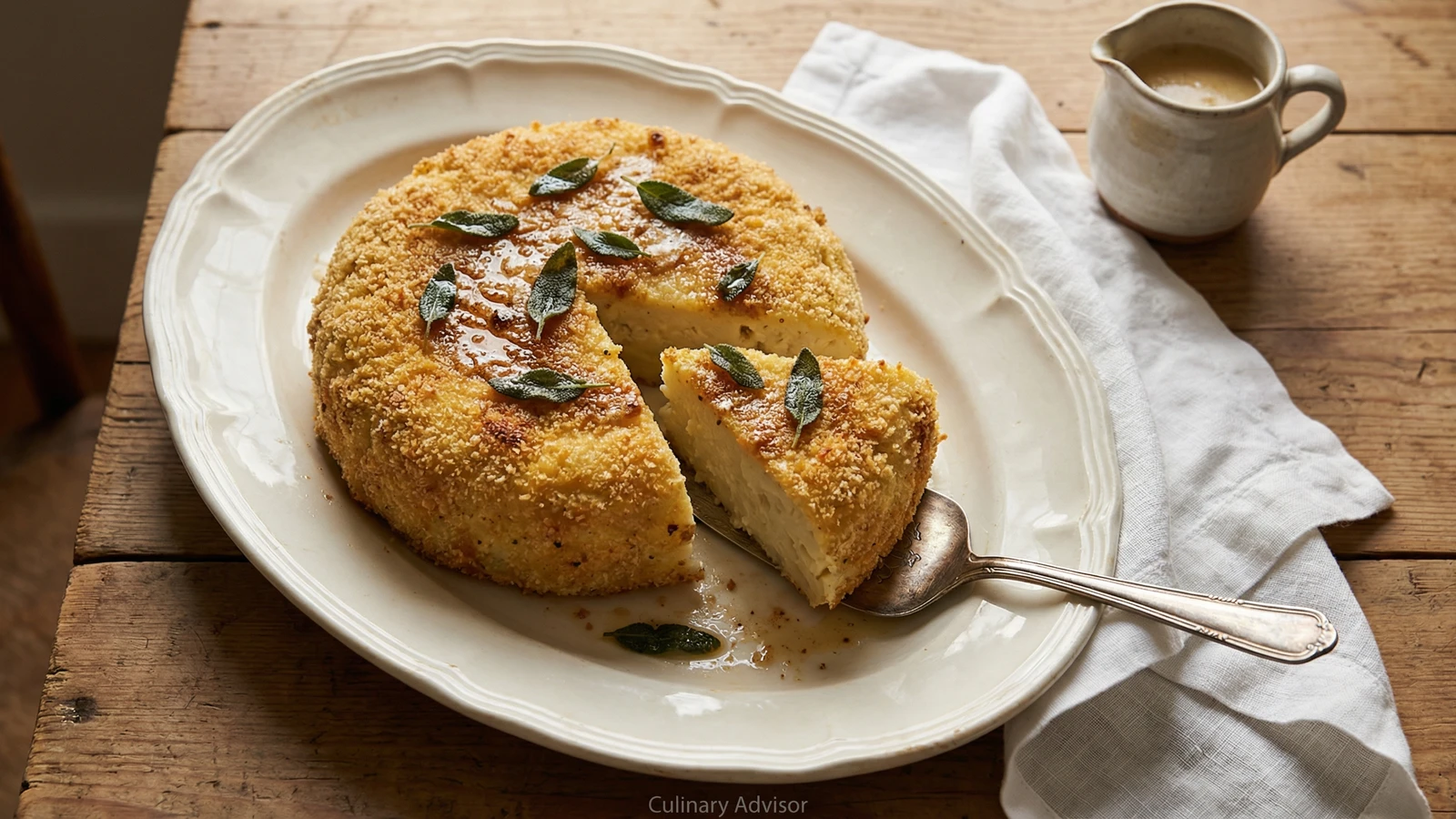
The refined vegetable custard of Northern Italy, where cauliflower is cooked to softness, bound with besciamella and eggs, then baked until it sets into something between a flan and a savory pudding.
Asformato is not a soufflé, and you must understand this before you begin. A soufflé rises dramatically and collapses the moment you look at it improperly. A sformato sits lower in the mold, bakes gently in a water bath, and unmolds with dignity. It waits for you. It holds its shape at the table while you serve your guests. This is food for civilized people who wish to have a conversation over dinner.
The sformato belongs to Northern Italy, particularly Piedmont and Lombardy, where the influence of French technique met Italian pragmatism. It is a first course, served warm, often with a spoonful of sauce alongside: a light tomato, a butter and sage, sometimes nothing at all. The vegetable speaks.
Cauliflower takes to this treatment beautifully. Cooked until completely tender (this is not the time for al dente vegetables), pureed until silky, bound with a thick besciamella and enriched with eggs and Parmigiano. The result is simultaneously delicate and substantial. It looks impressive when unmolded, golden and trembling slightly. But the real accomplishment is textural: that first spoonful, yielding and creamy, tasting of cauliflower more intensely than cauliflower ever tastes when simply boiled.
Sformati emerged in the aristocratic kitchens of 18th-century Piedmont, where French-trained cooks adapted the techniques of terrines and timbales for Italian vegetables. The term derives from sformare, to unmold, which remains the defining moment of the dish. By the 19th century, sformati had spread throughout Northern Italy as an elegant first course for formal dinners.
Quantity
1 medium head (about 2 pounds)
trimmed into florets
Quantity
4 tablespoons, plus more for the mold
Quantity
3 tablespoons
Quantity
1 1/2 cups
warmed
Quantity
4
Quantity
3/4 cup
freshly grated
Quantity
1/4 teaspoon
freshly grated
Quantity
to taste
Quantity
to taste
freshly ground
Quantity
2 tablespoons
| Ingredient | Quantity |
|---|---|
| cauliflowertrimmed into florets | 1 medium head (about 2 pounds) |
| unsalted butter | 4 tablespoons, plus more for the mold |
| all-purpose flour | 3 tablespoons |
| whole milkwarmed | 1 1/2 cups |
| large eggs | 4 |
| Parmigiano-Reggianofreshly grated | 3/4 cup |
| nutmegfreshly grated | 1/4 teaspoon |
| fine sea salt | to taste |
| white pepperfreshly ground | to taste |
| fine dry breadcrumbs | 2 tablespoons |
Bring a large pot of well-salted water to a boil. Add the cauliflower florets and cook until completely tender when pierced with a knife, 12 to 15 minutes. The cauliflower must be soft throughout. Undercooked cauliflower will not puree smoothly and your sformato will be grainy. Drain thoroughly and let the florets steam dry in the colander for five minutes.
Generously butter a 6-cup ring mold or a 9-inch round cake pan. Coat the interior completely with the breadcrumbs, tilting and rotating to cover all surfaces. Tap out the excess. The breadcrumbs create a delicate crust that helps the sformato release cleanly.
Melt the butter in a heavy saucepan over medium heat. When the foam subsides, add the flour all at once and stir vigorously with a wooden spoon for two minutes. The roux should be pale and smell faintly of toasted grain. Remove from heat and add the warm milk in a steady stream, whisking constantly. Return to medium heat and cook, stirring, until the sauce thickens enough to coat the back of a spoon heavily, about 5 minutes. It should be quite thick, thicker than a typical besciamella. Season with the nutmeg, salt, and white pepper. Remove from heat.
Transfer the drained cauliflower to a food processor. Process until completely smooth, scraping down the sides as needed. No lumps should remain. Add the warm besciamella and pulse to combine. The mixture should be silky and uniform.
Transfer the cauliflower mixture to a large bowl. Let it cool for five minutes. Beat the eggs lightly in a small bowl. Stir them into the cauliflower mixture along with the Parmigiano-Reggiano. Taste and adjust the seasoning. The mixture should be well-seasoned now; the eggs and cheese will mute the flavors slightly during baking.
Position a rack in the center of the oven and heat to 350°F. Bring a kettle of water to a boil. Pour the cauliflower mixture into the prepared mold, smoothing the top. Place the mold in a roasting pan and transfer to the oven. Carefully pour boiling water into the roasting pan until it reaches halfway up the sides of the mold.
Bake until the sformato is golden on top, slightly puffed, and set when you shake the pan gently, 40 to 45 minutes. A knife inserted near the center should come out clean. The sformato will have pulled away slightly from the sides of the mold. Remove from the water bath and let rest on a rack for 10 minutes. This resting is essential. The custard firms as it cools.
Run a thin knife around the edge of the mold. Place a serving plate over the mold and invert them together with a quick, confident motion. Lift off the mold. The sformato should release cleanly, revealing its golden breadcrumb crust. If it resists, press a warm damp towel against the outside of the mold for 30 seconds and try again. Serve immediately, cutting into wedges at the table.
1 serving (about 225g)
Culinary guides, cultural storytelling, and the editorial depth that makes cooking meaningful.
Discover Culinary ExplorerChef Graziella
Bone-in pork loin rubbed with fennel, rosemary, and sage, roasted until the herbs form a crackling crust and the meat stays pink and succulent. This is the roast that brings Sunday to life.

Chef Graziella
The ancient technique of salt-baking creates a sealed chamber where the fish steams in its own moisture. What emerges is flesh of remarkable purity, seasoned perfectly, ready for nothing but your best olive oil.

Chef Graziella
The ugly fish that cooks like veal, braised in tomatoes until the firm white flesh absorbs the briny sweetness of olives and capers. Fishermen's wives along the Adriatic knew its worth before restaurants discovered it.

Chef Graziella
A fifteen-minute lesson in restraint: pork chops, butter, sage, and the understanding that what you leave out matters as much as what you put in.