
Chef Lupita
Acambaritas de Acámbaro
Guanajuato's daily bread from Acámbaro, a small glazed roll built on pata, enriched with manteca de cerdo, and baked until the top shines lightly for merienda.
A cooking platform built around craft, culture, and the stories behind what we eat.
Created by
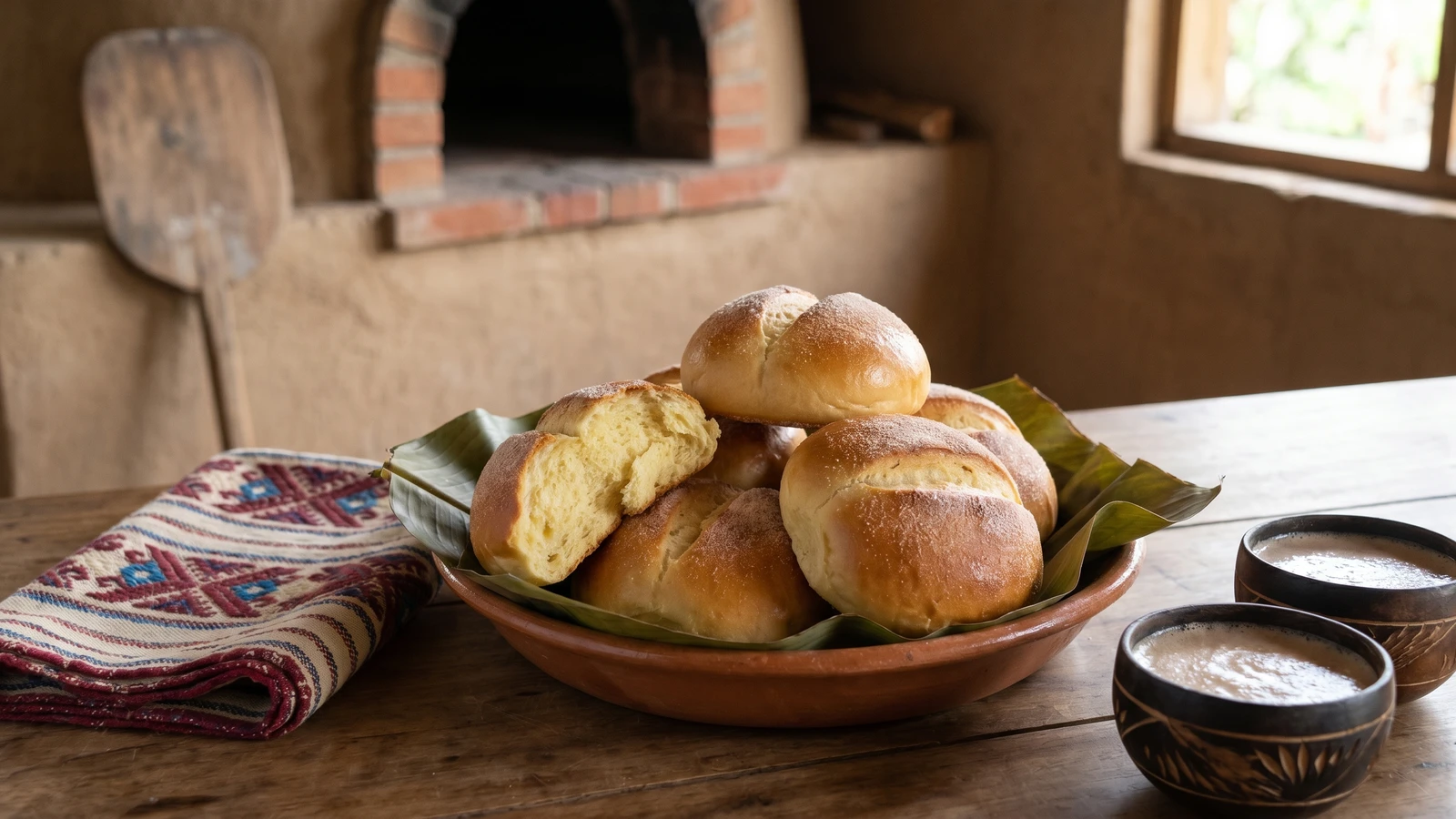
Chiapas gives Comitán this sweet daily bread: a round yeasted semita enriched with manteca, scored with the knife, baked until golden, and eaten with atole or coffee at merienda.
Chiapas, specifically Comitán de Domínguez in the Meseta Comiteca, owns this bread. Not every Mexican bread is concha, not every sweet roll comes from the capital, and not every wheat bread belongs to the north. Cada estado, su propia cocina.
The semita comiteca is pan de cada día: wheat flour, sugar, yeast, salt, and manteca de cerdo worked into a soft dough, shaped round, rested, and opened with the cuchillo before baking. That cut matters. It gives the bread its face and helps it rise with a clean split instead of tearing wherever it wants. The women in Comitán bakeries know this by hand, not by thermometer.
I ate these with café de olla near the mercado in Comitán, still warm enough that the crumb pulled apart in soft strands. No filling. No icing. No decoration pretending to be culture. La cocina no es decoración, es trabajo. This is a modest bread, yes, but modest is not the same as careless. Use good manteca, knead properly, let the dough rise, and bake it until the bottom sounds hollow. Así se hace y punto.
Wheat bread in Chiapas expanded during the colonial period after Spanish mills and ovens entered highland towns, while Indigenous corn-based cooking remained the daily foundation in surrounding communities. Comitán de Domínguez became known for panadería traditions tied to merienda, market commerce, and the coffee-growing region around the Meseta Comiteca. The word semita descends from older Spanish terms for wheat or bran breads, but in Comitán it developed into its own sweet round roll, different from Puebla's sesame cemita and from northern piloncillo semitas.
Quantity
4 cups, plus more for dusting
Quantity
1/2 cup
Quantity
2 1/4 teaspoons
Quantity
1 teaspoon
Quantity
3/4 cup
about 100F
Quantity
1/4 cup
about 100F
Quantity
1
room temperature
Quantity
1/2 cup
softened
Quantity
1 teaspoon
Quantity
1 tablespoon
for brushing
Quantity
1 tablespoon
for sprinkling
| Ingredient | Quantity |
|---|---|
| all-purpose flour | 4 cups, plus more for dusting |
| granulated sugar | 1/2 cup |
| active dry yeast | 2 1/4 teaspoons |
| fine sea salt | 1 teaspoon |
| warm whole milkabout 100F | 3/4 cup |
| warm waterabout 100F | 1/4 cup |
| large eggroom temperature | 1 |
| pork lard (manteca de cerdo)softened | 1/2 cup |
| vanilla extract | 1 teaspoon |
| whole milkfor brushing | 1 tablespoon |
| granulated sugarfor sprinkling | 1 tablespoon |
Stir the warm milk, warm water, yeast, and one tablespoon of the sugar in a bowl. Let it stand for 8 to 10 minutes, until the surface looks foamy and alive. If nothing happens, your yeast is dead. Throw it out and start again. Bread does not forgive dead yeast.
In a large bowl, whisk the flour, remaining sugar, and salt. Make a well in the center. Add the yeast mixture, egg, vanilla, and softened manteca de cerdo. Mix with your hand until the flour is hydrated and the dough looks rough. It will feel sticky at first. Do not panic and bury it in flour.
Turn the dough onto a lightly floured table and knead for 10 to 12 minutes. Push, fold, turn. The dough should become smooth, elastic, and slightly tacky, with a faint sheen from the manteca. La manteca es el sabor. It gives the crumb tenderness that oil will not give you.
Place the dough in a lightly greased bowl, cover with a clean kitchen towel, and let it rise in a warm place for 1 hour to 1 hour 15 minutes, until doubled. In Comitán, bakery dough rises according to the weather. Your kitchen will do the same. Watch the dough, not the clock.
Punch the dough down gently and divide it into 10 equal pieces. Roll each piece into a tight round, pulling the surface smooth and tucking the seam underneath. Set them on a parchment-lined baking sheet with space between them. Press each round lightly with your palm so it sits like a small dome, not a ball.
Cover the shaped semitas and let them rise 35 to 45 minutes, until puffy and almost doubled. Heat the oven to 375F while they rise. If you have a baking stone, use it. A wood-fired horno gives better bottom heat, but a hot home oven will do the work if you respect the preheat.
Brush the tops lightly with milk. With a sharp knife or lame, make one confident slash across the top of each semita, about 1/4 inch deep. Sprinkle with the tablespoon of sugar. The cut should open during baking into a clean split. A timid cut tears. A confident cut blooms.
Bake for 18 to 22 minutes, rotating the pan once, until the semitas are golden on top and browned underneath. Tap one on the bottom. It should sound hollow. The kitchen should smell of warm wheat, sugar, and manteca, like a Comitán panadería just before merienda.
Move the semitas to a rack and let them cool at least 15 minutes before serving. Eat them warm or at room temperature with café de olla, atole, or hot chocolate. They are best the day they are baked, but the next morning they revive well on a comal. Saber cocinar es saber vivir.
1 serving (about 95g)
Culinary guides, cultural storytelling, and the editorial depth that makes cooking meaningful.
Discover Culinary ExplorerChef Lupita
Guanajuato's daily bread from Acámbaro, a small glazed roll built on pata, enriched with manteca de cerdo, and baked until the top shines lightly for merienda.

Chef Lupita
Michoacan's Tinguindin aguacatas are flat, leaf-scored sweet breads made with harina de trigo, piloncillo, anise, and manteca de cerdo, shaped by hand for the wood oven.

Chef Lupita
From Ajijic on Lake Chapala, Pan Tachihual is a lightly sweet wedding loaf built with harina de trigo, harina de maiz, piloncillo, manteca, anise, and the old Guadalajara pata.

Chef Lupita
Comitán's pan de yema shaped into little pigs, birds, and rabbits, a Chiapas bakery bread rich with egg yolks, manteca de cerdo, and anís, baked golden on hoja de plátano.