
Chef Thomas
A Bloomer
A proper British bloomer, slashed deep and baked until the cuts open wide and the crust turns deep, glossy gold. The kind of loaf that makes the rest of the day feel deliberate.
A cooking platform built around craft, culture, and the stories behind what we eat.
Created by Chef Thomas
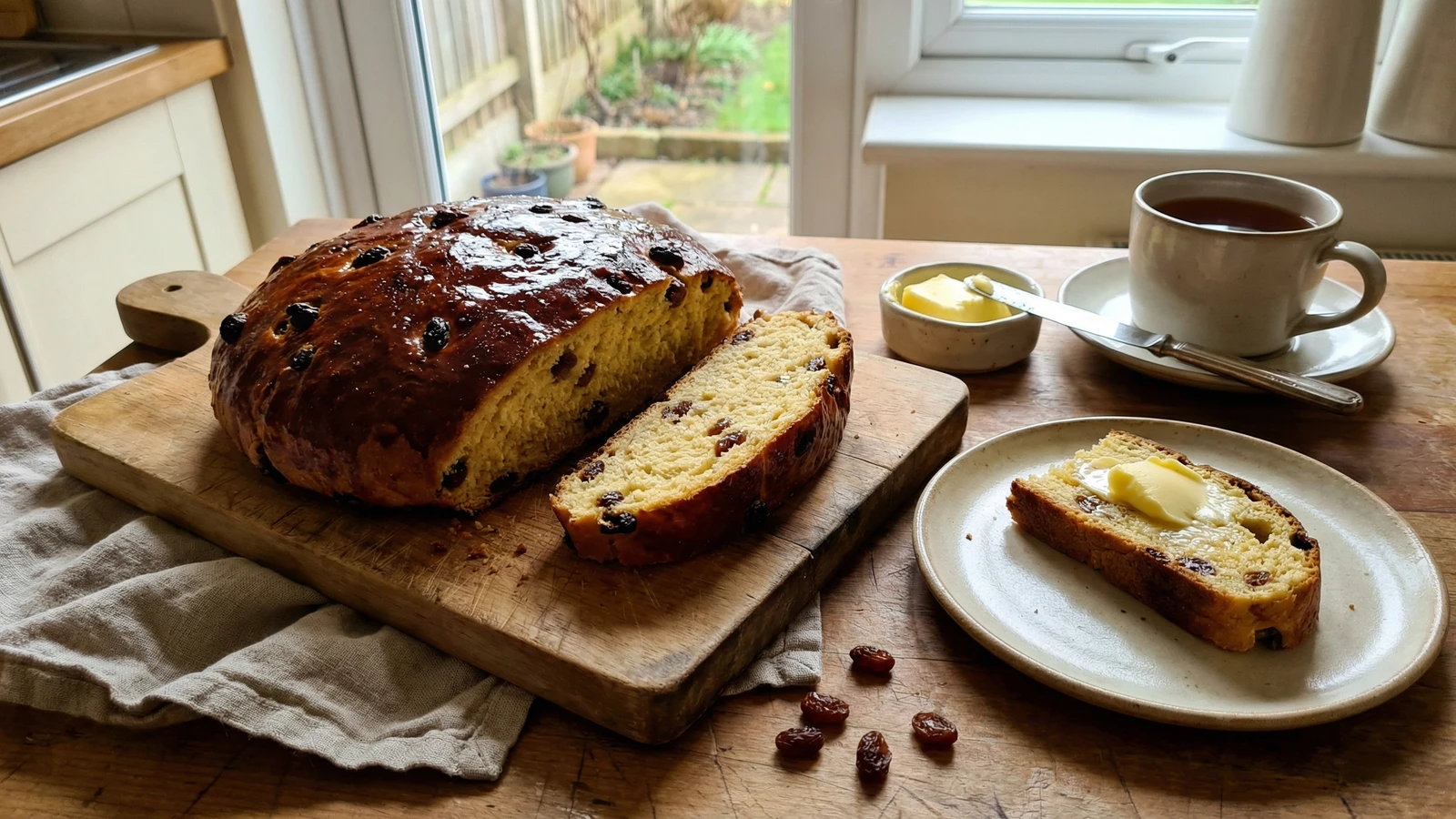
A buttery, sultana-studded Scottish bread baked low and round, glossy on top and tender within, made for the quiet hour between afternoon and evening when the kettle goes on and nothing much is asked of you.
There's an hour in the late afternoon, somewhere between three and five, when the light goes thin and the day starts to give up. That's when this bread makes sense. A thick slice of Selkirk bannock, spread with cold butter, beside a mug of strong tea. It's not a meal. It's not a pudding. It's the small, quiet ritual that bridges one part of the day and the next.
The bannock comes from Selkirk in the Scottish Borders, where a baker named Robbie Douglas first made it in the 1850s. Queen Victoria, the story goes, was offered a slice at Sir Walter Scott's house and refused everything else on the table. I don't know if that's true. I don't much care. What I know is that it's a generous, buttery, sultana-heavy bread that sits somewhere between a loaf and a cake, and it improves with a day or two of sitting wrapped in a tea towel on the counter.
This is bread that asks for time but not skill. The dough is enriched with butter and egg and sugar, which means it rises slowly and feels reluctant in your hands at first. Don't fight it. Knead it patiently and it will reward you. The sultanas go in after the first rise, worked through with the heels of your palms until they're scattered evenly through the dough. The shape is low and round, like a thick cushion, and the top is brushed with egg yolk before it goes in the oven so it bakes to a deep, glossy mahogany.
I made one yesterday for no particular reason. The kitchen smelled of warm butter and toasted sugar for the rest of the afternoon, and I cut the first slice this morning with cold butter and a cup of tea. I wrote it down in the notebook: bannock, butter, Tuesday, rain. Some afternoons need nothing more than that.
Quantity
500g
plus extra for dusting
Quantity
7g
Quantity
1 teaspoon
Quantity
75g
Quantity
125g
softened
Quantity
250ml
warmed to blood temperature
Quantity
1
lightly beaten
Quantity
350g
Quantity
1
mixed with 1 tablespoon milk, for glazing
| Ingredient | Quantity |
|---|---|
| strong white bread flourplus extra for dusting | 500g |
| fast-action dried yeast | 7g |
| fine sea salt | 1 teaspoon |
| golden caster sugar | 75g |
| unsalted buttersoftened | 125g |
| whole milkwarmed to blood temperature | 250ml |
| large egglightly beaten | 1 |
| sultanas | 350g |
| egg yolkmixed with 1 tablespoon milk, for glazing | 1 |
Warm the milk in a small pan until it feels like bathwater against the inside of your wrist. Not hot. Tip it into a jug, stir in a teaspoon of the sugar and the yeast, and leave it for ten minutes. It should froth and smell faintly of beer. If nothing happens, the yeast has given up and you'll need to start again with fresh.
Tip the flour into a large bowl with the salt and the rest of the sugar. Add the softened butter in pieces and rub it through the flour with your fingertips until it disappears, the way you would for a scone. Make a well in the middle. Pour in the yeasty milk and the beaten egg. Mix with a wooden spoon until it pulls together into a shaggy, sticky dough.
Turn the dough out onto a lightly floured surface and knead for ten minutes. It will feel sticky and difficult at the start. Resist the urge to add more flour. Push, fold, turn, repeat. After a few minutes it will start to come together, and by the end it should feel soft, smooth, and slightly tacky, like the inside of your forearm. If you have a stand mixer with a dough hook, use it. Eight minutes on a slow speed will do the same job.
Put the dough in a clean, lightly oiled bowl, cover with a damp cloth or cling film, and leave somewhere warm but not hot. The top of the fridge is usually about right. Let it rise for an hour and a half, or until it has doubled in size and looks puffy and slack when you press a finger into it. The dent should stay.
Tip the risen dough out onto a lightly floured surface and flatten it gently with your hands. Scatter the sultanas over the top and fold the dough over itself, working them through. This takes a few minutes of patient kneading. The dough will resist at first and the sultanas will try to escape. Keep going until they're evenly distributed. Don't be too vigorous. You want the fruit whole, not crushed.
Butter a baking tray and line it with parchment. Shape the dough into a round, slightly flattened disc, about 20cm across and 4cm high. A bannock is not a tall loaf. It sits low, like a thick cushion. Place it on the tray, cover loosely with the cloth, and leave to rise again for about an hour. It should look swollen and feel pillowy when you touch it.
Set the oven to 180C/160C fan. Brush the top of the bannock generously with the egg yolk and milk wash. This is what gives it that deep, glossy mahogany colour. Bake for 35 to 40 minutes, until the top is a rich, glossy brown and the bottom sounds hollow when you tap it. If the top is browning too quickly, lay a piece of foil loosely over it for the last ten minutes.
Lift the bannock onto a wire rack and let it cool completely before you cut into it. I know. The smell makes it difficult. But warm enriched bread tears rather than slices, and a Selkirk Bannock is meant to be cut into proper, even pieces. An hour on the rack and you're ready.
1 serving (about 115g)
Culinary guides, cultural storytelling, and the editorial depth that makes cooking meaningful.
Discover Culinary ExplorerChef Thomas
A proper British bloomer, slashed deep and baked until the cuts open wide and the crust turns deep, glossy gold. The kind of loaf that makes the rest of the day feel deliberate.

Chef Thomas
A simple white loaf made from flour, water, yeast, and salt. The kind of bread that fills the kitchen with the smell of a Saturday morning and teaches you, slowly, everything you need to know about baking.

Chef Thomas
A dark, fruit-heavy Welsh tea loaf, soaked overnight in strong tea and baked slowly until the kitchen smells of spice and orange peel. Sliced thick and buttered cold.

Chef Thomas
Rich, butter-laden Georgian buns from Bath, glazed deep gold and crowned with crushed sugar nibs that crack beneath your teeth, the kind of bake that turns a Sunday afternoon into something deliberate.