
Chef Thomas
Apple Charlotte
Buttered bread baked to a deep mahogany around a filling of spiced Bramley apples, turned out at the table in a small moment of drama, cold cream poured from a jug alongside.
A cooking platform built around craft, culture, and the stories behind what we eat.
Created by Chef Thomas
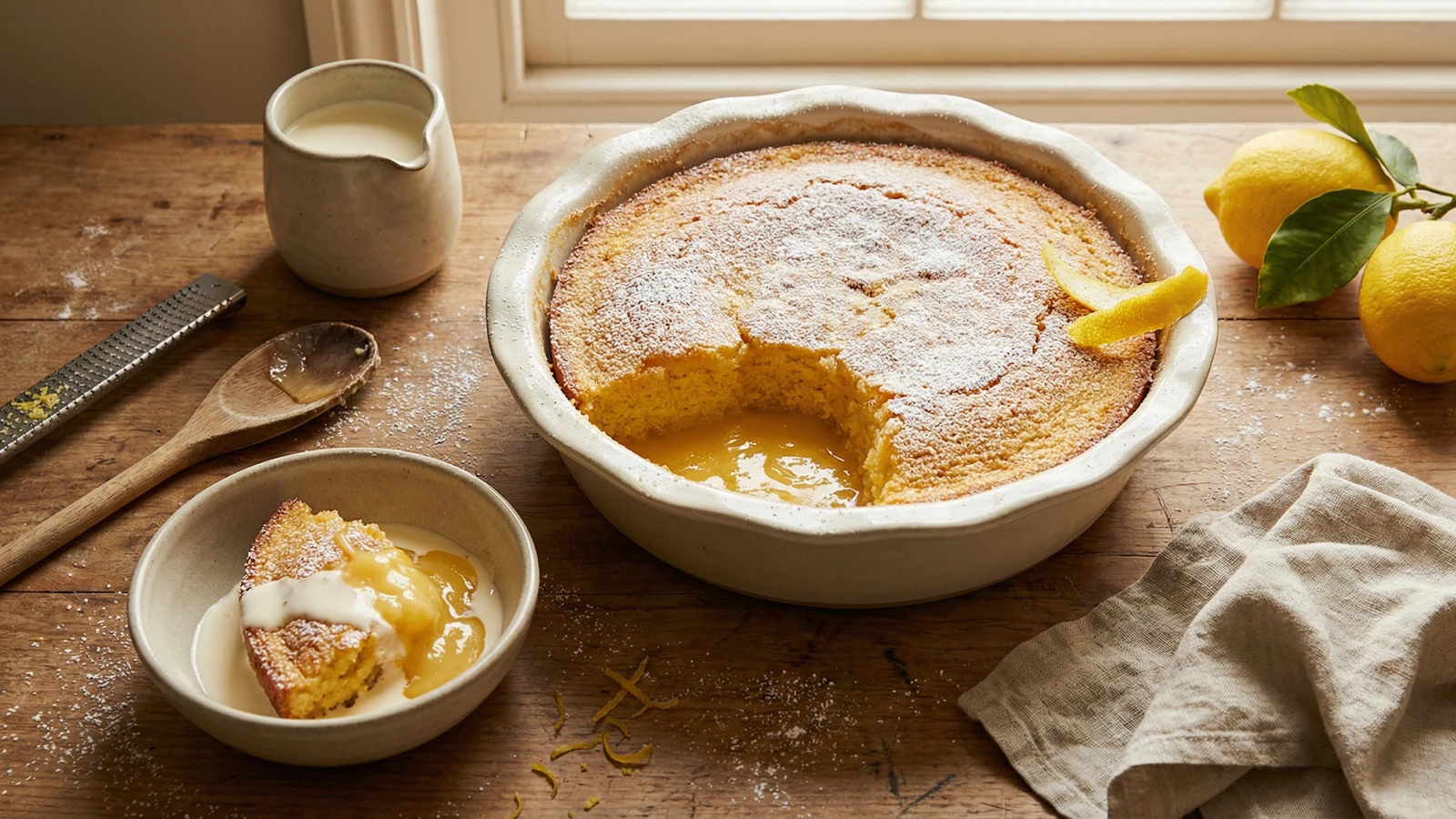
A warm lemon pudding that bakes itself into two layers, a soft golden sponge on top and a pool of sharp-sweet curd beneath, the kind of dish that turns a Tuesday in January into an occasion.
January is the month I give up pretending and start buying lemons by the bagful. The good ones arrive around now, Amalfi if you're lucky, the heavy yellow sort with a few dark leaves still attached, smelling so strongly of themselves that the paper bag carries the scent home with you. They're the one thing the supermarket can't flatten. The market decides, and in January, the market decides lemons.
This is a pudding I make on weeknights when the evening has gone cold and slightly sorry for itself and there's nothing on television. You mix everything in one bowl, fold in some whisked egg whites, pour it into a buttered dish, and slide it into the oven. Forty minutes later, it comes out having performed a small piece of kitchen magic: the batter has separated itself into a pale golden sponge floating on top of a pool of hot, sharp lemon curd. I've made it dozens of times and I still don't entirely understand how it works. I don't need to.
I wrote it down in the notebook years ago. "Lemon pudding. Cold Tuesday. Enough." That's still the whole entry. Some recipes don't need more than that.
Serve it warm, with cold cream poured straight from the jug so it runs over the top in pale rivers and meets the hot sauce underneath. There are few better feelings than putting a warm bowl of this in front of someone on a dark evening. We're only making dinner. But dinner, done with attention, is the thing.
Quantity
60g
softened, plus extra for the dish
Quantity
150g
Quantity
2
zest and juice
Quantity
3
separated
Quantity
50g
Quantity
300ml
Quantity
pinch
Quantity
for dusting
Quantity
to serve
| Ingredient | Quantity |
|---|---|
| unsalted buttersoftened, plus extra for the dish | 60g |
| golden caster sugar | 150g |
| unwaxed lemonszest and juice | 2 |
| large eggsseparated | 3 |
| plain flour | 50g |
| whole milk | 300ml |
| fine sea salt | pinch |
| icing sugar (optional) | for dusting |
| double cream or pouring cream | to serve |
Set the oven to 180C/160C fan. Butter a 1.2 litre baking dish generously, right up the sides, and put the kettle on. You'll need boiling water in a minute. Set the dish inside a deeper roasting tin. The water bath is what keeps the bottom half of the pudding silky instead of cakey, so don't be tempted to skip it.
Beat the softened butter, sugar and lemon zest together until pale and fluffy. A wooden spoon works fine; it just takes a bit longer. Rub some of the sugar between your fingers first if you like, pressing the zest into it. It releases the oils and the whole bowl starts to smell like a sunlit kitchen in the middle of January, which is rather the point.
Beat in the egg yolks one at a time. Add the flour and stir until smooth. Now the lemon juice goes in, followed slowly by the milk, whisking as you pour. The mixture will look thin and possibly a bit curdled and strange. Don't panic. This is exactly what it should look like. A recipe is a conversation, not a contract, and this bit is the part where you trust me.
In a clean bowl, whisk the egg whites with a pinch of salt to soft peaks. Not stiff. You want them holding their shape but still glossy and a little floppy at the tips. Fold them into the lemon batter in two or three goes, using a large metal spoon or a spatula, cutting down through the middle and turning the mixture over rather than stirring. Stop while there are still a few streaks of white visible. Overmixing knocks the air out, and the air is what lets the sponge rise up and leave the sauce behind.
Pour the batter gently into the buttered dish. Slide the roasting tin into the oven, then carefully pour boiling water into the tin until it comes about halfway up the sides of the pudding dish. Bake for 35 to 40 minutes. You're looking for a top that's golden, risen, and springy when you press it lightly in the middle. The sides will have pulled away a little. Underneath, hidden from view, there's a pool of hot lemon curd waiting for you.
Lift the dish out of the water bath and let it sit for five minutes. This matters. Straight from the oven, the sauce is too loose. Five minutes of rest and it thickens into exactly the right consistency. Dust the top with icing sugar. Spoon into warm bowls, making sure everyone gets a bit of sponge and a proper puddle of sauce. Pour cold cream over the top and eat it immediately.
1 serving (about 200g)
Culinary guides, cultural storytelling, and the editorial depth that makes cooking meaningful.
Discover Culinary ExplorerChef Thomas
Buttered bread baked to a deep mahogany around a filling of spiced Bramley apples, turned out at the table in a small moment of drama, cold cream poured from a jug alongside.

Chef Thomas
Whole Bramley apples cored and stuffed with butter, brown sugar and plump dried fruit, baked until they collapse and the kitchen fills with the smell of autumn getting on with itself.

Chef Thomas
A proper baked rice pudding, slow-cooked in whole milk with butter and nutmeg until the top sets into a freckled golden skin. The kind of pudding that makes January feel like less of a long haul.

Chef Thomas
Wild blackberries and Bramley apples collapsed together under a thick, sandy crumble, the pudding that makes September feel like it's worth staying in for.