
Chef Takumi
Aji Fry (アジフライ, panko-fried horse mackerel)
Aji fry is weeknight fish with no mystery: fresh horse mackerel opened cleanly, breaded lightly, and fried until the panko crackles while the flesh stays sweet.
A cooking platform built around craft, culture, and the stories behind what we eat.
Created by
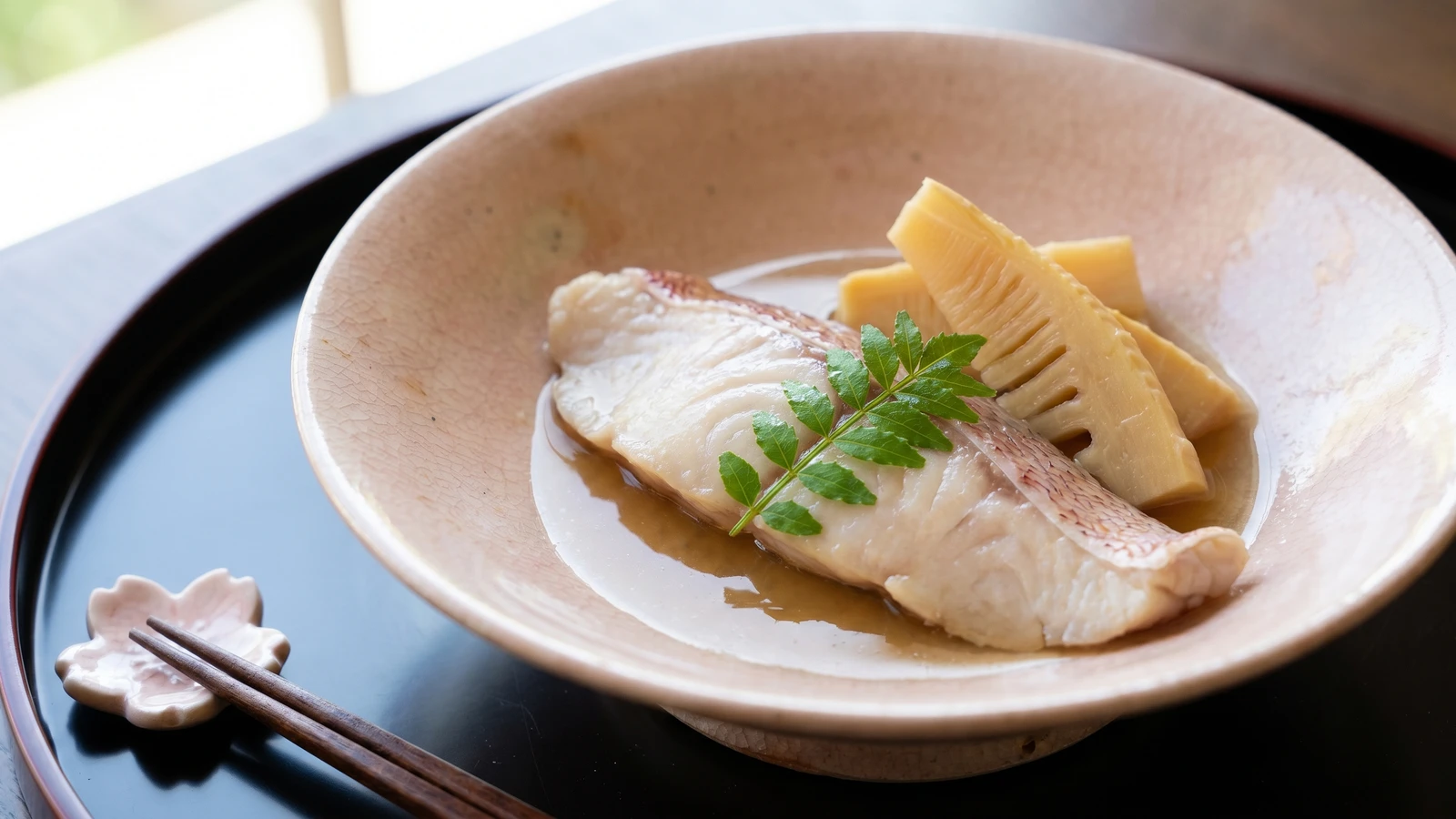
Spring's two stars share one bowl, not one cooking time: bamboo shoot drinks dashi slowly, sea bream barely needs a simmer, and the plate stays clear because each is handled on its own.
Spring puts tai and takenoko in the same sentence. Tai is sea bream, firm and faintly sweet; takenoko is bamboo shoot, green smelling and quick to go from tender to dull if you bully it. Together they look ceremonial, which makes cooks stand too straight. Relax. The ceremony is mostly timing.
Takiawase means cooked together, and then, like many useful Japanese words, tells only half the truth. We simmer each piece separately. The bamboo shoot needs time to drink dashi and light soy; the sea bream needs only a brief bath or it tightens and dries. Put them in one pot and one must suffer for the other. Keep them apart, and the dish becomes simple.
The detail that decides it is clarity. Make a clean ichiban dashi, do shimofuri, a quick blanching of the fish, and don't crowd the pan. The blanch tightens the skin and rinses away what would cloud the broth; the drop-lid keeps seasoning moving over the surface without stirring. At the end you bring mountain and sea into one shallow bowl, a little kinome on top, plenty of empty space. This is spring takiawase: honmono, but not a performance.
Takiawase literally means cooked together, but in kaiseki it names a simmered course in which each ingredient is cooked to its own character before being arranged in one vessel. Spring red sea bream is often called sakura-dai, cherry-blossom tai, because it is prized around blossom season, just as bamboo shoots break the ground. Mōsō bamboo, the source of many large takenoko, spread widely in Japan during the Edo period after introduction from China, giving cooks a new spring shoot to treat with dashi and restraint.
Quantity
5 cups
Quantity
1 piece (about 12g)
Quantity
25g
Quantity
400g
cut into wedges and half-moons
Quantity
4 (100 to 120g each)
skin-on, scaled, pin-boned
Quantity
1 teaspoon
for the fish
Quantity
3 tablespoons
divided
Quantity
3 tablespoons
divided
Quantity
1/4 cup plus 1 tablespoon
divided
Quantity
1 teaspoon
Quantity
4
| Ingredient | Quantity |
|---|---|
| cold water | 5 cups |
| konbu (dried kelp) | 1 piece (about 12g) |
| katsuobushi (bonito flakes) | 25g |
| parboiled takenoko (bamboo shoot)cut into wedges and half-moons | 400g |
| madai (red sea bream) filletsskin-on, scaled, pin-boned | 4 (100 to 120g each) |
| fine sea saltfor the fish | 1 teaspoon |
| usukuchi shōyu (light soy sauce)divided | 3 tablespoons |
| mirindivided | 3 tablespoons |
| sakedivided | 1/4 cup plus 1 tablespoon |
| sugar | 1 teaspoon |
| kinome leaves (young sanshō leaves) (optional) | 4 |
Wipe the konbu with a damp cloth, but don't wash it. Put it in the cold water and bring it up slowly over low heat, about 10 minutes. Pull the konbu just before the water boils, when small bubbles climb the sides and the surface begins to tremble. Boil the kelp and the dashi takes on a faint bitterness, which is a poor trade for impatience.
Bring the water to a gentle boil after the konbu is out. Add the katsuobushi all at once, turn off the heat, and leave it alone for 3 minutes. The flakes will sink as they give up their flavor. Strain through a cloth-lined sieve and let it drip without pressing. Squeezing pulls out harsh, oily flavors and clouds the stock you need clear.
If your parboiled takenoko came from a packet, simmer it in plain water for 2 minutes and drain it. That wakes it up and removes the packed taste. Cut the tender tip lengthwise into wedges so its shape shows, then cut the firmer base crosswise into 1 cm half-moons. The base has more fiber, so cutting across it makes it eat tender.
Measure 2 cups of the dashi into a wide pot. Add 2 tablespoons usukuchi shōyu, 2 tablespoons mirin, 1 tablespoon sake, and the sugar. Taste it before the takenoko goes in. It should be lightly salty and faintly sweet, a little stronger than you want the finished shoot to taste, because the bamboo will soften it as it drinks. Add the takenoko, set a wooden drop-lid (otoshibuta) directly on the surface, and simmer gently for 18 to 20 minutes. Remove from the heat and let it rest in the broth.
Sprinkle the sea bream lightly with the salt and let it stand for 10 minutes. Rinse quickly and pat dry. Set the fillets skin-side up in a shallow tray and ladle boiling water over the skin until it tightens and turns opaque, then immediately rinse in cold water and pat dry again. This is shimofuri, a quick blanching that firms the skin and rinses away what would cloud the broth. Nothing hidden, nothing perfumed over.
In a wide shallow pan, combine 1 1/2 cups dashi, 1/4 cup sake, 1 tablespoon usukuchi shōyu, and 1 tablespoon mirin. Bring it to a quiet simmer. Lay the sea bream in skin-side up, spoon broth over the surface, and set on the drop-lid or parchment. Simmer 3 to 5 minutes, just until the thickest part turns opaque and the flesh gives gently. Don't turn the fillets. A fish fillet has dignity, but not much structural ambition.
Take the pan off the heat and let the sea bream rest in its broth for 3 minutes. This finishes the center gently and keeps the flesh moist. Lift it with a wide spatula, not tongs, because pinching breaks the flakes you worked to keep whole.
Warm four shallow bowls, then dry them. Set one piece of sea bream slightly off-center and arrange three pieces of takenoko beside it, building a little height and leaving at least a third of the bowl empty. Spoon over a few tablespoons of the clear simmering broth, enough to gloss the dish but not turn it into soup. Tap each kinome leaf lightly between your palms to release its scent, then set one on the bamboo shoot. Serve at once, while the fish is tender and the takenoko still tastes of spring.
1 serving (about 245g)
Culinary guides, cultural storytelling, and the editorial depth that makes cooking meaningful.
Discover Culinary ExplorerChef Takumi
Aji fry is weeknight fish with no mystery: fresh horse mackerel opened cleanly, breaded lightly, and fried until the panko crackles while the flesh stays sweet.
Chef Takumi
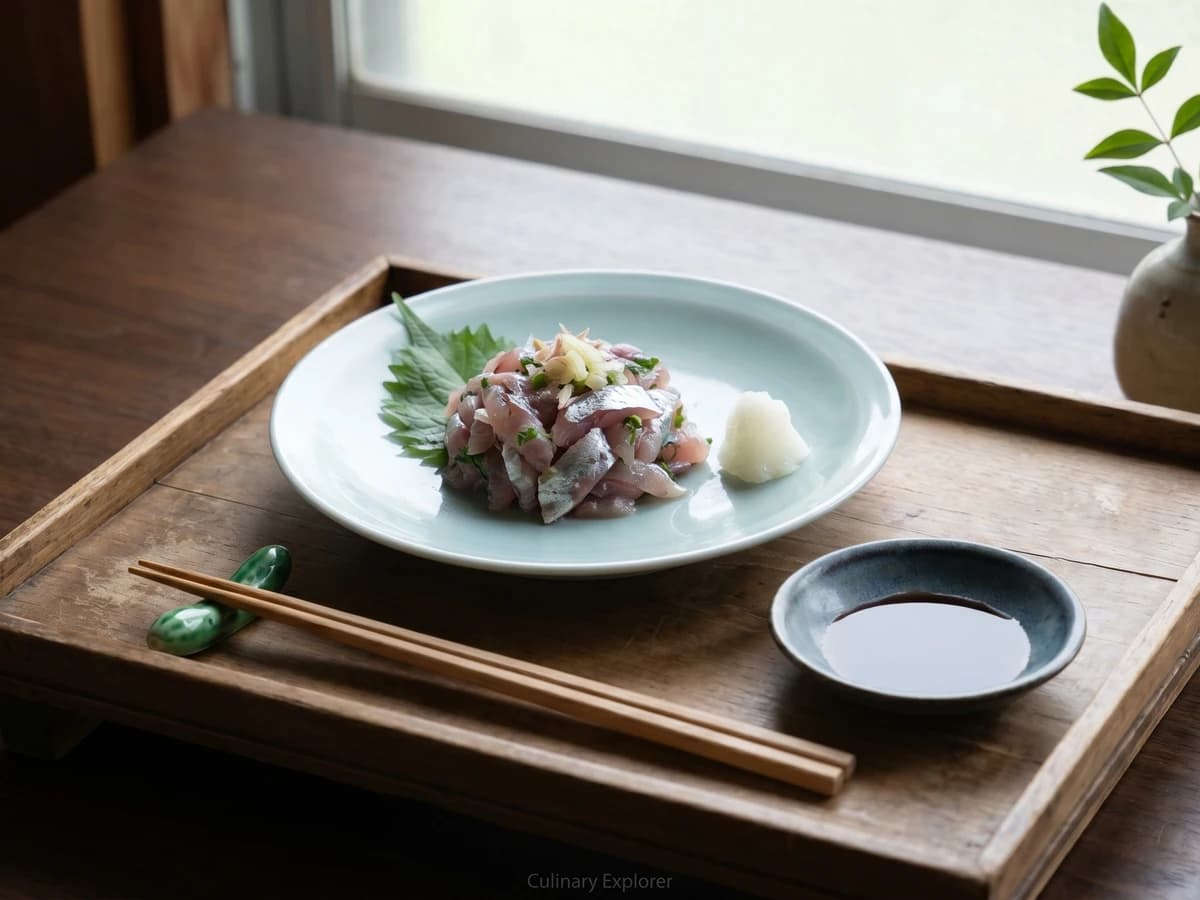
Summer horse mackerel, chopped just enough to catch ginger and scallion, becomes a cool, clean main dish with rice. The secret is fresh fish and a knife that does not bruise it.
Chef Takumi
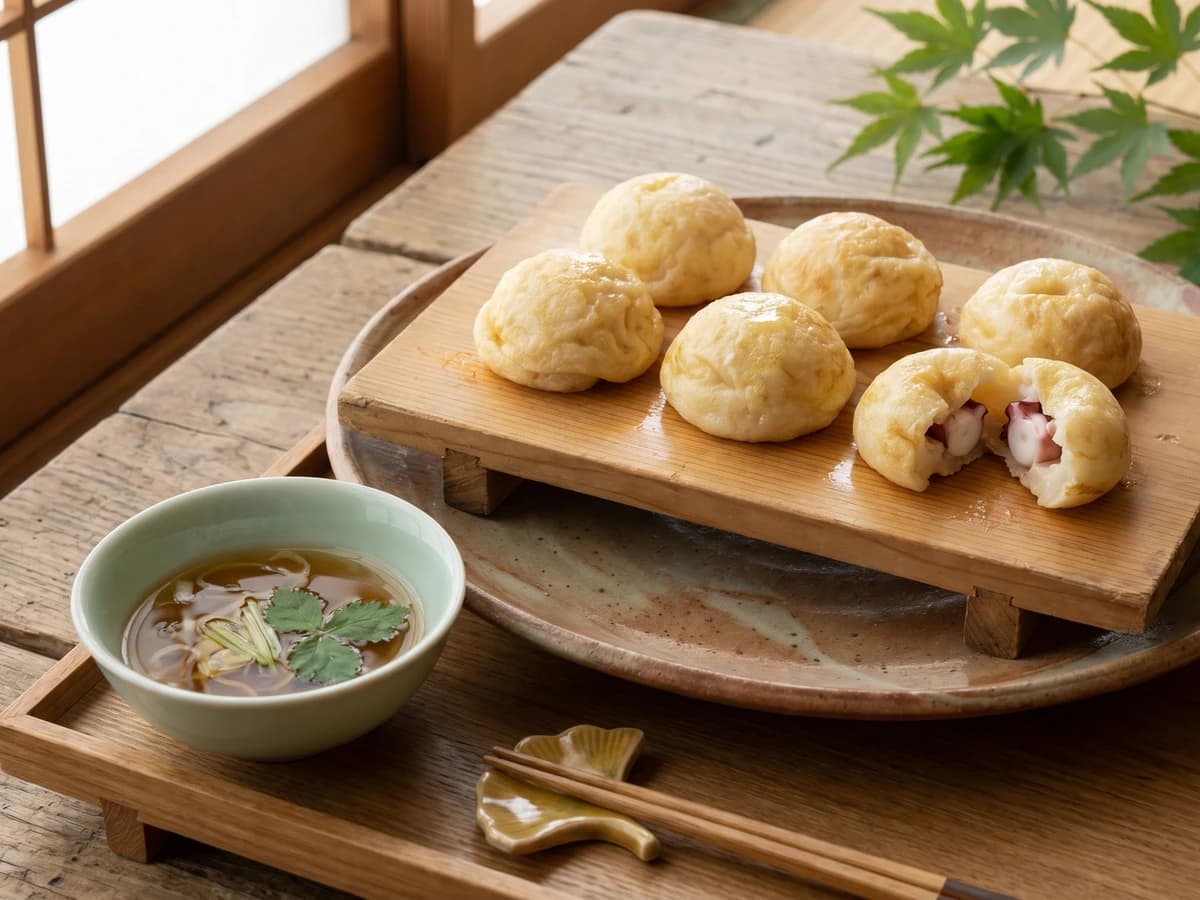
Akashi-yaki is not sauced takoyaki. It is egg-rich batter, tender octopus, and clear dashi, cooked pale and soft so each ball can be dipped like a small custard dumpling.

Chef Takumi
A whole anago looks like a test of nerve. It is mostly good sourcing, a dry skin, cold batter, and oil hot enough to leave the eel sweet under its lace.