
Chef Graziella
Raviole Bolognesi
The sweet half-moon pastries of Bologna, filled with quince mostarda and baked until golden. A San Giuseppe tradition that proves dessert can carry memory and meaning in every bite.
A cooking platform built around craft, culture, and the stories behind what we eat.
Created by
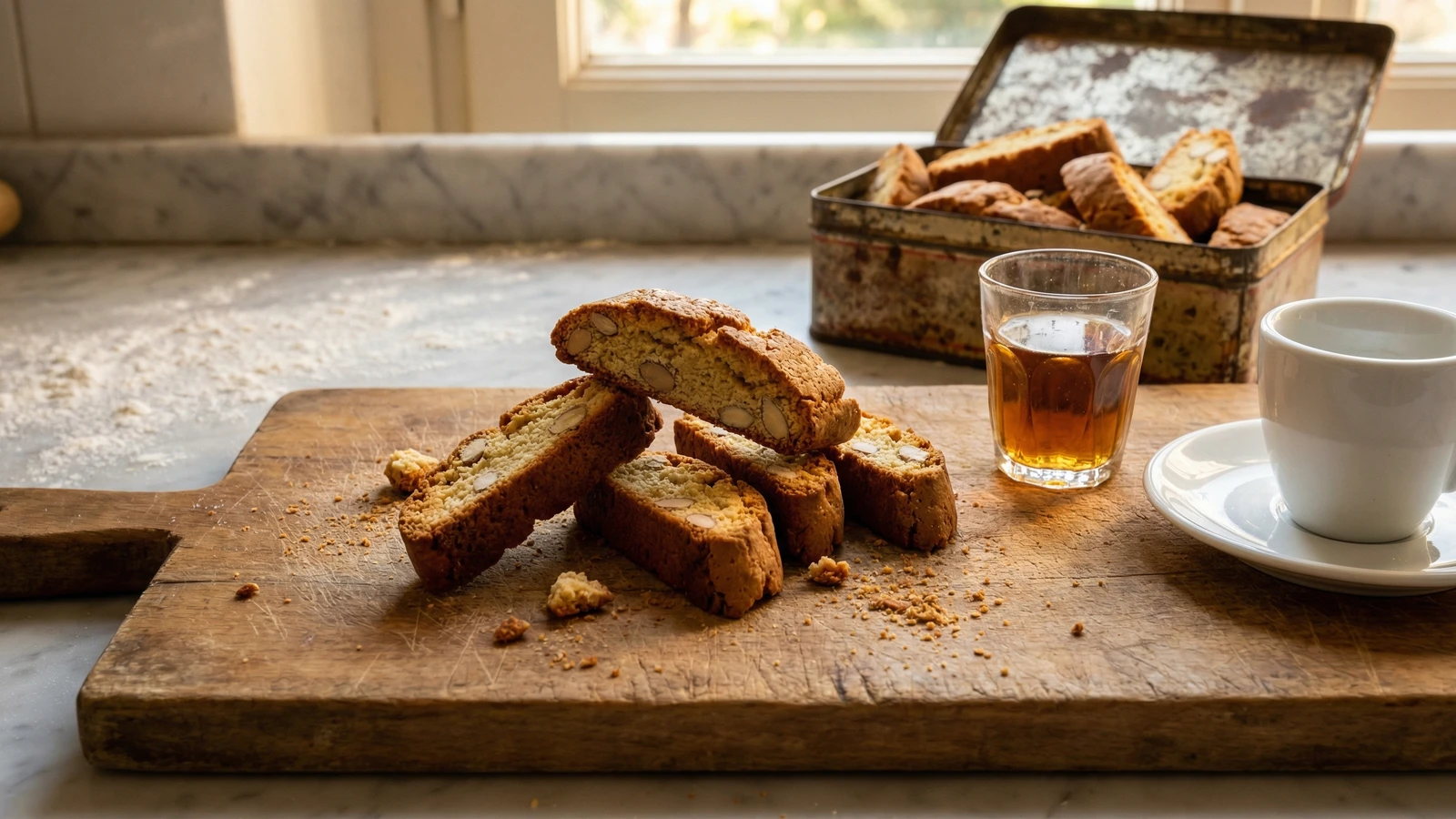
The twice-baked almond cookies of the Emilian hills, honest about their intention from the name alone. You will not eat these dry unless you have teeth of iron.
The name tells you everything. Scroccadenti means 'tooth-crackers,' and the mountain people of the Emilian Apennines do not exaggerate. These are cookies meant to be dipped, softened in sweet wine or strong coffee until they yield just enough to eat without incident. To bite into one straight from the tin is to understand why Italians named them so.
These belong to the tradition of twice-baked cookies that stretches across Italy: biscotti in Tuscany, cantucci in Prato, and here in the Apennine villages of Emilia, scroccadenti. The method is the same everywhere because it works. You bake the dough in logs, slice them while warm, then bake the slices again until they are dry clear through. The result keeps for weeks in a tin, which mattered when village women baked once and made it last.
What distinguishes the Emilian version is restraint. No chocolate. No dried fruit. Just flour, eggs, sugar, almonds, and a whisper of lemon. The almonds are left whole, skin on, because that is how they have always been made. Refinement is not the point. Durability and honest flavor are.
Scroccadenti emerged in the mountain villages of the Emilian Apennines, where twice-baked cookies solved the practical problem of preservation before refrigeration. The name, meaning 'tooth-crackers,' dates to at least the 19th century and reflects the characteristic hardness that allows these cookies to keep for weeks. They remain a specialty of the province of Modena and the hills above Bologna.
Quantity
300 grams (2 1/4 cups)
Quantity
200 grams (1 cup)
Quantity
200 grams (1 1/2 cups)
skin on
Quantity
3
Quantity
1 teaspoon
Quantity
1
finely grated zest
Quantity
1/4 teaspoon
Quantity
1 tablespoon
| Ingredient | Quantity |
|---|---|
| all-purpose flour | 300 grams (2 1/4 cups) |
| granulated sugar | 200 grams (1 cup) |
| whole almondsskin on | 200 grams (1 1/2 cups) |
| large eggs | 3 |
| baking powder | 1 teaspoon |
| lemonfinely grated zest | 1 |
| fine sea salt | 1/4 teaspoon |
| anise seeds (optional) | 1 tablespoon |
Position a rack in the center of your oven and heat to 350°F (175°C). Line a large baking sheet with parchment paper. Have a second sheet ready for the second bake.
In a large bowl, whisk together the flour, sugar, baking powder, salt, lemon zest, and anise seeds if using. Add the whole almonds and toss to distribute them evenly through the flour. The almonds stay whole. Do not chop them.
Beat the eggs lightly in a small bowl, then pour them into the flour mixture. Stir with a wooden spoon until a stiff, shaggy dough forms. Turn it onto a clean surface and knead briefly, no more than a minute, until the dough comes together. It will be dense and slightly sticky. This is correct.
Divide the dough in half. Roll each piece into a log about 12 inches long and 2 inches wide. The logs should be slightly flattened on top, not round. Place them on the prepared baking sheet, leaving at least 3 inches between them. They will spread.
Bake until the logs are golden brown and firm to the touch, 25 to 30 minutes. A crack down the center is normal and expected. Remove from the oven and let cool on the pan for exactly 10 minutes. The logs must be cool enough to handle but still warm enough to slice cleanly. Reduce the oven temperature to 325°F (160°C).
Transfer the logs to a cutting board. Using a sharp serrated knife, cut on the diagonal into slices about 3/4 inch thick. Work with confidence. A hesitant cut crumbles the cookie. You will have about 18 slices per log.
Arrange the slices cut side down on baking sheets. Bake for 10 minutes, then flip each cookie and bake another 10 minutes. The cookies should be dry, golden on both faces, and firm throughout. They will harden further as they cool.
Transfer to a wire rack and cool completely. They will be very hard. This is not a mistake. Store in an airtight tin at room temperature. They keep for three weeks easily, longer if you can resist them.
1 serving (about 20g)
Culinary guides, cultural storytelling, and the editorial depth that makes cooking meaningful.
Discover Culinary ExplorerChef Graziella
The sweet half-moon pastries of Bologna, filled with quince mostarda and baked until golden. A San Giuseppe tradition that proves dessert can carry memory and meaning in every bite.

Chef Graziella
The ancient honey and nut tart of Emilia, encased in thin, shattering pastry and dense with spiced fruit. Christmas in Brescello has tasted like this for centuries.

Chef Graziella
Golden pillows of sweet egg pasta encasing vanilla cream perfumed with anise liqueur, fried until blistered and crisp, then buried under powdered sugar. Piacenza's gift to Carnival.

Chef Graziella
Mountain cookies from the high Apennines, where shepherds and woodcutters needed sustenance that would keep. The crackled white glaze conceals a tender, anise-scented crumb that tastes of another century.