
Chef Thomas
A British BLT
Back bacon crisped in a hot pan, a ripe tomato that actually tastes of something, crisp lettuce and real butter on proper toast. A sandwich that earns its place in the notebook.
A cooking platform built around craft, culture, and the stories behind what we eat.
Created by Chef Thomas
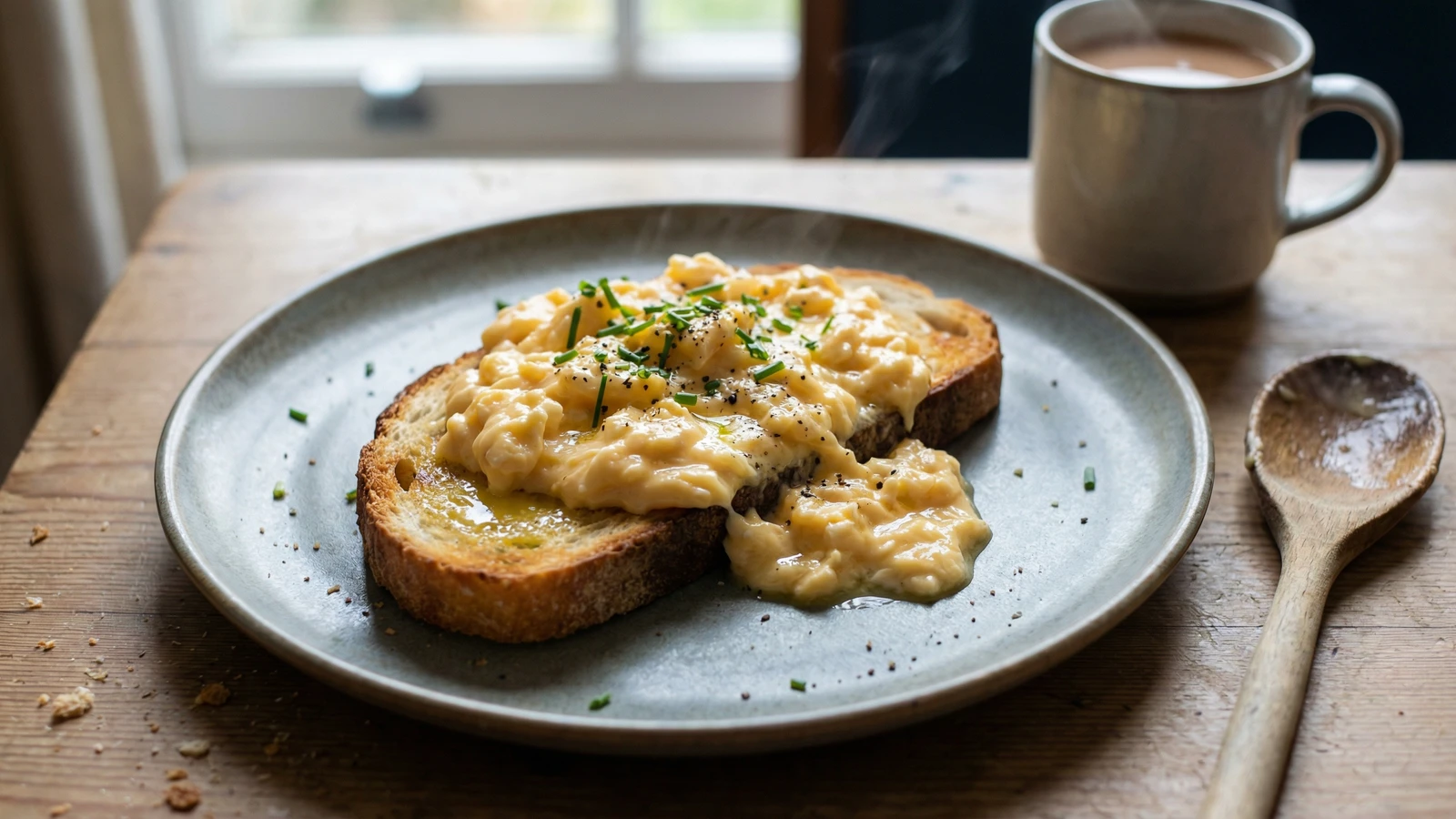
Eggs stirred low and slow in good butter until they barely hold together, spooned onto thick toast. Seven minutes, three ingredients, and the quiet proof that simple cooking is real cooking.
There's an evening you know well. The fridge is bare. The day was longer than it should have been. You stand in the kitchen and you don't want to think, you just want to eat something warm and then sit down. This is that supper.
Scrambled eggs on toast. It barely counts as a recipe. Three eggs, a knob of butter, a couple of slices of bread that can hold their nerve under something soft and hot. But the distance between scrambled eggs made with attention and scrambled eggs made in a hurry is the distance between a meal and a disappointment. Low heat. Slow stirring. The willingness to stand at the hob for three minutes longer than you think is necessary. That's all it asks.
I've made this hundreds of times. It's the meal I come back to when nothing else appeals, and it has never once let me down. I wrote it in the notebook years ago, just a few words: "Eggs. Butter. Toast. Tuesday. Late." I still think that says everything. We're only making dinner. But we're making it properly.
Quantity
3 large
Quantity
a generous knob, plus extra for the toast
Quantity
1-2 thick slices
sourdough or a proper white loaf
Quantity
to taste
Quantity
to taste
Quantity
a few
snipped
| Ingredient | Quantity |
|---|---|
| free-range eggs | 3 large |
| unsalted butter | a generous knob, plus extra for the toast |
| good breadsourdough or a proper white loaf | 1-2 thick slices |
| fine sea salt | to taste |
| black pepper | to taste |
| chives (optional)snipped | a few |
Crack the eggs into a bowl. Don't whisk them to death. A few strokes with a fork, just enough to break the yolks and bring it all together. You want streaks of white and gold still visible. Add a good pinch of salt now. Seasoning the eggs before cooking, not after, makes a quiet difference you'll notice the first time.
Get your bread on. Thick slices, toasted properly, with colour and crunch. Not the pale, apologetic toast that bends when you pick it up. It needs to hold the weight of what's coming. Butter it generously while it's hot, so the butter melts into the surface and disappears.
Set a small, heavy pan over a low heat. Not medium. Low. Drop in the butter and let it melt gently until it foams. Pour in the eggs. Now the only thing that matters is patience. Stir slowly with a wooden spoon or a spatula, drawing the eggs from the edges to the centre in long, unhurried strokes. The curds will form gradually, soft and creamy. This takes three to four minutes. If it takes less, your heat is too high. Pull the pan off the heat while the eggs are still slightly wetter than you think you want them. They carry on cooking in their own warmth. By the time they reach the plate, they'll be just right.
Spoon the eggs onto the buttered toast. Grind some black pepper over the top. Snip a few chives across if you have them, but don't worry if you don't. The eggs and the butter and the toast are already enough. Eat immediately. This is not a dish that waits.
1 serving (about 250g)
Culinary guides, cultural storytelling, and the editorial depth that makes cooking meaningful.
Discover Culinary ExplorerChef Thomas
Back bacon crisped in a hot pan, a ripe tomato that actually tastes of something, crisp lettuce and real butter on proper toast. A sandwich that earns its place in the notebook.

Chef Thomas
Salted anchovies pressed into hot buttered toast, sharp with lemon and cayenne, the kind of thing you eat standing at the kitchen counter with a glass of cold wine and nothing else planned.

Chef Thomas
Oysters wrapped in smoky bacon, grilled until the fat crisps and the sea-sweetness swells inside, set on hot buttered toast. The old savoury course, brought back to the table where it belongs.

Chef Thomas
English asparagus, steamed until just tender and laid across thick buttered toast with warm butter pooling beneath it. A dish that belongs to May and asks almost nothing of you except good ingredients and a few minutes of attention.