
Chef Thomas
A Bloomer
A proper British bloomer, slashed deep and baked until the cuts open wide and the crust turns deep, glossy gold. The kind of loaf that makes the rest of the day feel deliberate.
A cooking platform built around craft, culture, and the stories behind what we eat.
Created by Chef Thomas
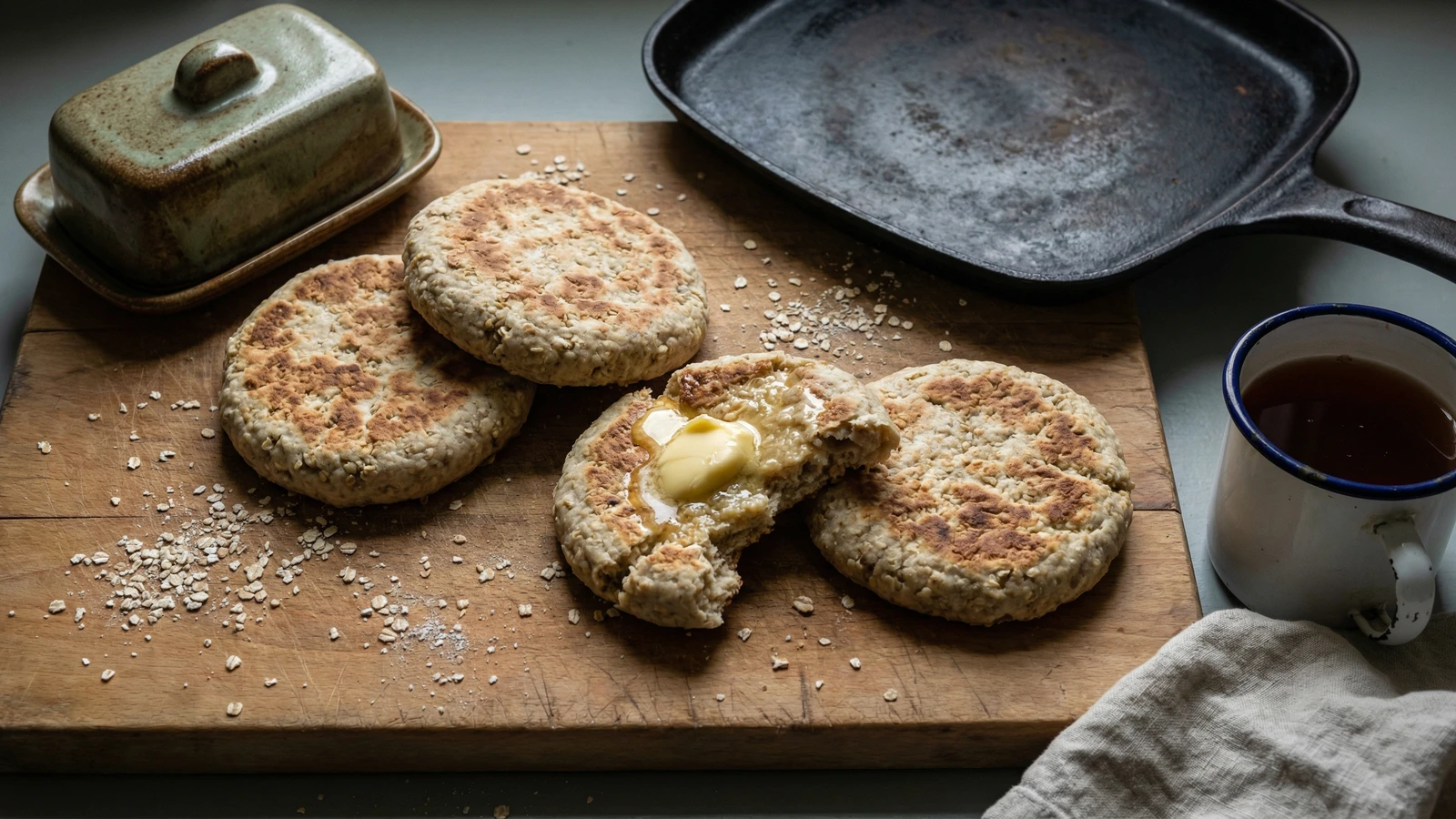
An old Highland griddle bread of oats and salt, cooked dry on a hot pan until the edges curl and the underside speckles. Dense, honest, and made to be torn warm with butter.
There's a kind of November afternoon when the light gives up by half past three and the only sensible thing is to put the kettle on. The girdle goes on the hob. A bowl of oatmeal sits on the counter. We're only making dinner, or rather, we're making the kind of bread that asks nothing of the day except half an hour of attention.
Bannocks belong to the Highlands, not to my corner of England, and I cook them with the respect owed to a tradition I haven't lived. But they've earned a place in my kitchen because they do something no other bread does: they go from bowl to table in less than an hour, no oven, no proving, no mystery. Oats, salt, a little flour to help things along, and a hot dry pan. That's the whole list.
They cook on the girdle until the edges curl up and the underside speckles brown, smelling of toasted oats and warmth. Tear them open while they're still hot and the inside is soft and slightly nutty. Butter goes straight in and disappears. I wrote it down in the notebook last winter: 'Bannocks. Friday. Wind in the chimney.' Some meals don't need more explanation than that.
Quantity
200g
plus extra for dusting
Quantity
50g
Quantity
1/2 teaspoon
Quantity
1/2 teaspoon
Quantity
25g
melted, or bacon dripping if you have it
Quantity
100-120ml
Quantity
to serve
| Ingredient | Quantity |
|---|---|
| medium oatmealplus extra for dusting | 200g |
| plain flour | 50g |
| bicarbonate of soda | 1/2 teaspoon |
| fine sea salt | 1/2 teaspoon |
| unsalted buttermelted, or bacon dripping if you have it | 25g |
| hot water | 100-120ml |
| cold butter | to serve |
Tip the oatmeal, flour, bicarbonate of soda and salt into a bowl and stir them together with your hand. Make a well in the middle. This is a bread of four ingredients, so the small things matter: don't skip the salt, and don't be tempted to use rolled porridge oats instead of proper medium oatmeal. They aren't the same thing.
Pour the melted butter into the well, then add the hot water a little at a time, drawing the dry ingredients in with a wooden spoon. Stop when it comes together into a stiff, slightly tacky dough. You may not need all the water. Oatmeal varies, and so does the weather. Trust your hands.
Dust a board generously with extra oatmeal. Tip the dough out and knead it for thirty seconds, no more. This is a bread that doesn't want to be worked. Pat or gently roll it into a round about a centimetre thick. Cut it into four wedges, what the Scots call farls. The edges will be a bit ragged. Good.
Set a heavy, dry frying pan or cast-iron girdle over a medium heat. No oil. No butter. The pan needs to be properly hot before the bannocks go in, but not screaming. When you hold your hand a few inches above the surface and feel real warmth coming off it, you're ready.
Lay the wedges in the pan and leave them alone for six or seven minutes. Don't fiddle. The edges will start to dry and curl, the underside will speckle to a deep golden brown, and the kitchen will fill with the smell of toasted oats. Trust your nose. It knows before you do.
Turn them over carefully with a palette knife or fish slice. Cook the second side for another four or five minutes, until that side is speckled too and the bannocks feel firm in the middle when you press them with a fingertip. Lift them onto a wire rack for a minute or two, just to let the bottoms breathe. Then tear them open while they're still warm and put them on the table with cold butter, a pot of jam, or a bit of crumbly cheese. Hot tea alongside is not optional.
1 serving (about 85g)
Culinary guides, cultural storytelling, and the editorial depth that makes cooking meaningful.
Discover Culinary ExplorerChef Thomas
A proper British bloomer, slashed deep and baked until the cuts open wide and the crust turns deep, glossy gold. The kind of loaf that makes the rest of the day feel deliberate.

Chef Thomas
A simple white loaf made from flour, water, yeast, and salt. The kind of bread that fills the kitchen with the smell of a Saturday morning and teaches you, slowly, everything you need to know about baking.

Chef Thomas
A dark, fruit-heavy Welsh tea loaf, soaked overnight in strong tea and baked slowly until the kitchen smells of spice and orange peel. Sliced thick and buttered cold.

Chef Thomas
Rich, butter-laden Georgian buns from Bath, glazed deep gold and crowned with crushed sugar nibs that crack beneath your teeth, the kind of bake that turns a Sunday afternoon into something deliberate.